

July 10, 2026
When the Floods Came in 2026: Borrowed Governance Frameworks, Broken Roads


When the Floods Came in 2026: Borrowed Governance Frameworks, Broken Roads
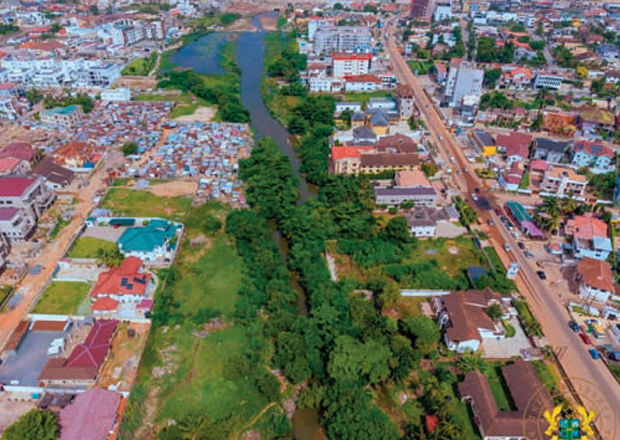
“Rivers” Where Roads Should Be
From Accra to Abidjan, Freetown to Nairobi, and Mombasa, floods have become annual calamities. They are not acts of God but acts of governance failure — the consequence of borrowed governance frameworks that fracture sovereignty and neglect resilience. CMS is Africa’s authored alternative: the third pillar of consequence, embedding accountability and stewardship to break the cycle. Roads are turned into rivers of destruction and death. Approved properties sanctioned by local authorities, alongside unapproved structures, block natural waterways and magnify communal devastation. What should have been foresight becomes negligence; what should have been resilience collapses under the weight of short‑termism. These floods are not accidents of nature but fractures of mimicry residues — borrowed governance logics that imitate without adapting, leaving citizens exposed to the ripple effects of systemic failure
Deathtraps in Plain Sight
The already underfunded road networks collapse further, leaving behind what should no longer be called roads. Each rainy season exposes the fragility of the systems citizens depend on daily. The deaths, destroyed livelihoods, and lost property are not accidents of nature; they are consequences of neglect.
Borrowed Frameworks, Cyclical Failure
Floods expose Africa’s deeper governance dilemma: dependence on borrowed frameworks.
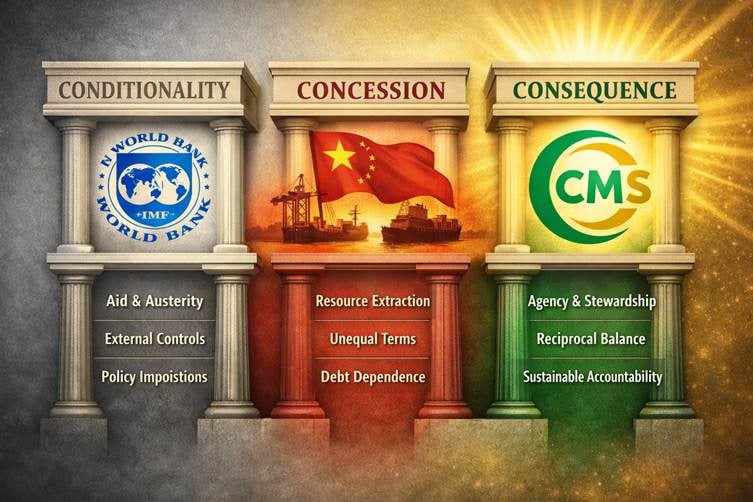
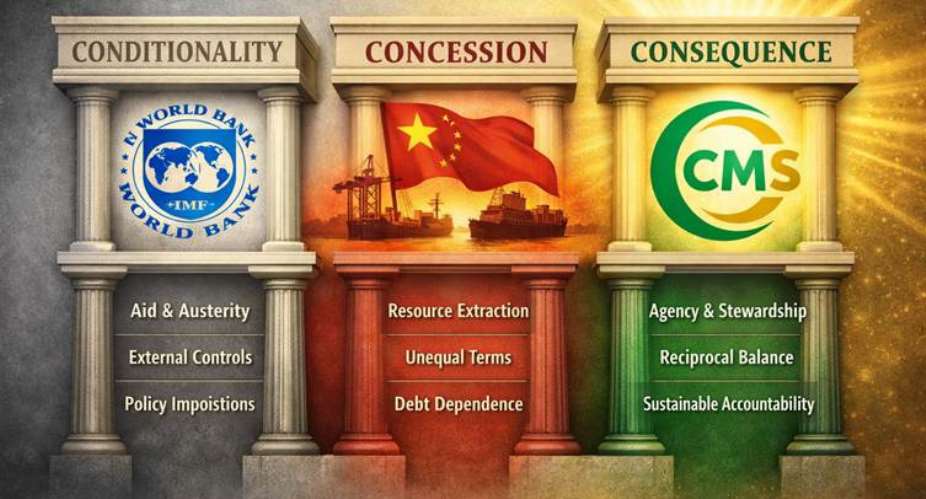
- Conditionality (IMF/World Bank): Aid tied to austerity, external controls, and policy mandates. Even when funds are allocated — such as the reported USD 350 million World Bank package intended to shore up flood defences — they are diverted to consultancies and administrative overhead, slowed by fiscal ceilings, diversions, and delayed disbursements, leaving drains clogged and communities unprotected.
- Concession (China and others): Resource extraction and debt dependence. Infrastructure is built, but ownership and benefit flow outward, while maintenance and resilience remain unfunded.
Both pillars perpetuate cycles of underdevelopment. Africa does not author them, nor do they align with Africa’s worldview. They leave citizens wading through rivers where roads should be. The effect is compounded by governance systems rooted in imported hierarchies, patronage, groupthink, and extractive mindsets. These borrowed residues silently wreck collective life, producing devastation at scale. Floods become not just natural disasters but symptoms of a wider systemic malaise — the fracture of mimicry
The Third Pillar: CMS Consequence Literacy
CMS introduces the third pillar:
- Agency & Stewardship
- Reciprocal Balance
- Sustainable Accountability
These are not mere words or workshop jargon. They are the deep roots of African metaphysical wisdom — a worldview that sees existence as relational, cyclical, and consequential. In African thought, every action ripples across generations, every imbalance demands restoration, and every covenant requires continuity. CMS translates this metaphysical inheritance into governance instruments. It embeds Consequence Literacy across governance, finance, and education — ensuring that floods are managed, roads are maintained, and drains are unclogged. In this way, CMS is not simply a framework; it is Africa’s authored civilizational compass, drawing on ancestral wisdom to confront modern crises.
From Floods to Paradigm Shift
The government minister who compared Accra’s floods to California’s missed the point. Californians may face floods, but they do not endure systemic collapse. CMS reframes the crisis: floods are consequences, not inevitabilities. With Consequence Literacy, Africa can break free from conditionality and concession, and author its own paradigm shift.
Conclusion
When floods came, Africa’s borrowed frameworks were exposed. Roads collapsed, drains clogged, and lives were lost. The floods are not isolated tragedies; they are another thread in a broader systemic governance malaise that Africa has grappled with since independence, some 69 years ago. Each rainy season is a reminder that borrowed models — conditionality from the West, concessions from the East — fracture sovereignty and perpetuate cycles of underdevelopment. CMS is the authored alternative. It is Africa’s civilizational framework, innovative and unique, embedding Consequence Literacy across governance, finance, and education.
CMS positions Africa not as a borrower of models but as a contributor to paradigms. It reframes floods as consequences rather than inevitabilities and offers a pathway to resilience: roads maintained, drains unclogged, and institutions accountable. Consequently, literacy lies at the heart of Africa’s paradigm shift — authored, civilizational, and globally relevant.
About CMS: The Consequential Management System (CMS) is an African epistemic governance framework authored and codified across three volumes (CMS I–III). It introduces Consequence Literacy as a framework for institutions, enterprises, and communities, embedding African metaphysical governance and worldview. CMS dramatizes the #ConsequenceGeneration movement — positioning Africa to reclaim agency, strengthen institutions, and steward civilizational outcomes.
Author Bio: Albert K. Owusu is the founder and architect of the Consequential Management System (CMS), an African epistemic governance framework authored and codified across three volumes. A global strategist and narrative architect, he has led institutions across finance and enterprise

Albert K. Owusu, © 2026
This Author has published 8 articles on modernghana.comColumn: Albert K. Owusu
Disclaimer: “The views expressed in this article are the author’s own and do not necessarily reflect ModernGhana official position. ModernGhana will not be responsible or liable for any inaccurate or incorrect statements in the contributions or columns here.”
Follow our WhatsApp channel for meaningful stories picked for your day.
Top Stories







<!–
–>
Originally published on www.modernghana.com
