

July 8, 2026
GRA hands over confiscated 18 diverted truckloads of cargo to School Feeding Programme
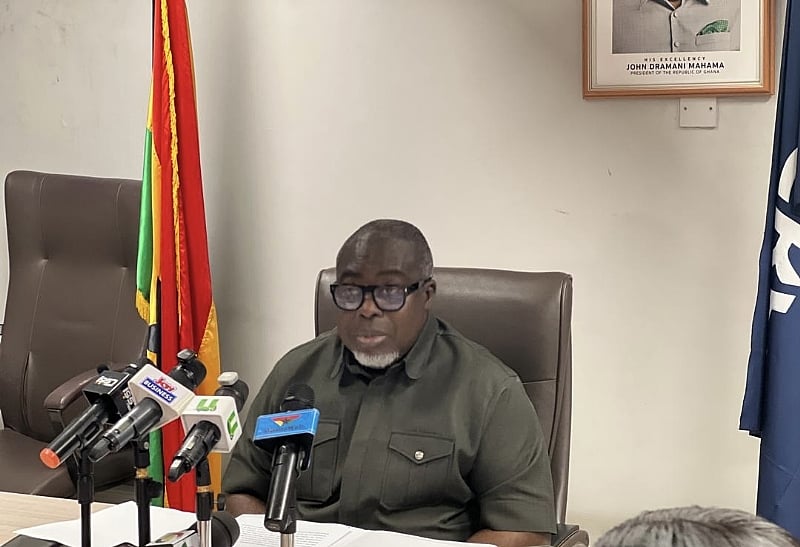


GRA hands over confiscated 18 diverted truckloads of cargo to School Feeding Programme
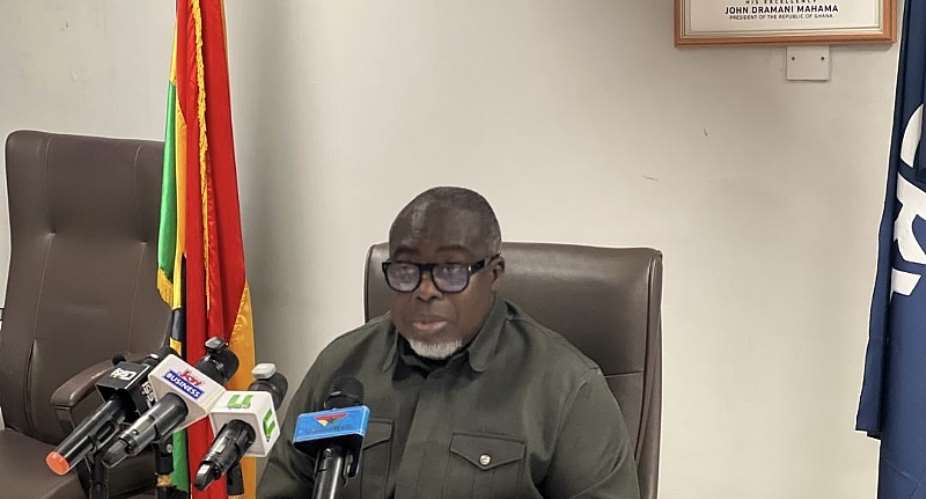
The Ghana Revenue Authority (GRA) has transferred 18 truckloads of confiscated transit cargo to the National School Feeding Programme after investigations established that the goods were being fraudulently diverted into the Ghanaian market.
The allocation was made on the directive of the Ministry of Finance following a comprehensive investigation into the attempted diversion of the consignments.
Addressing a media briefing on the outcome of the investigations, the Commissioner-General of the Ghana Revenue Authority, Anthony Kwasi Sarpong, said investigators uncovered multiple customs violations, including documentation fraud, under-declaration of goods, tariff misclassification and suspected identity fraud involving the declared consignee.
“As you may recall, in February 2026, we reported the interception of 18 trucks declared as transit cargo from Togo, through the Akanu Border Post, to Niger, amid suspicions that they were being diverted into the local market,” Mr Sarpong said.
He explained that the trucks were intercepted at the Kpone Barrier on the Tema Motorway by a joint team comprising preventive officers from the Customs Division of the GRA and National Security, prompting the Ministry of Finance and the GRA to launch a full-scale investigation.
According to him, the investigative committee reviewed reports from the arresting officers and interviewed Customs officials, declarants, transit escort officers, drivers, transit bond issuers and E-Track personnel.
The committee also re-examined the cargo at the Tema Transit Terminal, engaged the Nigerien Chamber of Commerce and carried out inspections at both the Akanu Border Post and the Togolese Customs station at Noépé.
Mr Sarpong disclosed that documents obtained from the Togolese Customs Administration showed the cargo originated from Malaysia and Indonesia before arriving at the Port of Lomé. Contrary to declarations made at Ghana’s border, the goods were actually destined for two companies in Abidjan, Côte d’Ivoire, and not Niger.
He further revealed that the transit declaration processed at Akanu was not supported by the original bills of lading and export documentation. Instead, officials relied on an invoice claiming the goods had been purchased on the open market in Togo.
The investigation also uncovered significant discrepancies in the quantity and classification of the goods.
According to Mr Sarpong, Customs officers found 39,256 jerrycans of vegetable cooking oil instead of the 35,246 units declared, representing an under-declaration of 4,010 jerrycans.
In addition, products declared as tomato paste were found to be tomato-flavoured seasoning, resulting in an incorrect assessment of the applicable transit bond value.
The Commissioner-General said the cooking oil had also been deliberately classified under a lower-duty Harmonised System code attracting a 20 percent duty instead of the correct 35 percent rate, significantly reducing the value of the transit bond and the taxes that would have been payable if the goods entered the domestic market.
Investigators also raised concerns over the legitimacy of the declared consignee.
Checks conducted with the Nigerien Chamber of Commerce failed to verify the Taxpayer Identification Number used for the shipment, while the named consignee, Adamou Moumouni, could not be confirmed as a registered business operator in Niger, pointing to possible identity fraud.
Further analysis of the Integrated Customs Management System (ICUMS) revealed 44 previous transit declarations linked to the same consignee over the past two years. Several of those transactions were processed without the required bills of lading and exhibited similar irregular exit patterns through the Kulungugu Border Post.
Describing the findings as deeply troubling, Mr Sarpong announced that four Customs officers connected to the consignment had been interdicted and are currently undergoing internal disciplinary proceedings.
He assured the business community and the public that the GRA has strengthened compliance and surveillance measures at the country’s borders to enhance revenue mobilisation, prevent customs fraud and combat illicit trade.

Top Stories


<!–
–>
Originally published on www.modernghana.com
