

August 22, 2026
The food dilemma of Nigeria
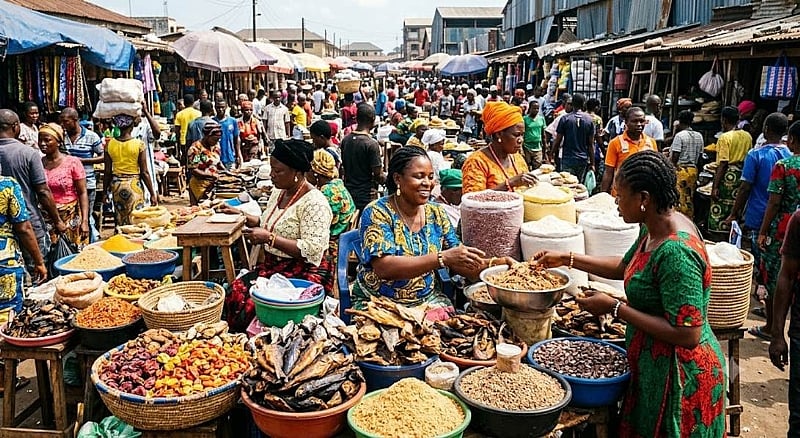


The food dilemma of Nigeria
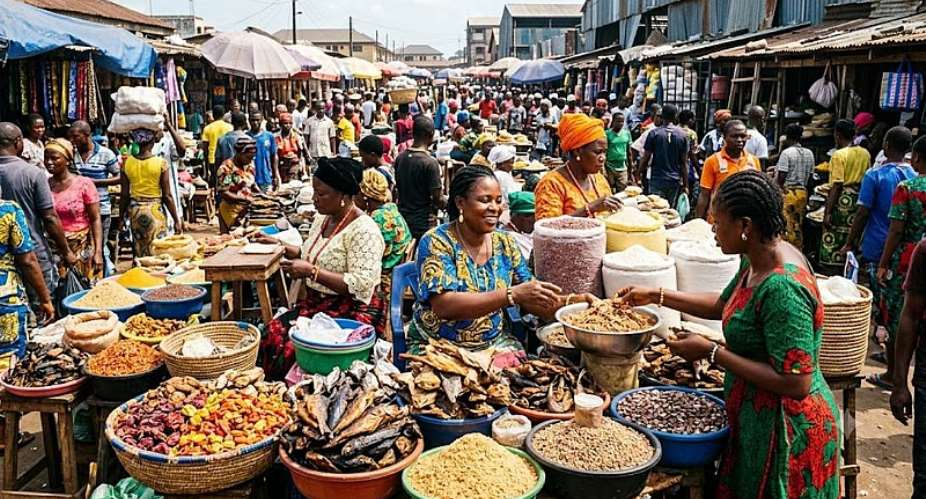
There is hunger in the land, and perhaps, paradoxically, that hunger has done what years of political speeches, religious sermons and national integration programmes have struggled to achieve. It has reminded Nigerians that, beyond the affiliation to tribe, religion, class and political allegiance, it is a common human need. Hunger does not ask whether you are Igbo, Hausa, Yoruba, Ijaw or Tiv. It does not check whether you worship in a Church, Mosque or traditional shrine. It simply arrives. And when it arrives, it demands attention.
And that reality raises an uncomfortable question. Could the food crisis confronting Nigeria today have an unintended advantage? Could hunger, by becoming the problem shared across Nigerian communities, also become a force for national solidarity, the massive force that can bring the poor voting masses together in their quest for better governance systems and a better life for the people? Should Nigerians fight the general hunger or leave everything to chance? The answer is that the country must confront hunger urgently while it keeps sight of the opportunity it presents to build a stronger sense of shared national purpose.
Nigeria’s food dilemma is not simply about whether or not there is sufficient food in the country. It is about whether ordinary citizens can afford to buy it, whether farmers can produce it profitably, whether food can move safely from farms to markets, and whether families can survive the rising cost of feeding themselves.
Recent statistics illustrate the complexity. Nigeria’s headline inflation eased slightly to 15.91% in June 2026 from 15.93% in May. But food inflation moved in the opposite direction, rising to 17.52% year-on-year, while month-on-month food inflation increased to 3.75% from 2.98%. The items driving the increase included tomatoes, pepper, beef, garri, yam, cowpea, cassava flour and other staples.
For a family struggling to put breakfast on the table, a statistical decline in headline inflation can only provide little comfort if the price of the actual food being bought continues to rise. Inflation is an economic concept, but hunger is a deeply-felt personal experience. It means the mother reducing the quantity of food in the cooking pot. It interprets to the father wondering how to feed his children after paying the house rent and transport costs. It beggars the student going to bed hungry because the money meant for food has been diverted to school expenses.
But, even at that, it would be misleading to suggest that Nigeria’s food crisis has a single cause. The country has continued to face insecurity in farming communities, climate-related shocks like river overflows, inadequate storage facilities, poor road and rail transportation networks, high production costs, limited access to credit and fluctuations in the value of the naira. Nigeria also remains exposed to international food and agricultural-input markets. A recent IMF analysis notes that imported food accounts for about 30% of food consumed in Nigeria and that domestic food prices can remain elevated even when international prices moderate, partly because of domestic, structural and climate-related factors.
This means that the food dilemma cannot be resolved by simply telling Nigerians to produce more food. While production matters enormously, so do security of lives and properties, good roads, constant electricity, irrigation, storage facilities, well-maintained markets, finance and policy consistency.
The farmer must be able to plant without fear. He must have access to fertilizer and improved seeds at reasonable prices. He must be able to harvest without losing his crops to flooding or drought. He must have somewhere to store them. He must be able to transport them to consumers without transportation costs swallowing his profit. And, ultimately, consumers must be able to afford the purchase of what the farmer produces.
This is where the idea that hunger could unite Nigeria becomes interesting.
Nigeria has spent decades wrestling with identity politics. Elections often expose the fault lines of ethnicity and religion. Political conversations can quickly turn into regional arguments. A problem that should be national can be interpreted through the lens of who is affected and who is in power. Hunger has a different language.
The trader in Lagos and the farmer in Benue may have little in common politically, but both understand the rising cost of food because they feel it. The civil servant in Abuja and the motorcycle mechanic in Kano may worship differently, but both know what it means when the cost of feeding a family rises faster than income because they live it. The student in Enugu and the artisan in Kaduna may belong to different ethnic communities, but both can understand the anxiety that accompanies an empty wallet at mealtime because they experience it. In that sense, hunger becomes a great equalizer, pointing a direction to the voter, irrespective of his locality, and political or religious affinity.
But we cannot romanticize this reality. While one would have imagined that general hunger would unite Nigerians to protest against a visionless government, the truth is that general hunger cannot inherently be a nation-builder. In practice, severe food deprivation can only induce anger, crime, social unrest, political manipulation and conflict. Hungry people do not necessarily become more united by their hunger, sometimes they become more desperate and irascible. When people cannot meet their basic needs, they can become vulnerable to exploitation by politicians, criminals and extremists who offer them money, food, protection or a sense of belonging. And that is where the danger lies.
Nigerian leaders should not allow hunger to persist, in the hope that it will unite the country. That would be an unacceptable gamble. Hunger is a humanitarian and economic crisis, not a social experiment. The better opportunity is to allow the shared experience of food insecurity to strengthen the argument for collective action. Nigeria needs to begin treating food security with the seriousness that is traditionally reserved for national security. A country cannot be truly secure when millions of its citizens are uncertain about their next meal. A country cannot achieve sustained economic growth when households spend such a large proportion of their income on food that little remains for education, healthcare, housing or investment.
Come to think of it: Nigeria boasts of enormous agricultural potentials. It has arable land, diverse climatic zones, a large youthful population, a huge domestic market and millions of people with farming knowledge. The problem is not a complete absence of capacity. The problem is converting that capacity into the production of a reliable food system. The reform requires long-term planning. Government must create conditions in which agriculture becomes a commercially attractive enterprise rather than an occupation associated with poverty. Private investors need confidence that policies will not change unpredictably. Farmers need infrastructure and security. Researchers and universities need to develop crops and techniques suited to changing climatic conditions. Young Nigerians need to see agriculture not merely as subsistence farming but as a modern business involving technology, processing, logistics, finance and export.
There is also a role for ordinary citizens. Nigerians cannot demand cheaper food while they simultaneously ignore the systems that produce and distribute it. Waste is part of the problem. So are inefficient supply chains and excessive dependence on imported products that could be produced competitively at home. Government must resist the temptation to blame consumers for structural failures. People do not become wasteful simply because they are irresponsible. Poor storage, inadequate electricity and weak distribution systems also contribute to food losses. By the same token, farmers cannot be expected to absorb every increase in the cost of diesel, fertilizer, labour and transportation while consumers demand ever-lower prices.
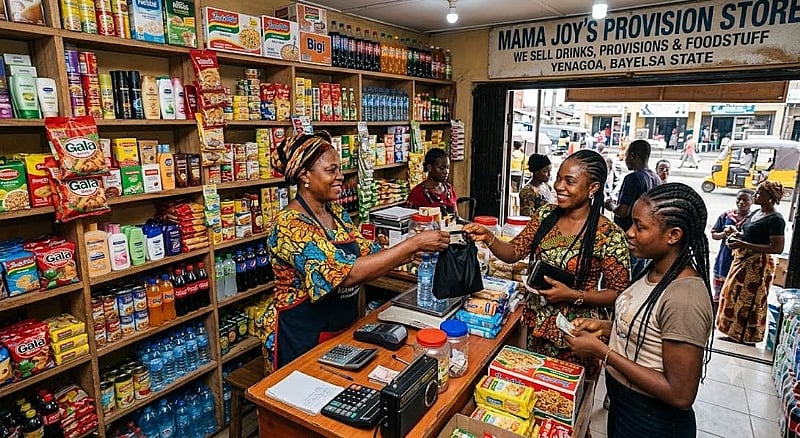
The food dilemma requires a balance between producer and consumer interests. That is another way the crisis could become an opportunity. Food can create relationships across Nigeria in ways politics sometimes cannot. Farmers need markets in cities. Cities need farmers in rural communities. Northern grain producers depend on southern markets, while southern consumers depend on agricultural production from across the country. Livestock, grains, tubers, vegetables and fish move across regional boundaries every day. The food chain is already national, even when national consciousness is sometimes fragmented. Nigeria could build on that reality. Instead of seeing food production as a regional responsibility, the country should develop a truly national food strategy in which every region contributes according to its comparative advantage. Such an approach would encourage cooperation rather than competition and remind Nigerians that prosperity in one part of the country can strengthen the entire nation.
The global outlook makes this even more urgent. The Food and Agriculture Organization reported that world food prices rose to their highest level in more than three years in July 2026, driven by weather disruptions and geopolitical conflicts. The World Food Programme has also warned that a strong El Niño could push millions more people into acute food insecurity globally.
Nigeria cannot assume that the international environment will always provide cheap food or agricultural inputs. Building domestic resilience is becoming less a matter of preference and more a matter of survival. So, should Nigerians fight hunger or leave it? There is only one responsible answer: fight it. But Nigerians should also recognise what the fight can teach them. Hunger is telling the country that no ethnic group can eat ethnicity, no religion can substitute for food, and no political slogan can fill an empty stomach. It is revealing a common vulnerability underneath Nigeria’s many unspecified identities.
That may indeed be an advantage—but only if Nigerians transform that shared vulnerability into shared responsibility. The real victory will not come when Nigerians discover that everyone is hungry. It will come when they discover that everyone has a stake in ensuring that nobody remains hungry. Nigeria’s food dilemma is bigger than agriculture. It is a test of national collaboration, economic intelligence and political will. The country can allow hunger to deepen its divisions, or it can use the crisis to build bridges between farmer and consumer, north and south, rich and poor, government and citizen.
Hunger may have no tribe or religion. The challenge before Nigeria is to ensure that the response to it has no tribe or religion either. The empty plate should not become a symbol of despair. It should become a reminder that, in the most basic things, Nigerians are one people—and that feeding the nation is a responsibility that belongs to everyone.

Emeka Asinugo, PhD., M.A., KSC, © 2026
A London-based veteran journalist, author and publisher of ROLU Business Magazine (Website: https://rolultd.com)Column: Emeka Asinugo, PhD., M.A., KSC
Disclaimer: “The views expressed in this article are the author’s own and do not necessarily reflect ModernGhana official position. ModernGhana will not be responsible or liable for any inaccurate or incorrect statements in the contributions or columns here.”
Follow our WhatsApp channel for meaningful stories picked for your day.

Top Stories


Originally published on www.modernghana.com
