

July 23, 2026
Stop Flying To Washington: Nigeria Deserves A Real Debate
4 hours ago | Opinion
Stop Flying To Washington: Nigeria Deserves A Real Debate
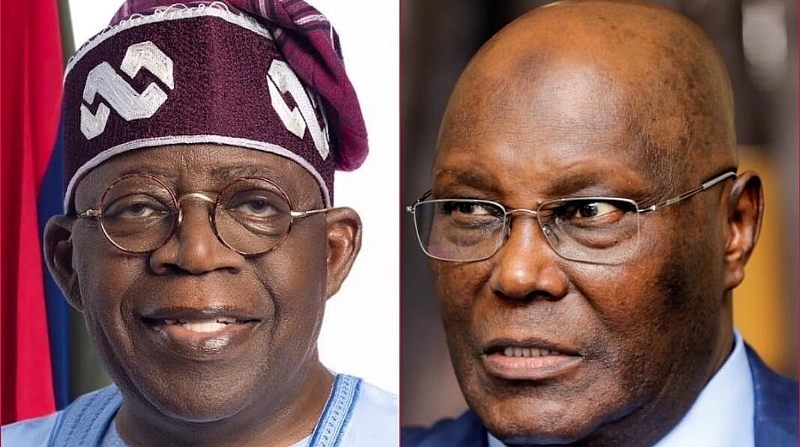
As Nigeria gradually enters another election season, an old political script has returned. Once again, political rivals are attempting to fight Nigerian elections not only before Nigerian voters, but also before foreign governments, lobbyists, and policymakers in Washington. This recurring pattern deserves careful reflection—not because politicians should refrain from criticizing one another, but because the country’s democratic future should never depend on foreign political theaters.
The recent effort by former Vice President Atiku Abubakar’s camp to renew attention in Washington to President Bola Ahmed Tinubu’s decades-old United States civil forfeiture matter highlights a broader concern about the direction of Nigeria’s political discourse. In any democracy, political opponents have every right to examine one another’s public records and raise questions they believe are relevant to voters. Such scrutiny is both legitimate and necessary. However, it should always be conducted with factual accuracy, fairness, and respect for the legal record.
One important point deserves clarification. The matter frequently referenced in connection with President Tinubu involves a civil forfeiture proceeding in the United States dating back to 1993. It was not a criminal prosecution and did not result in a criminal conviction. Under U.S. law, civil forfeiture proceedings and criminal prosecutions are distinct legal processes, governed by different legal standards, procedures, and burdens. As with any issue presented during an election, public understanding is best served when legal matters are described accurately and placed in their proper context.
Acknowledging this legal distinction neither shields public officials from legitimate scrutiny nor diminishes the importance of transparency and accountability. Citizens are entitled to ask difficult questions of those seeking public office, and democratic societies are strengthened by informed public debate. At the same time, the quality of that debate depends on presenting legal and historical facts with precision rather than allowing legal categories to become blurred in the course of political competition.
This observation extends beyond one individual or one political party. Nigerian politics has repeatedly witnessed major political actors seeking influence, validation, or political leverage through foreign capitals rather than through domestic democratic engagement. Similar tactics have appeared across different administrations and political alignments. Today’s critics were often yesterday’s beneficiaries, while today’s defenders may become tomorrow’s critics. The cycle continues regardless of who occupies Aso Rock.
From a democratic perspective, this approach carries significant costs. Every time Nigerian political disputes are internationalized primarily for electoral advantage, attention shifts away from the issues that most directly affect citizens. Security challenges continue to threaten communities. Poverty remains widespread. Youth unemployment persists. Inflation strains household incomes. Environmental degradation continues to affect livelihoods in many regions. These are the matters that should dominate presidential campaigns.
Nigerians deserve more than competing lobbying campaigns in Washington. They deserve nationally televised debates in which presidential candidates explain, defend, and compare their policies. Citizens should hear detailed proposals on strengthening national security, expanding economic opportunity, improving education and healthcare, combating corruption, protecting the environment, and restoring confidence in public institutions. These conversations are far more valuable than repeated arguments over legal matters that have already been publicly examined for decades.
The responsibility does not rest with one political camp alone. It belongs to every major political actor seeking the nation’s highest office. Elections should be won through ideas, competence, integrity, and practical solutions—not through whichever campaign hires the most effective foreign lobbyists or generates the loudest international headlines.
Nigeria is Africa’s largest democracy and one of the continent’s most influential nations. Its democratic legitimacy should be determined by Nigerian institutions and, above all, by Nigerian voters. Foreign governments may have diplomatic interests, but they should not become the arena in which Nigerians attempt to settle domestic political contests.
As the 2027 elections approach, Nigerians should demand something better from every candidate. Ask difficult questions. Examine records carefully. Hold leaders accountable. But insist that the national conversation focus on governance rather than political theater.
The future of Nigeria will not be secured in Washington conference rooms or lobbying offices. It will be determined by informed Nigerian citizens evaluating competing visions for their country’s future. That is where democratic legitimacy belongs, and that is where the real debate should remain.
About the Author
Professor John Egbeazien Oshodi is an American forensic and clinical psychologist, policing and corrections expert, educator, researcher, and public scholar with expertise in forensic, legal, clinical, cross-cultural, organizational, and public policy psychology, as well as public ethics and governance. A native of Uromi, Edo State, Nigeria, and the son of a 37-year veteran of the Nigeria Police Force, he has devoted his career to advancing psychology at the intersection of justice, public policy, leadership, and institutional development.
In 2011, Professor Oshodi helped introduce advanced forensic psychology into Nigerian higher education through the National Universities Commission and Nasarawa State University, Keffi, where he served as Associate Professor of Psychology. His work has contributed to expanding forensic psychology education, professional training, and interdisciplinary collaboration across Nigeria.
He teaches in the Doctorate in Clinical and School Psychology program at Nova Southeastern University; the Doctorate in Clinical Psychology, BS Psychology, and BS Tempo Criminal Justice programs at Walden University; and serves as Visiting Virtual Professor of Forensic and Clinical Psychology at Nasarawa State University, Keffi, Nigeria. He is also President and Chief Psychologist of the Oshodi Foundation and the Center for Psychological and Forensic Services in the United States.
Professor Oshodi is a Black Republican in the United States but is not affiliated with any political party in Nigeria. His scholarship and public commentary are guided solely by justice, constitutional democracy, good governance, institutional accountability, ethical leadership, and Africa’s sustainable development.
He is the founder of Psychoafricalysis (Psychoafricalytic Psychology), a culturally grounded psychological framework that integrates African sociocultural realities, historical consciousness, indigenous knowledge, and future-oriented identity into psychological theory, research, assessment, and practice.
Professor Oshodi has authored more than 1,000 public policy and psychological articles, numerous peer-reviewed publications, and multiple books on forensic psychology, clinical psychology, policing and corrections, criminal justice, higher education, African-centered psychology, governance, leadership, and public ethics. Through decades of work with Africans, the African diaspora, and culturally diverse populations in the United States and internationally, he has also contributed to the development of cross-cultural psychological frameworks and assessment approaches that bridge scientific rigor with cultural relevance. His work continues to advocate for evidence-based policymaking, institutional integrity, psychological justice, and the application of behavioral science to national development.
Disclaimer: “The views expressed on this site are those of the contributors or columnists, and do not necessarily reflect TheNigerianVoice’s position. TheNigerianVoice will not be responsible or liable for any inaccurate or incorrect statements in the contributions or columns here.”
Originally published on www.thenigerianvoice.com
