

August 24, 2026
Six million Somalis face acute hunger as drought and conflict worsen


Six million Somalis face acute hunger as drought and conflict worsen
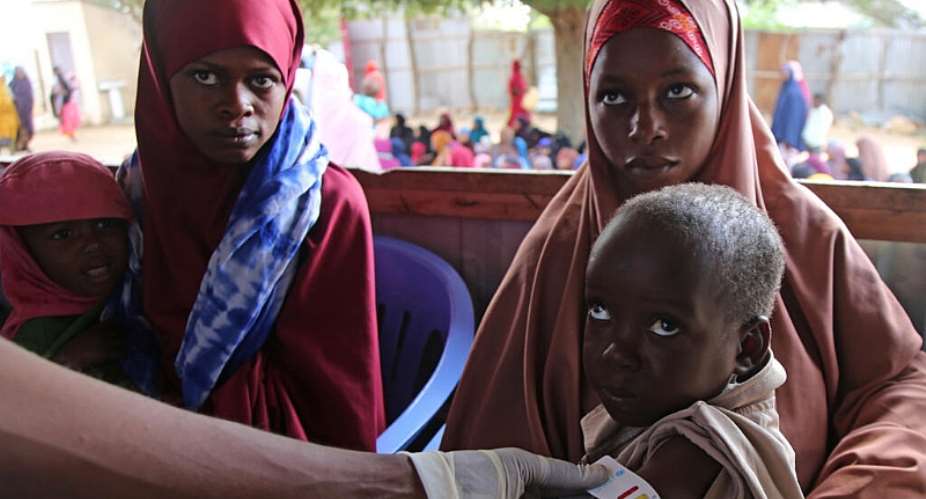
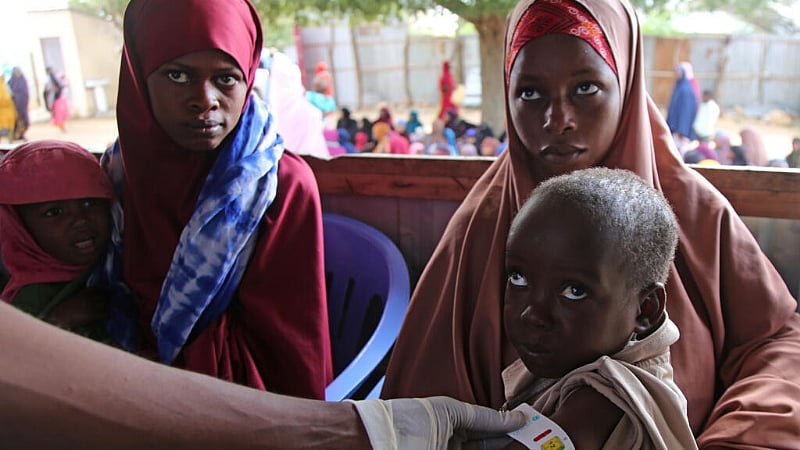
A health worker measures a Somali baby for malnutrition at Feynuus Nutrition Centre on the outskirts of Mogadishu in August, 2026. – © Farah Abdi Warsameh / AP Photo
The World Food Programme (WFP), the UN agency providing food assistance, said around one third of Somalia’s population is now facing acute hunger, with nearly two million children expected to suffer from acute malnutrition this year.
“Those are not abstract figures: they are families exhausting every option they have left to survive,” the WFP said.
More than 200,000 people were displaced during the second quarter of 2026 as the country faced severe drought. Poor rainfall over several seasons has led to water shortages, crop failures and livestock losses.
Higher fuel and food prices, made worse by the conflict in the Middle East, have added to the pressure.
Somalia is also facing an insurgency by the Islamist al-Shabaab group and localised armed clashes.
Fears mount over resurgence of Al-Shabaab jihadists in Somalia
‘Extreme’ food shortages
The situation is particularly difficult in camps for displaced people in Baidoa, in the south-west of the country, where medical charity Doctors Without Borders (MSF) is working.
MSF said one in two children in the camps was suffering from acute malnutrition, while one in four had severe acute malnutrition. One third of families are surviving on just one meal a day, MSF said.
The charity is also concerned about a lack of funding to respond to the crisis.
More than 80 percent of the number of patients admitted to its nutrition programme last year had already been admitted by this point in 2026, said MSF health adviser Mitchell Sangma.
“What is worrying is not only the numbers, but also the severity of these cases. These are very sick children, suffering from many medical complications,” he told RFI.
“They arrive at a very advanced stage after having gone hungry for many months, and we are now seeing the consequences of the extreme food shortage.”
Many are also suffering from epidemic diseases such as measles and diphtheria, he said.
Under the same sky, climate change brings drought to Somalia and floods to Kenya
Long queues for food and water
children treated in hospital are often readmitted after returning to camps where they have insufficient food and no access to safe drinking water, Sangma noted.
“Many are suffering from epidemic diseases, such as measles or diphtheria, which is very worrying. We receive these children, we treat them in our hospitals, we allow them to leave, but they end up being readmitted because they return to the same environment where they do not have access to enough food or safe drinking water,” he said.
“It’s very visible when you walk through the camps early in the morning. We see long lines of people with jerry cans waiting to receive water. Long lines of patients are waiting outside mobile clinics for their children to be treated. We are trying to sound the alarm about what we are seeing on the ground before it is too late.” Health workers talk to a woman with her malnourished baby at Bay Hospital in Baidoa, Somalia, 4 August, 2026.
Funding shortages
Humanitarian aid is struggling to meet the needs as international funding falls.
The Integrated Food Security Phase Classification (IPC), the global system used to measure hunger, estimated in May that food assistance was reaching just 12 percent of the six million people facing acute food insecurity.
More than 200 health and nutrition centres have closed, the United Nations Children’s Fund (Unicef) said, describing the budget cuts as “unprecedented”.
At the same time, the El Nino climate pattern, which is expected to be strong, threatens to bring very heavy rainfall to Somalia towards the end of the year, increasing the risk of flooding.
This article was adapted from the original in French and has been lightly edited for clarity.

RFI
All the news from France, Europe, Africa and the rest of the world.Page: rfi

Top Stories




Originally published on www.modernghana.com
