

August 4, 2026
Operationalising Ghana’s Value for Money Office: Institutional Design Choices That Will Determine Whether It Works
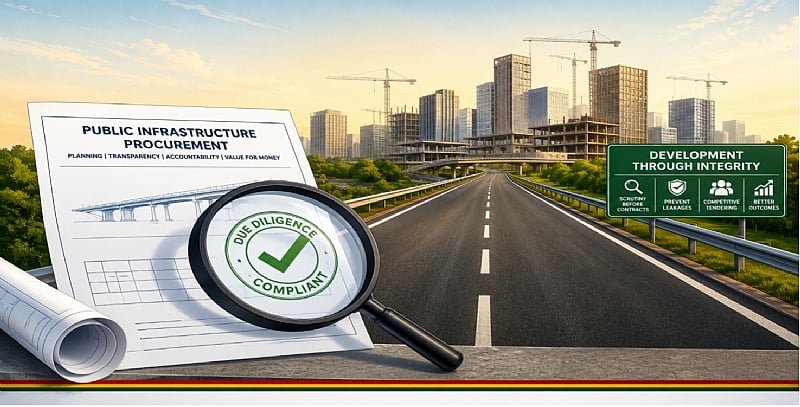


Operationalising Ghana’s Value for Money Office: Institutional Design Choices That Will Determine Whether It Works
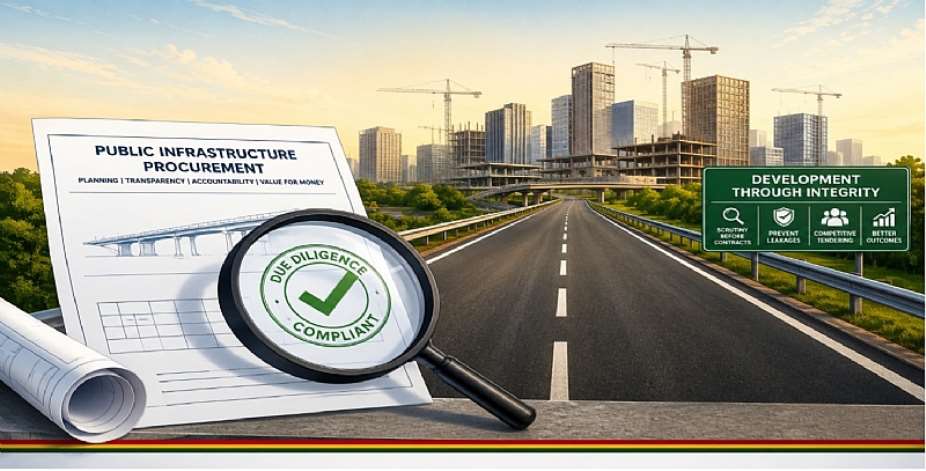
By the third week of July 2026, Ghana’s Ministry of Finance had moved US$1.7 billion into a ring-fenced account at the Bank of Ghana, held for one purpose: paying for the Accra-Kumasi Expressway once a construction contract is signed. It is the kind of figure that should make every Ghanaian ask a simple question. Is this the right project, at the right price, built the right way? That question is exactly what Ghana’s newest public institution, the Value for Money Office, was created to answer. The problem is that it cannot yet answer anything, because it does not yet have a staff.
Parliament passed the Value for Money Office Bill in March 2026, despite Minority objections, and President John Dramani Mahama signed it into law on 11 May. The 2026 Mid-Year Fiscal Policy Review then set the real target: full operation by end-June 2027. That gap, between a law that exists on paper and an institution that works in practice, is the whole story. What Parliament decides in the coming months, and what Government does before that deadline, will determine whether the Office becomes a genuine safeguard for public money or another well-meaning name on an already crowded accountability chart.
“Is this the right project, at the right price, built the right way? That is exactly the question Ghana’s newest institution was created to answer.”
Why the Office matters now
The Value for Money Office is part of a wider fiscal clean-up. Government reports that primary expenditure fell from 18.7 percent of GDP in 2024 to 13.2 percent in 2025, while the budget swung from a deficit to a 2.5 percent surplus. Much of that improvement comes from Commitment Authorisation, which stops procurement commitments running ahead of approved budgets, a new Fiscal Council, and a legal requirement for a minimum primary surplus and a falling debt ceiling.
These reforms all check whether spending has been approved. None of them checks whether the spending was worth approving in the first place. Ghana has spent two decades building roads, hospitals and schools whose final costs and completion dates rarely matched the original business case. Presenting the Bill, Finance Minister Dr Cassiel Ato Forson said the Office would “institutionalise a comprehensive value-for-money framework” to close exactly that gap.
“These reforms all check whether spending has been approved. None of them checks whether the spending was worth approving in the first place.”
What the law asks the Office to do
Deputy Finance Minister Thomas Nyarko Ampem summed up the Office’s core job better than any amount of surrounding language: it must ensure “life cycle costing, technical soundness and post-contract verification” for major public contracts, something the Public Procurement Authority was never designed to provide. It will issue Value for Money Certificates and work with the Auditor-General, the Procurement Authority and the Internal Audit Agency on sanctions for waste and fraud.
Even the timeline has already slipped. At the signing ceremony, the Minister promised the Office would be fully operational by January 2027. Six weeks later, the Mid-Year Review pushed that back to end-June 2027. Whether this reflects a more honest assessment of how long it takes to build a technical institution, or an early sign of the delay that has affected other Ghanaian agencies, is a question worth asking now, not after the fact.
The biggest institutional challenges
Institutions rarely fail because their mandate is wrong. They fail because of quieter choices: who appoints the board, how the office is funded, and what happens when it disagrees with a powerful ministry.
The Office has real legal standing, a full Act of Parliament with 67 clauses, not a mere Cabinet directive. The weakness lies in its governance. Minority Leader Alexander Afenyo-Markin has argued that the board is “dominated by partisan political appointees” and reports directly to the finance minister, the very office it is meant to scrutinise. Independent legal commentary has made a similar point on more technical grounds: the Act sets no fixed board terms, no clear removal process, and no direct reporting line to Parliament. Left unaddressed, the Office risks becoming, in Afenyo-Markin’s words, “the shield behind which the next generation of procurement scandals is defended.”
“The Office risks becoming the shield behind which the next generation of procurement scandals is defended,” Alexander Afenyo-Markin, Minority Leader
Staffing is just as important. Judging whether a road or hospital represents value for money needs quantity surveyors, engineers, procurement specialists and economists working together, not financial analysts alone. Funding matters too: an office that depends on annual budget approval from the ministries it appraises has an obvious weakness. Ring-fenced, statutorily protected funding would remove that pressure. Finally, an Office that reports only to the Minister, with no duty to publish its findings or report to Parliament, will function as an internal advisory unit rather than a public watchdog.
There is also a real risk of overlapping with existing institutions. The Ghana Institute of Procurement and Supply (GIPS) petitioned Parliament’s Finance Committee in March 2026, arguing that the new Act’s objectives “overlap significantly” with the Procurement Authority’s existing mandate. The Finance Committee acknowledged the risk and recommended clear statutory boundaries. In principle, the distinction is simple: the Auditor-General checks what already happened, the Procurement Authority checks how contracts are awarded, and the Value for Money Office checks a project’s merits before money is committed. That boundary needs to be written into law, not assumed.
The Big Push Programme: where the stakes turn real
These design questions stop being abstract once you look at what Ghana is actually building. The Big Push Infrastructure Programme now covers 87 projects across all sixteen regions, with 13 already past the halfway mark. Its flagship, the Accra-Kumasi Expressway, is meant to cut travel time between Ghana’s two largest cities to roughly two hours. Procurement for the main construction contract is expected to begin in September 2026. If the Value for Money Office is not staffed and functioning by then, and current timelines suggest it will not be, the country’s largest live capital project will proceed without the appraisal the Act exists to provide. The Dambai Bridge, at only 6 percent physical progress, is a reminder that early-stage projects are exactly where appraisal discipline is cheapest to apply and most costly to skip.
“If the Office is not staffed and functioning by September, the country’s largest live capital project will proceed without the appraisal the Act exists to provide.”
Lessons from other countries
Ghana is not inventing this idea. The United Kingdom’s National Audit Office draws its credibility from sitting inside Parliament’s own architecture: its head is an Officer of the House of Commons, appointed and removed only by Parliament, not the executive. Ghana’s Office has no equivalent anchor, a gap local legal commentators have flagged as its most serious design weakness. South Africa’s Office of the Chief Procurement Officer shows a similar problem: it works when political backing is strong and struggles when it weakens, because it too sits inside the finance ministry rather than at arm’s length from it. Kenya’s experience teaches a narrower but equally important lesson: good design on paper means little without adequate funding and professional protection for staff. None of these models transplants neatly into Ghana, but the underlying lesson holds everywhere: appraisal must happen before contracts are signed, and independence must be built into the founding law, not promised afterward.
Implementation risks worth naming honestly
None of this is an argument against the Office. It is an argument for taking its implementation as seriously as government takes its fiscal rules. The independence deficit is the clearest risk, raised by the Minority Leader and legal commentators alike. Duplication with the Procurement Authority is a close second, now a documented concern rather than a hypothetical one. Underfunding and thin technical capacity threaten to leave the Office unable to match the scale of the projects it must appraise. Data quality is a quieter risk: reliable appraisal depends on the GIFMIS-GHANEPS integration Government has promised to extend to all spending units by June 2027. If that slips, the Office will work with incomplete information no matter how well it is designed. Finally, an Office that tries to certify every contract, rather than focusing on major capital projects above a clear threshold, will drown in volume before it proves it can do the job well.
What should happen now?
Government should publish a staffing roadmap with named milestones the country can track against both the January and June 2027 dates in circulation. Parliament should treat the independence and duplication concerns raised by the Minority Leader and by GIPS as unfinished business, and amend the Act on board terms, removal procedures and direct reporting to the House. The Procurement Authority and the Value for Money Office should jointly publish where one institution’s authority ends, and the other’s begins. State-owned enterprises now being reclassified should fall within the Office’s remit from the start, and ministries such as Roads and Highways should treat it as a partner in getting appraisals right early, not a hurdle to manage late. Professional bodies, universities and the media all have a role in holding the Office to the independence standard its own critics have described.
Success by 2027 should be measured honestly. The first test is procedural: has a Head of Office been appointed, has a technical team been recruited, and has the independence gap been closed through amendment rather than left to goodwill? Beyond that, Dr Forson has already offered a number worth tracking: a projection that the Office could cut contract waste by 10 to 15 percent within five years, saving roughly GH¢3 billion a year. That figure may prove optimistic, but it gives Parliament, journalists and researchers something concrete to measure against from 2028 onward.
Conclusion
Ghana has rebuilt several pieces of its fiscal architecture in a short space of time: a binding fiscal rule, Commitment Authorisation, a working Fiscal Council, and now a Value for Money Office backed by its own Act of Parliament. That is real progress, and it deserves recognition rather than reflexive cynicism.
“Passing a law was the easy part. Making the Office independent, funded and free of the ministry it is meant to scrutinise is the part Ghana has not yet finished.”
But passing a law was the easy part. What will decide whether this Office becomes a credible, independent institution, rather than another name added to an already crowded accountability chart, is whether its independence is fixed before it is tested, whether its boundary with the Procurement Authority is written down rather than assumed, and whether its findings ever see daylight. The Accra-Kumasi Expressway’s tendering process begins within weeks. The country’s newest watchdog needs to be ready to test whether that project, and the billions already set aside for it, truly represent value for money, before the contract is signed, not after.
Author Bio
Dr. Emmanuel Norgah Bukari is a Lecturer in Procurement and Supply Chain Management at KAAF University’s Faculty of Business Administration and Chief Quantity Surveyor at Ghana’s Ministry of Roads and Highways’ Procurement Directorate. A Chartered Procurement professional (MCIPS) and, he researches value for money and procurement governance across Ghana’s public infrastructure sector.

Surv. Dr. Emmanuel Norgah Bukari, © 2026
About the Author
Surv. Dr. Emmanuel Norgah Bukari is Chief Quantity Surveyor at Ghana’s Ministry of Roads and Highways. Correspondence: [email protected] Column: Surv. Dr. Emmanuel Norgah Bukari
Disclaimer: “The views expressed in this article are the author’s own and do not necessarily reflect ModernGhana official position. ModernGhana will not be responsible or liable for any inaccurate or incorrect statements in the contributions or columns here.”
Follow our WhatsApp channel for meaningful stories picked for your day.

Top Stories


8 hours ago

Originally published on www.modernghana.com
