

August 28, 2026
Only 27% of Ghana’s roads paved – World Bank


Only 27% of Ghana’s roads paved – World Bank
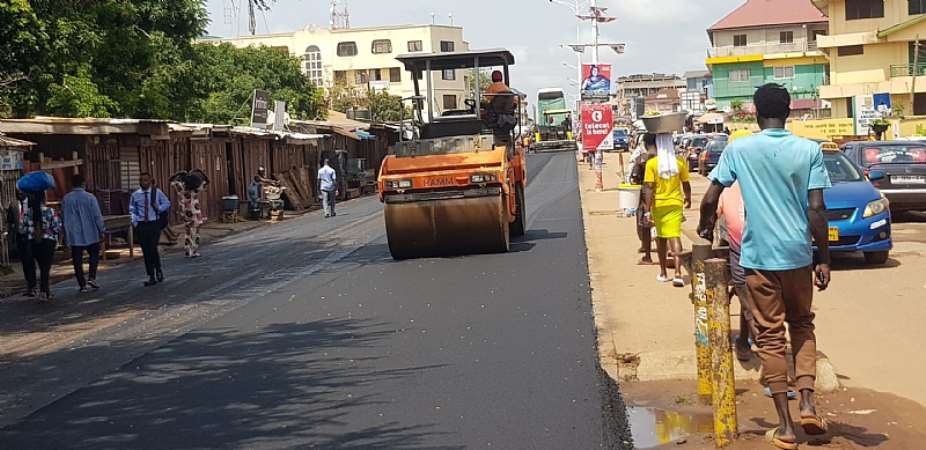
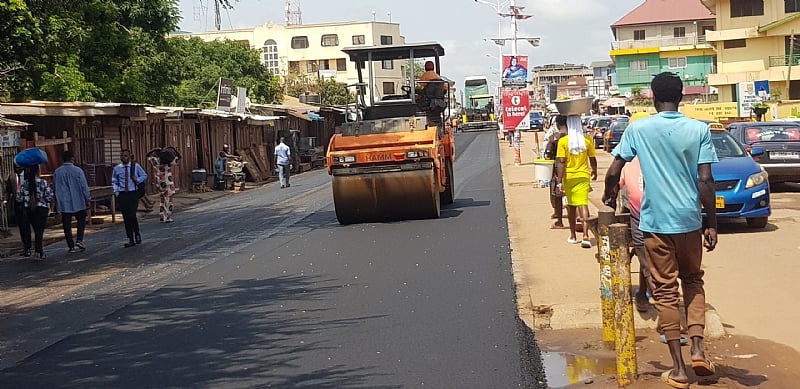
Almost 27 per cent of Ghana’s 94,200 kilometres road network is paved with more than half in ‘fair-to-poor condition,’ as road accidents cost the country approximately US$4.55 billion annually, the World Bank says.
The country’s rail network has also reduced from 947 kilometres of operational rail in 1960 to about 160 by 2020, with population access dropping from nearly 30 per cent to less than one per cent.
The World Bank disclosed this in the Ghana 10th Economic Update, launched on Wednesday in Accra, on the theme: “Reset for Growth: Sustaining macroeconomic recovery and unlocking transport for transformation.”
The Bank explained that the physical gaps in the transport sector has been compounded by fragmented institutional responsibility that hindered an effective coordination in planning and execution of programmes.
“The economic cost is staggering, road safety incidents alone cost an estimated 2.1 per cent of Gross Domestic Product (GDP) annually – roughly US$4.55 billion – more than the entire national education budget,” said Dr Robert Taliercio O’Brien, World Bank Division Director for Ghana, Liberia, and Sierra Leone.
Meanwhile, the Bank, in May 2026, provided US$500m support to the Government through the Ghana Market Access and Connectivity Project, aimed at rehabilitating about 1,050 kilometres of feeder roads under performance-based maintenance contracts.
“This is not just an infrastructure story – it is a growth story, a competitiveness story, a jobs story,” the World Bank Division Director said, identifying six priority pillars for the sector’s transformation.
They are operationalising the Road Maintenance Trust, developing a unified national transport sector strategy, and pursuing value revitalisation on the western and eastern rail corridors.
Other reforms include treating road safety as a public health emergency to curb fatalities, embedding climate-resilient design standards in all new projects, and deploying a digital single window to streamline permits, inspections and logistics efficiently.
Dr O’Brien described Ghana’s Big Push programme as a “significant ambition” that the Bank endorsed, pledging its continued partnership with the government to address challenges in the sector.
“The returns will only materialise if reforms in maintenance financing, institutional coordination, and governance are implemented alongside the capital investment,” the World Bank Division Director said.
Finance Minister Dr Cassiel Ato Forson, in his speech, read by Mr Samuel Arkhurst, the Ministry’s Coordinating Director, said the government had recognised the challenge and investing towards bridging the infrastructure gap.
While the country had achieved economic gains in recent years, it was only a foundation as it worked towards translating growth into jobs and investment in communities that have waited longest, he said.
“This is precisely the thinking behind our Big Push Infrastructure Programme, the largest coordinated investment in strategic transport infrastructure that Ghana has undertaken in recent years,” Dr Forson said.
He said by the end of June 2026, projects were already underway in all 16 regions of the country, with 13 at least halfway completed and six more than three-quarters done.
He stated that the 176km-six-lane Accra-Kumasi Expressway has 122km of right-of-way cleared, with feasibility and engineering designs due by end-August, while construction procurement was scheduled for September to accelerate delivery.
He also mentioned progress on the Adawso-Ekye Amanfrom Bridge over the Afram River and Dambai Bridge along the Eastern Corridor, two projects that addressed connectivity gaps, which had held back communities for decades.
The Minister said the World Bank’s US$500m feeder roads rehabilitation across 13 regions would cut travel times by 40 per cent, lower transport costs and post-harvest losses, and create 25,000 jobs, including 7,500 for women.
“When a farmer in the Afram Plains or along the Northern Corridor can get her produce to market without losing a third of it to a damaged road, that is not just an infrastructure achievement. It is a food security story, an income story, and a story about who gets to share in growth,” he added, while expressing appreciation for the Bank’s assistance.
GNA
Top Stories


4 hours ago

Originally published on www.modernghana.com
