

July 7, 2026
Legacy Under Siege: Ghana’s Sacred Kapok Trees Must Be Defended


Tue, 07 Jul 2026 Feature Article
Legacy Under Siege: Ghana’s Sacred Kapok Trees Must Be Defended
“Crime Has No Expiry Date, Heritage Has No Substitute”
A Case of Malicious Premeditation and Impunity
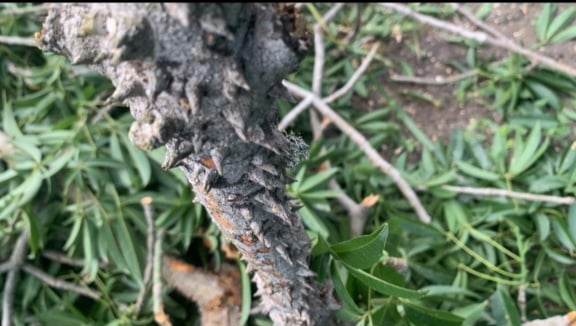
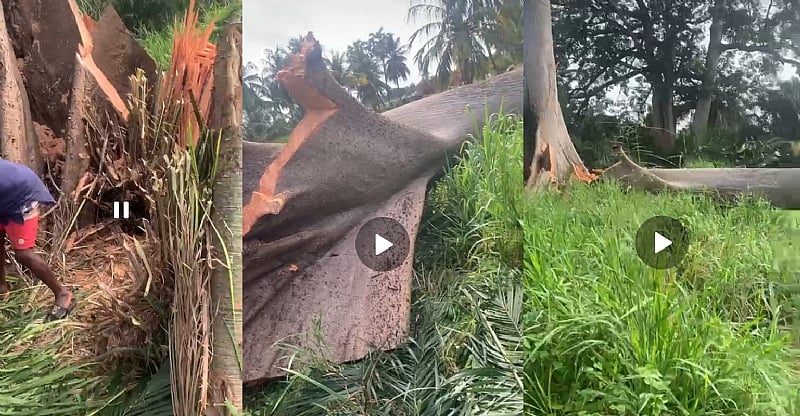
In Tegbi-Kpota, three towering, 200‑year‑old Kapok trees (Ceiba pentandra) have stood for generations as guardians of memory, ecology, and community spirituality. Today, only three remain standing. One has already fallen—not to the natural elements of storm or decay, but to the reckless axe of human ambition.
This is not a sudden mistake or an accidental oversight. It is a case of cold, calculated premeditation. Mr. Bright Oneal Fiagbey, a wealthy developer, has demonstrated a persistent, multi-year intent to destroy this heritage site at all costs. Family and community records reveal that this is his second attempt; he was explicitly stopped from felling these same trees two to three years ago. Biding his time, he returned with a clear, defiant agenda to strip these sacred trees for timber for his private mansion.
Acting with absolute impunity, he proceeded under the assumption that personal wealth can override heritage, law, and community boundaries. Compounding this destruction, the developer allegedly sought environmental or logging permits under deceptive descriptions, deliberately misleading public officials about the true heritage value and sacred status of the target site. This fraudulent deception of state regulators demands an immediate, transparent criminal and administrative investigation.
As the famous African proverb reminds us: “When the last tree dies, the last man dies.” Similarly, Scripture warns in Deuteronomy 20:19: “For the tree of the field is man’s life.” This is no longer a private land dispute; it is a full-blown national crisis of heritage defense.
The Chronology of Destruction and Legal Escalation
The threat to the remaining grove at Tegbi-Kpota is immediate, systemic, and fully documented. The timeline of events establishes that the developer acted with clear prior intent and that the affected community and family completely exhausted all peaceful avenues before involving state authorities:
- A History of Premeditated Trespass: Local records confirm this is a repeat offense. The developer attempted to fell these exact same heritage trees two to three years ago but was successfully challenged and stopped by family and vigilant local stakeholders. His recent actions prove a calculated, long-term intent to destroy the grove at all costs, regardless of prior warnings or community boundaries.
- The Unlawful Felling: Having bided his time, Mr. Bright Oneal Fiagbey returned to execute his plans, successfully cutting down the first ancient, protected Kapok tree to secure construction timber.
- The Greater Looming Threat: Following this destruction, the developer openly and aggressively declared his unwavering intent to fell the remaining trees, completely disregarding traditional taboos, ecological risks, and direct communal pushback.
- Administrative Deception: In order to bypass local resistance, permits were requested under highly misleading descriptions, deliberately misrepresenting the ecological and sacred nature of the site to regulatory officers who were kept in the dark.
- The Continuous Search for Peace: Demonstrating immense good faith despite this history of harassment, the local family and community leaders initially pursued an amicable resolution. They sent formal communications and offered clear avenues for dialogue and reconciliation to resolve the matter peacefully.
- State Intervention and Interception: Following the failure of internal dialogue, a Forestry Commission officer fortunately chanced upon the active cutting site, immediately ordered operations to halt, and lawfully seized the logging crew’s chainsaw machine. Official criminal and regulatory reports have now been filed with the Sogakope Police Service and the Forestry Commission Office.
- Formal Engagement of Legal Counsel: Following these formal state interventions, Mr. Fiagbey acknowledged the legal nature of the dispute in writing on July 7, 2026. He has officially referred the family to his designated legal counsel, E.A. Vordoagu, Esq. (Abelemkpe, Accra), stating his commitment to an amicable settlement and due process through law enforcement and the courts. The family and the local community welcome this formal step and intend to hold his team strictly accountable under the full weight of statutory law and public visibility.
The Anatomy of Accountability: Legal Implications and Liability
The interception of the logging crew raises critical legal questions under Ghanaian environmental and criminal law that state prosecutors must aggressively pursue:
1. Confiscation of Equipment and the Chainsaw Operator’s Complicity
Under Ghanaian forest protection laws, the seized chainsaw must not be released back to the developer or the operators under any circumstances outside of a formal court order. The machine is material evidence of a crime. Furthermore, the chainsaw operator cannot escape liability by claiming they were “only following orders” from a wealthy employer. Under the law, any individual who physically operates machinery to unlawfully fell timber is fully complicit as a principal offender or co-conspirator in malicious damage and environmental degradation.
2. The Permit Fraud: Who Faces the Law?
The law is clear: both the applicant and the issuing officer must face full legal accountability.
- The Applicant (Mr. Fiagbey): Fraud vitiates consent. Obtaining a regulatory permit through deceptive descriptions and deliberate misrepresentation of a sacred site constitutes fraud against the state, rendering the permit legally null and void. The evidence of his prior failed attempt two to three years ago establishes a clear pattern of criminal intent and knowledge that the site was protected.
- The Issuing Forestry Officer: Public officials owe a strict fiduciary and statutory duty to fact-check, conduct field inspections, and verify site details before signing off on logging rights. If the officer failed to inspect the site, they are guilty of gross administrative negligence and dereliction of duty. Under Ghanaian law, a public officer cannot feign ignorance. Ignorance is no defense for a regulator whose very mandate is to know and verify what they are licensing.
The Pillars of Value: Why These Trees Matter
1. Ecological Guardians
- Carbon Sequestration: The massive biomass of these 200-year-old trees sequesters significant amounts of carbon, acting as localized buffers against climate change.
- Biodiversity Havens: The canopy provides critical nesting grounds and habitats for local bird populations, bats, and beneficial insect species.
- Hydrological Stability: Deep root systems stabilize the local water table and secure topsoil, protecting Tegbi-Kpota from severe seasonal flooding.
2. Cultural and Spiritual Sanctuaries
- Ancestral Portals: In Ghanaian traditional cosmology, ancient Kapok trees serve as revered shrines and gateways connecting the living to ancestral memory.
- Civic Spaces: The grove serves as a historical town square for storytelling, the performance of traditional libations, and customary elders’ councils.
- Living History: These trees are physical monuments connecting the pre-colonial history of the region directly to modern generations.
3. Economic and Local Assets
- Sustainable Tourism: The grove possesses significant potential for eco-tourism and cultural heritage tourism, bringing revenue to the district.
- Cottage Industry: The seasonal harvest of natural kapok fiber supports local pillow, mattress, and textile artisans.
- Traditional Medicine: The bark, leaves, and roots of Ceiba pentandra provide vital ingredients for indigenous healthcare and local pharmacopeia.
4. Constitutional and Statutory Protections
- The Timber Resources Act: Commercial exploitation or destruction of heritage timber without proper, transparent allocation is strictly restricted under the Timber Resources Management Act (Act 547).
- Constitutional Rights: Protection of community property and cultural environments is anchored in Article 18 and the Directive Principles of State Policy of the 1992 Constitution of Ghana.
- Judicial Precedent: Ghanaian courts hold clear precedents awarding substantial punitive damages against individuals who destroy trees of economic or cultural significance without lawful authority.
Urgent Call to Action: Defending the Surviving Grove
The destruction of the first Kapok tree is an urgent environmental warning. The survival of the remaining two trees hangs in a precarious balance. To prevent further irreversible loss, local community members, environmental activists, and the general public must unite immediately to monitor the site. Any suspicious activity or heavy machinery near the grove must be reported to the Sogakope Police and the Forestry Commission.
State authorities must act swiftly on the formal complaints already filed. The state must issue immediate restraining orders, establish a permanent protection perimeter around the Tegbi-Kpota grove, and enforce strict legal sanctions against any further encroachment. Safeguarding these remaining living monuments is a vital national duty to preserve Ghana’s natural heritage before it is lost forever.
Stakeholder Mandates
- The Forestry Commission: Must permanently freeze any fraudulent permits tied to the developer, prosecute the complicit internal officer, refuse the release of the impounded equipment, and issue an absolute protection order for the remaining trees.
- The Ghana Police Service (Sogakope District): Must swiftly investigate the destruction under criminal trespass, malicious damage to property, and fraud, using the written evidence of his prior attempt to prove long-term criminal intent.
- The Ministry of Lands and Natural Resources: Should intervene to declare these specific 200-year-old giants as protected national heritage assets.
- The Ministry of Tourism, Arts, and Culture: Needs to document and integrate the sacred groves of Volta Region into the national register of cultural tourism sites to grant them administrative immunity.
- The Environmental Protection Agency (EPA): Must step in to evaluate the localized ecological damage caused by the felling and assess risks to the local water table.
- Traditional Authorities and the Local Council: Must enforce customary sanctions, fine perpetrators under traditional law, and withdraw local recognition from developers who disrespect indigenous taboos.
- Civil Society Organizations (CSOs) & NGOs: Must amplify this case internationally, provide legal aid to the community, and sponsor local reforestation initiatives.
One Kapok tree has already fallen.Three remain standing as the final guardians of memory and ecology in Tegbi-Kpota. If citizens and regulators fail to act today, future generations will inherit nothing but barren stumps and bittersweet stories.
As the historic church hymn reminds us: “O God, our help in ages past, our hope for years to come, be Thou our guard while troubles last, and our eternal home.”
Crime has no expiry date. Heritage has no substitute. Justice delayed is heritage denied. Let all stakeholders—from state ministries to local youth—move immediately into defensive action. The survival of these sacred trees is no longer a private family grievance; it is a profound national duty.
By Atitso Akpalu / Family Representative
✍️ Retired Senior Citizen
For and on behalf of all Senior Citizens of the Republic of Ghana 🇬🇭
Teshie‑Nungua
[email protected]
Appendix:
Statutory Citations and Legal Framework
This appendix outlines the clear legal baseline establishing why the activities at Tegbi-Kpota constitute serious statutory and administrative violations under the Timber Resources Management Act, 1997 (Act 547) and its subsequent frameworks:
1. Statutory Prohibition of Unlicensed Harvesting
- Act 547, Section 1 (Prohibition from Harvesting Timber Without Timber Utilisation Contract): Explicitly mandates that no person shall harvest timber from any land unless they hold valid timber rights granted via a Timber Utilisation Contract (TUC). Private property development does not automatically grant logging rights for heritage or commercial-grade timber.
- Act 547, Section 4 (Land Subject to Timber Rights): Outlines lands where timber rights can be evaluated and distributed. It explicitly protects community-held lands and lands containing farms or sacred areas from being logged without express, transparent, written consent.
2. Fraudulent Permit Allocation and Official Liability
- Act 547, Section 5 & 6 (Evaluation Committee Mandates): Requires a comprehensive evaluation of applications prior to any ministerial grant. Regulatory failure by an officer to inspect the physical site constitutes a direct breach of these vetting mandates.
- Act 547, Section 6B (Disqualification for Involvement in Illegal Timber Operations): Disqualifies any actor engaged in illegal harvesting, misrepresentation, or cutting outside lawful parameters from holding or exercising timber rights.
- Administrative Law Principle (Fraud Vitiates Everything): Deceiving public officials by using false land descriptions or omitting the heritage identity of the trees invalidates any permit obtained. It exposes the applicant to prosecution for fraud against the state.
3. Equipment Confiscation and Operator Liability
- Act 547, Section 17 (Offences and Penalties): Establishes criminal penalties, heavy fines, and prison terms for individuals who unlawfully harvest timber, assist in harvesting, or operate unauthorized machinery on protected property.
- Act 547, Section 18(g) & Regulatory Frameworks: Empowers forest officers and state law enforcement agencies to immediately seize and impound any equipment, vehicles, or chainsaw machinery used in committing a logging offence. Equipment remains under state custody as material evidence for court proceedings.

Atitso Akpalu, © 2026
A Voice for Accountability and Reform in Governance. More Atitso Akpalu is a prominent Ghanaian columnist known for his incisive analysis of political and economic issues. With a focus on transparency, accountability, and reform, Akpalu has been a vocal critic of mismanagement and corruption in Ghana’s governance. His writings often highlight the need for decentralization, local governance empowerment, and robust anti-corruption measures. Akpalu’s work aims to foster a more equitable and just society, advocating for policies that benefit all Ghanaians.
He is a passionate advocate for transparency and accountability. His columns focus on critical analysis of political and economic issues, with a particular interest in the energy sector, financial services, and environmental sustainability. He believes in the power of informed citizenry to drive positive change and am committed to highlighting the challenges and opportunities facing Ghana today.Column: Atitso Akpalu
Disclaimer: “The views expressed in this article are the author’s own and do not necessarily reflect ModernGhana official position. ModernGhana will not be responsible or liable for any inaccurate or incorrect statements in the contributions or columns here.”
Follow our WhatsApp channel for meaningful stories picked for your day.

Top Stories

56 minutes ago


<!–
–>
Originally published on www.modernghana.com
