

August 21, 2026
Ghana’s Gold, Ghana’s Choice: The Story The US$1.7 Billion Headline Does Not Tell
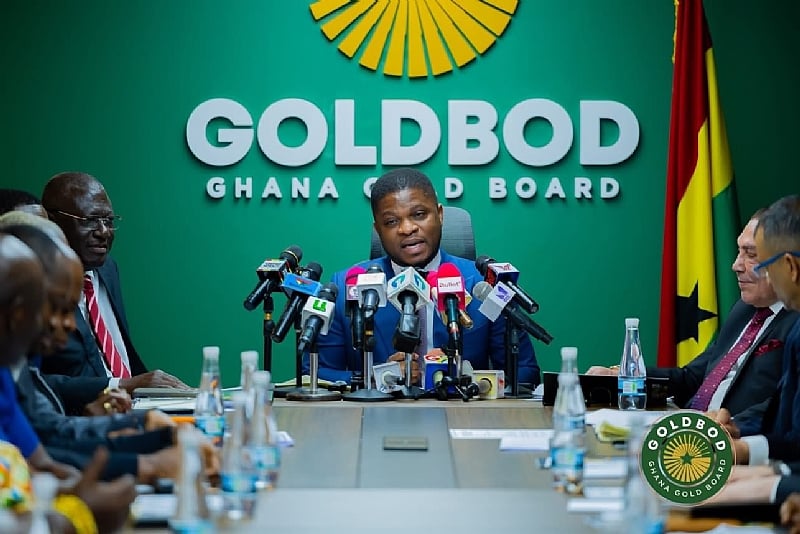


Ghana’s Gold, Ghana’s Choice: The Story The US$1.7 Billion Headline Does Not Tell
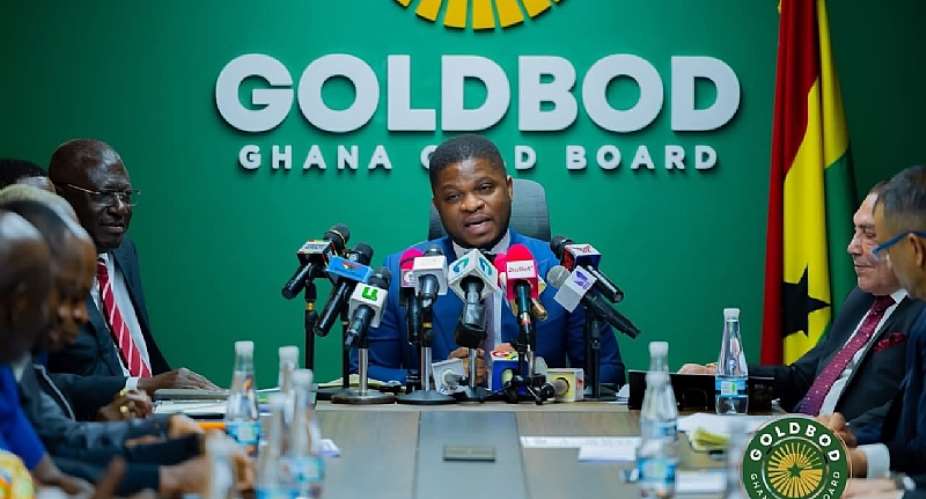
I have followed the controversy surrounding the assessment of Ghana’s Domestic Gold Purchase Programme and the headline figure being described as losses arising from the programme.
Let me state from the outset that I am not dismissing concerns about the cost of the programme. Every dollar belonging to Ghana matters, and every public institution must account for the resources entrusted to it.
But I refuse to accept the proposition that an IMF accounting assessment must automatically become the final word on whether a sovereign Ghanaian policy has succeeded or failed.
We must tell the Ghanaian story too.
And that story cannot begin and end with US$1.7 billion.
WHAT EXACTLY DID GHANA BUY WITH THIS “LOSS”?
That, for me, is the question missing from much of the political conversation.
If Ghana spends money implementing a strategic policy and, as a consequence, strengthens its reserves, brings billions of dollars of previously fragmented gold exports into formal channels, improves foreign-exchange availability and gives the central bank greater capacity to defend the economy, can we simply isolate the implementation cost and scream “LOSS!”?
Economics cannot be reduced to one line on a balance sheet.
Governments routinely incur costs to achieve strategic national objectives.
Countries spend billions subsidising agriculture to guarantee food security.
They spend billions supporting energy to protect industries and households.
Central banks deploy enormous resources defending currencies and financial systems.
Governments subsidise transportation, healthcare and strategic industries because the wider economic and social returns cannot always be captured by asking whether the particular intervention itself made an accounting profit.
So Ghana must ask a more intelligent question:
What did this programme cost us, and what did Ghana receive in return?
NOW LOOK AT WHAT HAPPENED TO GHANA
At the end of 2025, Ghana’s gross international reserves had climbed to approximately US$13.8 billion.
Gold export earnings reached approximately US$20 billion in 2025, almost double the US$10.3 billion recorded in 2024.
Inflation, which had been 23.8% at the beginning of 2025, fell to 5.4% by December. By July 2026, it stood at 4.6%.
The cedi, which ended 2024 at around GH¢14.70 to the dollar on the Bank of Ghana interbank measure, ended 2025 at approximately GH¢10.45.
Nobody should dishonestly claim that GoldBod alone produced all these outcomes. Fiscal discipline, monetary policy, commodity prices, confidence and several other factors contributed.
But equally, nobody should pretend that a programme designed specifically to mobilise Ghana’s gold, bring foreign exchange into the formal economy and strengthen our reserves had absolutely nothing to do with the dramatically improved external position of the country.
The facts simply do not support such a convenient political narrative.
AND HERE IS THE PART THAT MAKES THE ATTACK ON GOLDBOD EVEN MORE CURIOUS
GoldBod itself did not report a US$1.7 billion operational loss.
Its audited financial statements for 2025 reported an operational surplus of GH¢909.71 million.
Let that sink in.
The institution currently being treated in sections of our political discourse almost as though it squandered US$1.7 billion actually reported an operational surplus in its formative year.
So why has so much of the Minority’s campaign been directed personally at the Chief Executive of GoldBod?
Why the threats?
Why the personalised attacks?
Why has an issue concerning the Bank of Ghana’s Domestic Gold Purchase Programme suddenly been transformed into a prosecution of Sammy Gyamfi in the court of political opinion?
If the concern is genuinely about protecting the public purse, then let us interrogate the programme honestly.
But if the objective is political score-settling with someone the NPP regards as one of the formidable political actors who contributed to its crushing 2024 electoral defeat, then Ghanaians should recognise the difference.
THE OPPOSITION SHOULD GIVE US AN ALTERNATIVE, NOT A VILLAIN
This is where I find the Minority’s approach particularly disappointing.
You say the programme is costing Ghana too much.
Fine.
What is your alternative?
How would you aggregate small-scale gold?
How would you reduce smuggling?
How would you guarantee repatriation of the foreign exchange?
How would you build Ghana’s gold reserves?
How would you provide the foreign-exchange liquidity required by the economy?
How would you ensure that Ghana—not foreign intermediaries—captures greater value from one of its most important natural resources?
Tell us.
That is what a serious opposition does.
It does not merely identify a headline number, find a political opponent to attach it to and proceed with threats and character assassination.
Bring the superior policy.
If you can achieve the same or greater benefits at half the cost, show Ghana how.
If you have a better mechanism for mobilising our gold resources while strengthening the cedi and our reserves, put it before Parliament.
That would be a patriotic contribution.
AND LET US NOT PRETEND GHANA’S GOLD-PURCHASING HISTORY BEGAN IN 2025
This is another inconvenient fact.
The Domestic Gold Purchase Programme predates the current government and GoldBod.
Indeed, Bank of Ghana figures indicate losses of approximately GH¢74.44 million in 2022, GH¢1.553 billion in 2023 and GH¢4.068 billion in 2024, encompassing gold-for-oil transactions, reserve purchases and associated supply-chain costs.
So where was this newfound outrage then?
Where were the threats?
Where were the declarations that somebody must answer personally for every cedi?
This is not an invitation to equalisation. Two wrongs never make a right.
It is an invitation to consistency.
If we are genuinely interested in determining whether Ghana’s gold policy provides value for money, then examine the entire programme from its inception.
Don’t conveniently begin history from the day your political opponents took office.
THE IMF HAS A PERSPECTIVE. GHANA MUST HAVE ONE TOO.
There is another conversation Africans must eventually become confident enough to have.
International financial institutions assess policies through particular economic frameworks. Their analysis deserves consideration. Ghana works with these institutions and should listen carefully to legitimate concerns they raise.
But listening does not mean surrendering our sovereign capacity to think.
The IMF is not Ghana.
It does not own our gold.
It does not experience our economy exactly as the Ghanaian trader, farmer, importer, manufacturer or worker experiences it.
Its preferred accounting treatment of a policy cost cannot, by itself, determine the total economic value of that policy to Ghana.
We have spent decades exporting gold while periodically returning to international institutions because our foreign-exchange reserves were inadequate.
Perhaps it is time we became a little more courageous about using what lies beneath our own soil to strengthen what sits inside our central bank.
There will be mistakes.
There will be costs.
There will be inefficiencies that must be corrected.
But the answer cannot perpetually be retreat.
THIS IS ABOUT ECONOMIC SOVEREIGNTY
For generations, African countries have exported enormous quantities of natural resources while retaining far too little control over their value chains.
Gold leaves.
Oil leaves.
Cocoa leaves.
Diamonds leave.
And too often the countries from whose soil these resources originate remain exposed to foreign-exchange shortages, currency crises and external financial dependency.
GoldBod represents an attempt—however imperfect—to change part of that story.
It seeks to formalise the trade, bring more transactions under Ghanaian regulatory control, ensure foreign-exchange repatriation and give the state greater influence over a strategic national resource.
That objective is worth defending.
Not blindly.
Not without accountability.
But proudly.
YES, REDUCE THE COST
This is where government must now be uncompromising.
If Ghana can achieve these benefits for less, then every unnecessary dollar must be eliminated.
Review every fee.
Renegotiate every expensive arrangement.
Remove unnecessary intermediaries.
Improve the purchasing mechanism.
Strengthen auditing and parliamentary oversight.
Publish sufficient information for Ghanaians to assess the programme.
Close every loophole.
And if anybody has stolen Ghana’s money, prosecute that person.
But don’t destroy a strategic national programme simply because its first phase has been expensive.
Make it cheaper. Make it stronger. Make it Ghanaian.
That should be our response.
GHANAIANS SHOULD LOOK BEYOND THE POLITICAL NOISE
The Minority has every right to scrutinise government.
In fact, Ghana needs a strong opposition.
But opposition cannot mean waiting for every difficult number and converting it into a political weapon.
Ghanaians should ask themselves a simple question:
Is the Minority currently trying to improve the gold programme—or merely trying to destroy the people administering it?
Those are not the same thing.
I want to hear their alternative.
I want to see their calculations.
I want to know how they would secure the same foreign-exchange flows, reserve accumulation, formalisation and control of Ghana’s gold resources at substantially lower cost.
Until then, threats against individuals are not economic policy.
MY POSITION IS UNAMBIGUOUS
Protect the programme.
Protect Ghana’s control over its gold.
Protect the gains we have made.
But relentlessly attack the inefficiencies.
If US$1.7 billion represents the estimated economic cost, interrogate every cent of it. Find out why it occurred and make sure Ghana never pays that much again for the same outcome.
But also calculate the value of what Ghana received.
Calculate the reserves.
Calculate the foreign-exchange inflows.
Calculate the gold brought into the formal economy.
Calculate the effect of greater FX availability and stability on businesses and households.
Calculate what economic instability itself would have cost Ghana.
Only then can we honestly talk about the net cost or benefit to the Ghanaian people.
Ghana is Africa’s leading gold producer.
We cannot remain a country sitting on extraordinary mineral wealth while perpetually surrendering control over how that wealth supports our economy.
There will always be voices telling African countries that taking greater control of their resources is too risky, too expensive or contrary to somebody’s preferred economic model.
We should listen.
We should examine the evidence.
We should correct our mistakes.
But ultimately, Ghana must have the courage to make decisions in Ghana’s interest.
Our gold.
Our economy.
Our future.
And increasingly, our decision.

Nsiaba Nana Akwasi Kobi, © 2026
Political Commentator & Citizen AdvocateColumn: Nsiaba Nana Akwasi Kobi
Disclaimer: “The views expressed in this article are the author’s own and do not necessarily reflect ModernGhana official position. ModernGhana will not be responsible or liable for any inaccurate or incorrect statements in the contributions or columns here.”
Follow our WhatsApp channel for meaningful stories picked for your day.

Top Stories


16 hours ago

Originally published on www.modernghana.com
