

August 12, 2026
German Ambassador calls for integrated strategy to tackle climate-driven migration in Ghana
Advertisement
German Ambassador calls for integrated strategy to tackle climate-driven migration in Ghana
)
)
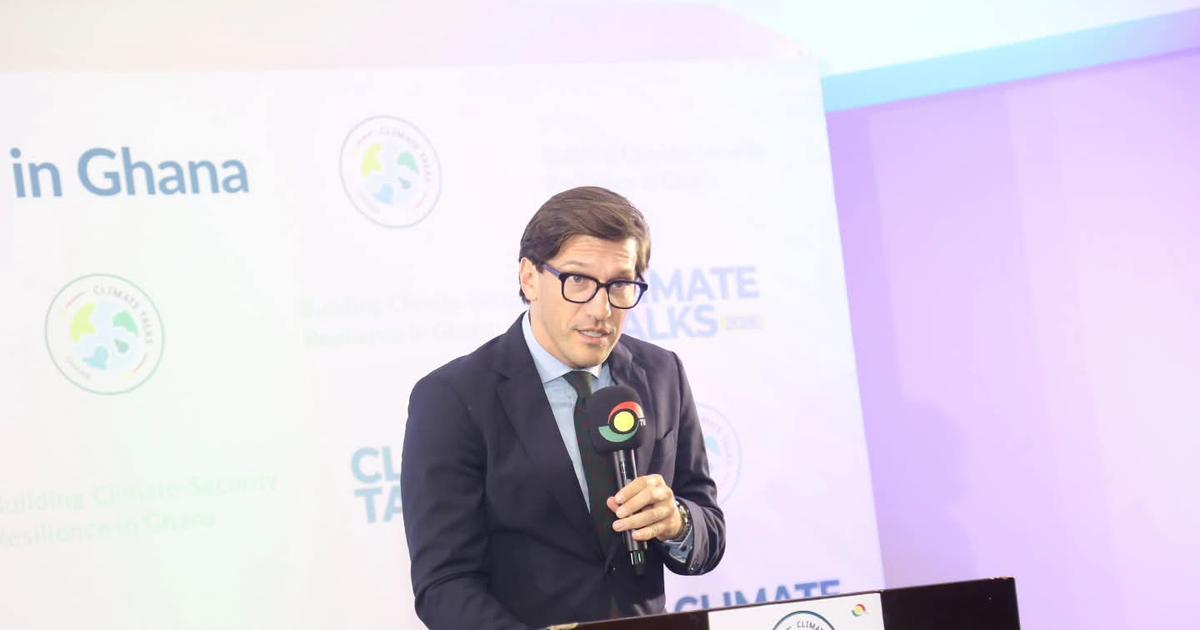
German Ambassador to Ghana, H.E. Frederik Landshoeft
German Ambassador to Ghana, H.E. Frederik Landshoeft, has called for stronger coordination between government, communities and development partners to address the growing impact of climate change on migration and security in Ghana’s Upper East Region.
Advertisement
-
German Ambassador Frederik Landshoeft has called for a coordinated response to climate-driven migration in Ghana.
-
Experts highlighted community resilience, resource management and youth opportunities as key solutions.
-
Germany reaffirmed its support for peacebuilding and sustainable development in Ghana.
Advertisement
He made the call in Bolgatanga during Climate Talks 2026, organised by the German Embassy in Accra under the theme, “Climate-Driven Migration and Its Impacts in Ghana’s Upper East Region.”
The dialogue brought together experts from the Ghana Immigration Service (GIS), the United Nations Refugee Agency (UNHCR) and local communities to examine how climate change, environmental degradation and extreme weather are affecting human mobility and livelihoods across Northern Ghana and the wider Sahel.
)
Participants at the dialogue also highlighted the importance of strengthening community resilience and social cohesion as part of the response to climate-driven migration.
Advertisement
Speaking at the event, Ambassador Landshoeft said climate change was increasingly becoming a security concern, particularly in communities already facing economic and social pressures.
“Ghana’s Upper East Region has longstanding social and cultural ties with neighbouring countries. However, climate change, environmental degradation, and recurring droughts are placing growing pressure on livelihoods across the Sahel,” he said.
“These environmental challenges often interact with conflict, economic hardship, and political instability, prompting many people to seek safety and opportunities elsewhere.”
The Ambassador stressed the need to balance humanitarian protection with sustainable development and regional security as climate-related displacement becomes more complex.
Advertisement
He said appropriate policies could help displaced people contribute positively to host communities instead of viewing migration solely as a security challenge.
According to him, refugees and migrants can bring skills, knowledge and labour that support local economies, particularly in agriculture, trade and service delivery.
He cited bylaws developed with stakeholders in the Upper West Region as an example of how local policy interventions can help prevent potential conflicts and create an environment in which the benefits of migration can be realised.
Participants at the dialogue also highlighted the importance of strengthening community resilience and social cohesion as part of the response to climate-driven migration.
Advertisement
)
Upper East Regional Minister, Akamugri Donatus Atanga
They said sustainable management of land, water and grazing areas was critical to reducing competition over natural resources, which can intensify tensions between communities and contribute to displacement.
The discussions further identified economic opportunities for women and young people as an important tool for reducing vulnerability to exploitation and supporting long-term peace.
“To have lasting peace, we must first build strong communities. This means managing our land and water fairly and creating real opportunities for women and young people so they aren’t left behind. When local people lead the way in finding solutions, the community stays united, even when climate change makes life harder,” participants said.
Ambassador Landshoeft also called for greater knowledge-sharing and coordination among stakeholders working on climate, migration and security.
“Together, we can build a better understanding of the challenges we face and the solutions that already exist within our communities,” he said.
“Resilience starts with knowledge, grows through communication, and succeeds through coordination.”
The German Embassy said the Climate Talks 2026 forms part of its efforts to promote evidence-based discussions and practical responses to emerging climate and security challenges.
Advertisement
The Embassy acknowledged the global nature of climate change and Germany’s responsibility as an industrialised country, stressing that its approach to Ghana is based on solidarity and partnership.
Ambassador Landshoeft reaffirmed Germany’s commitment to supporting peacebuilding, conflict prevention and sustainable development in Ghana, particularly as communities continue to face the effects of environmental and economic pressures.
The discussions in Bolgatanga come as climate change continues to reshape livelihoods and patterns of human mobility across the Sahel, making coordinated responses increasingly important for Ghana and its neighbouring countries.
Advertisement
Latest Videos
)
Advertisement
Videos
)
)
)

Advertisement
Advertisement
More from Pulse Ghana
)
)
)
)
)
)
Advertisement
Originally published on www.pulse.com.gh
