

August 24, 2026
From Depot To Pump: The Fund Keeping Ghana’s Fuel Logistics Costs Uniform


From Depot To Pump: The Fund Keeping Ghana’s Fuel Logistics Costs Uniform
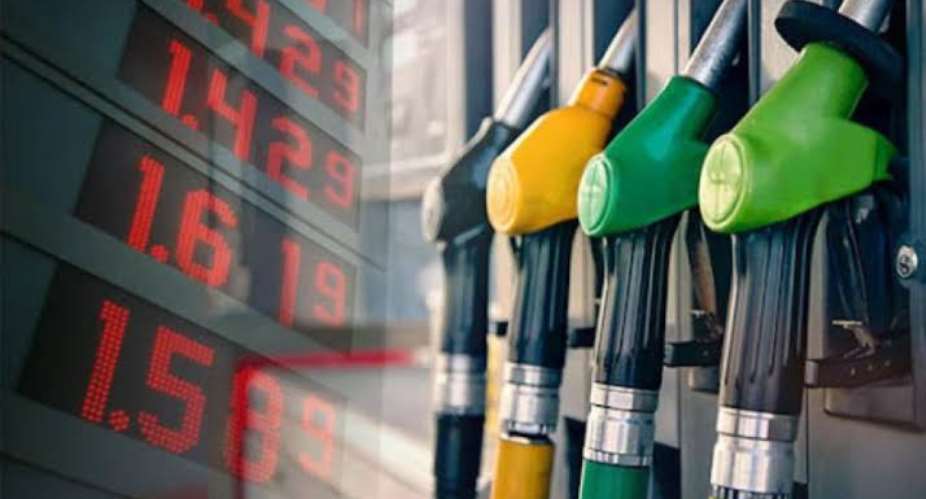
Unlike how freight costs can affect the last-mile delivery cost of a one (1) litre bottled water from Accra to Bawku, have you ever wondered how the GH₵ 15.00 or 17.00/l price displayed on the LED at a StarOil or Goil retail outlet in Tema remains the same for their retail outlets in Tumu despite being about 835 km apart?
Well, here is how the government makes that magic happen under the deregulated petroleum downstream industry.
Every country in the West Africa subregion wrestles with the same basic dilemma: crude oil and refined products are priced in dollars on a world market, but fuel is bought in local currency by people who mostly live nowhere near a port. How a country closes that gap between global base and freight cost, and local affordability between a coastal depot and an inland town says a lot about its energy policy philosophy. Ghana’s answer relies on two related but distinct charges buried in the country’s ex-pump price build-up: the Primary Distribution Margin (PDM) and the Unified Petroleum Price Fund (UPPF). They are frequently mentioned in the same breath, and both exist to compensate for real transport costs per litre from the coast to the most remote inland town, but they cover different legs of the same journey. Only one of them functions as a fund in the true sense of the word.
The PDM covers the first leg: the cost of moving refined petroleum products from a refinery or a coastal custom-bonded warehouse in Tema and Takoadi to the various BOSTenergies storage depots scattered around the country. It is paid by the National Petroleum Authority(NPA) to Bulk Import Distribution Export Companies (BIDECs) for onward payment to the transporter. The PDM is currently pegged at GH₵ 0.26 per litre on gasoil and gasoline.
The UPPF covers the second leg, and does something the PDM does not: it equalises the cost of moving fuel from every depot to the thousands of individual retail outlets across the country, regardless of how close or far each one is from the coast. This policy exists to prevent Oil Marketing Companies (OMCs) from arbitrarily adding haulage costs to their pump prices further away from the coast. Unlike the PDM, the UPPF operates as an actual pooled fund. Every litre of diesel or petrol has a UPPF margin of GHC 0.90 in it, paid by NPA to the OMC for onward payment to the transport company (transporter).
The distinction matters enough that Ghana’s National Petroleum Authority is now proposing, under a draft NPA bill, to merge the PDM and UPPF into a single “Distribution Fund”, an acknowledgement that the two channels have long been entangled in practice even though they serve different stages of the supply chain and that their complexity and lack of transparency have drawn sustained public scrutiny. For now, though, they remain separate line items in the price build-up, and it’s worth understanding the UPPF specifically, since it is one of the more distinctive pricing mechanisms on the continent helping explain why fuel policy in West Africa is far from a single, uniform story.
What the UPPF Actually Does
The UPPF was created under Ghana’s National Petroleum Authority Act of 2005 (Act 691), which established the National Petroleum Authority (NPA) as regulator of the downstream petroleum sector. The fund itself has one narrow, specific job: it does not subsidise the price of fuel itself; it subsidises the cost of moving fuel around the country.
In practice, this means a litre of petrol costs the same at the pump whether you’re buying it in Accra, a few kilometres from the coastal depots, or in a town in the far north hundreds of kilometres inland. Every litre sold anywhere in Ghana includes a small UPPF margin in its price build-up. Oil Marketing Companies (OMCs) that transport fuel beyond a defined “equalisation” distance draw down from the fund to cover their extra freight costs; those operating close to the depots, whose actual transport costs are lower than the standard margin, pay the difference back into the fund. It is, in effect, a self-balancing cross-subsidy between short-haul and long-haul distributors, administered by the NPA rather than funded directly by the state budget.
This is a meaningfully different idea from the broader, more politically fraught concept of a “fuel subsidy,” where the government absorbs the gap between the market price and a capped retail price. The UPPF was designed to survive Ghana’s 2015 deregulation of the downstream sector when the government moved away from setting pump prices directly and let market-based, automatic pricing formulas take over precisely because it targets distribution cost equalisation, not the underlying commodity price.
How Big Is the UPPF Margin, In Practice?
The UPPF line item is small relative to taxes, but it moves regularly as the NPA reviews freight costs. Some reference points from the price build-up over the last few years:
December 2022: the UPPF margin was raised by 7 pesewas to 47 pesewas per litre of petrol and diesel, alongside a BOST margin increase, to reflect prevailing freight costs.
April 2022: by contrast, the margin was cut by 9 pesewas per litre as part of a broader 15-pesewa reduction in industry margins meant to ease pump prices during a period of high crude and cedi depreciation.
May 2023: the margin was reviewed upward by 28 pesewas per litre to keep pace with rising transport costs to retail outlets.
June 2024: the NPA raised the UPPF margin to GH₵0.90 per litre, its highest level in recent years.
2026: industry analysts have put combined industry margins- marketers’, dealers’, and UPPF charges together at roughly GH₵1.37 per litre within the ex-pump price build-up. Isolated by product, however, the UPPF component itself has been reported at around 66 pesewas per litre for petrol, while for diesel it briefly went negative (about -63 pesewas per litre) after government temporarily stripped taxes and margins out of the diesel price build-up for consumer relief meaning OMCs were, for a time, expected to front distribution costs and recover them later through NPA reimbursement once margins were restored.
Why This Makes Ghana Unusual in the Sub-Region
Compare this to the two dominant approaches elsewhere in West Africa:
Nigeria’s full deregulation model. After decades of a state-funded subsidy that made Nigerian pump prices among the cheapest in Africa, President Bola Tinubu’s May 2023 declaration that “the petrol subsidy is gone” triggered an overnight, multiple-fold jump in prices and let the market, rather than government or an equalisation fund, determine what motorists pay state by state. There is no national mechanism guaranteeing a driver in Lagos and a driver in Maiduguri pay the same price; costs increasingly diverge with distance from supply points, the reverse of what Ghana’s UPPF is built to prevent.
Again, the CFA-zone administered model. Francophone neighbours such as Côte d’Ivoire, Senegal, and Cameroon generally run centrally administered pricing frameworks in which a government body sets or caps the maximum retail price and adjusts it periodically, often monthly in response to world prices, insulated somewhat by the CFA franc’s euro peg. Côte d’Ivoire’s Directorate General of Hydrocarbons, for example, publishes fixed maximum pump prices for each month. Cameroon’s Caisse de Stabilisation des Prix des Hydrocarbures (CSPH) goes further, functioning as a classic price-stabilisation fund that absorbs global price swings directly, closer in spirit to a traditional subsidy vehicle than to Ghana’s distribution-cost equaliser.
The Bigger Picture
The distinguishing feature of Ghana’s UPPF, then, is its precision of purpose. It is not trying to shield consumers from global oil price volatility (that job was formally handed to the market under deregulation), and it is not a general subsidy fund the government tops up. It exists solely to solve the geography problem, making sure a country with sharply uneven transport costs between its coast and its interior does not end up with wildly uneven fuel prices across different retail outlets of the same OMC.
Most fuel pricing debates in Africa and around the world are framed as a binary choice, i.e., subsidise consumption or deregulate and let the market decide. Ghana’s UPPF suggests a third lever: keep the commodity price market-driven, but ring-fence and equalise the local logistics cost separately, so market pricing does not automatically punish people simply for living far from the coast. As a piece of policy architecture, it remains one of the more original attempts in the region to solve the “same price, different distance” problem that shapes fuel access across Africa.
Author: Isaac Edem Ayitey
Supply Chain Analyst
Disclaimer: “The views expressed in this article are the author’s own and do not necessarily reflect ModernGhana official position. ModernGhana will not be responsible or liable for any inaccurate or incorrect statements in the contributions or columns here.”
Follow our WhatsApp channel for meaningful stories picked for your day.

Top Stories





Originally published on www.modernghana.com
