

August 12, 2026
Fidel at 100: The Revolutionary Legacy of a Global South Leader


Wed, 12 Aug 2026 Feature Article
Fidel at 100: The Revolutionary Legacy of a Global South Leader
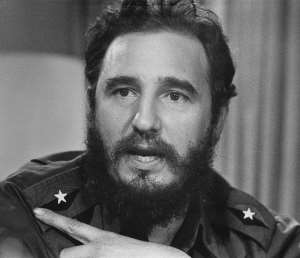
On 13 August 2026, Cuba marks the centenary of the birth of Commander-in-Chief Fidel Castro Ruz, one of the most consequential revolutionary leaders of the twentieth century. The centenary is not simply a celebration of an individual. It is an opportunity to examine a political project that challenged colonialism, imperialism, racism, inequality and the domination of small nations by powerful states. Cuba has officially designated 2026 as the “Year of the Centennial of Commander in Chief Fidel Castro Ruz,” and the year has been marked by nationwide commemorations and activities reflecting on his contribution to the Cuban Revolution.
The significance of the centenary extends far beyond Cuba. Fidel’s political life was deeply connected to the struggles of the Global South. His Cuba understood that national sovereignty could not be separated from international solidarity. For many people in Africa, Latin America and Asia, Fidel represented a different possibility: that a small country could defend its independence, organise its own development priorities and refuse to accept that the interests of powerful external states should determine its destiny.
The First International Colloquium “Fidel: Legacy and Future,” taking place in Havana from 10 to 13 August 2026, provides an important platform for this discussion. Organised by the Fidel Castro Ruz Centre together with Cuban academic and cultural institutions, the colloquium brings together historians, political scientists, researchers, social leaders and friends of the Cuban Revolution to examine Fidel’s contribution to contemporary thought. Its themes include politics, society, internationalism, national liberation, the Global South, geopolitics, imperialism, inequality, climate change, peace and the sovereignty of peoples.
This agenda is important because Fidel’s legacy cannot be reduced to military victory or political leadership. His deeper legacy was the attempt to place human beings, rather than profit and domination, at the centre of national development. Education, healthcare, scientific advancement, culture and social equality became central pillars of the Cuban revolutionary project. Whatever one’s political position on Cuba, these priorities explain why Fidel continues to generate debate internationally decades after the triumph of the Cuban Revolution.
For Africa, the Fidel legacy carries particular historical significance. The Cuban Revolution did not see Africa as a distant continent. It recognised African liberation as part of the broader struggle against colonialism and apartheid. Cuban internationalism became especially visible through support for African liberation movements and the deployment of Cuban personnel, including medical workers, teachers and military advisers, in solidarity with countries confronting colonial and apartheid systems.
The most powerful example was Angola. Cuban internationalist assistance played a significant role in the defence of Angola following the country’s independence. The Battle of Cuito Cuanavale in 1987–88 became an important episode in the history of southern Africa and is widely remembered in Cuba and across the region as part of the wider struggle against apartheid and for regional independence. Fidel’s approach demonstrated that international solidarity could be translated into concrete political action.
This history matters because Africa continues to confront forms of external pressure, economic dependency and unequal international relations. Political independence has not automatically produced economic sovereignty. Many African countries remain heavily dependent on external markets, finance, technology and strategic commodities. The struggle for genuine sovereignty therefore remains unfinished.
Fidel’s thinking offers one lesson that remains relevant: sovereignty requires the capacity to make independent decisions. A country that possesses a flag and government but cannot determine its economic priorities, protect its resources, educate its people or provide essential services remains vulnerable to external domination.
Another central element of the Fidel legacy is education. The Cuban Revolution treated education as a strategic instrument of national transformation. The famous literacy campaign launched after the Revolution reflected the belief that an educated population was essential to building an independent society. Education was not viewed merely as preparation for employment; it was connected to citizenship, national development and social responsibility.
For African countries, this principle remains highly relevant. Universities and colleges must not simply reproduce inherited knowledge. They must develop knowledge capable of solving African problems. Research must address agriculture, health, technology, industrialisation, climate change, food security, public administration and economic transformation. Education should produce citizens who can think critically about their societies and contribute to national development.
Fidel’s emphasis on healthcare provides another important lesson. Cuba built a healthcare system centred on universal access and also developed a major tradition of medical internationalism. Cuban doctors and health professionals have worked in numerous countries, including across Africa and Latin America. The principle behind this approach was that medical knowledge could be an instrument of solidarity rather than merely a commercial commodity.
In today’s world, this question is increasingly important. The COVID-19 pandemic demonstrated the deep inequalities that exist in global access to medicines, vaccines and medical technologies. Wealthier countries often possess greater capacity to secure essential resources, while poorer countries remain vulnerable. Fidel’s approach encourages a different conception of international cooperation in which science and medicine serve humanity as a whole.
His internationalism also provides a challenge to narrow nationalism. Fidel was a Cuban patriot, but his patriotism was connected to international solidarity. The defence of Cuban sovereignty was presented alongside solidarity with peoples struggling against colonialism and apartheid. This combination of patriotism and internationalism is particularly relevant to Africa, where Pan-Africanism has historically insisted that the liberation of one country is connected to the liberation of others.
The centenary therefore offers an opportunity to reconnect contemporary Pan-Africanism with the practical questions of sovereignty, development and solidarity. Africa needs greater continental cooperation, stronger regional institutions, greater technological independence and the ability to add value to its natural resources rather than exporting raw materials while importing finished products.
Fidel’s legacy is also relevant to the contemporary struggle over the meaning of development. For decades, development has often been measured primarily through economic growth. Yet growth alone does not necessarily produce social justice. A country can experience economic expansion while millions remain without adequate healthcare, housing, education or decent employment.
The Cuban experience placed social indicators at the centre of the development debate. This does not mean that Cuba’s model should simply be copied elsewhere. Historical conditions differ, and every society must develop solutions appropriate to its own circumstances. The more useful lesson is that development should be judged by how effectively it improves people’s lives.
The same principle applies to climate change. The poorest countries are among those most vulnerable to climate disasters, droughts, floods and food insecurity, despite having contributed much less historically to global emissions. Fidel’s insistence on international cooperation and the responsibility of powerful countries to address global inequality provides a useful framework for thinking about this crisis.
Climate change cannot be solved through competition alone. It requires cooperation, technology sharing, financing and recognition of differentiated responsibilities. The Global South needs development strategies that combine environmental protection with the right to industrialise and improve living standards.
The world has also changed significantly since Fidel died in 2016. New geopolitical centres of power are emerging. China has become a major global economic and technological power. Russia has reasserted itself internationally. Countries across Asia, Africa and Latin America are demanding greater representation in global institutions. The traditional dominance of a small group of Western powers is being challenged by a more multipolar international system.
In this changing environment, Fidel’s insistence on national sovereignty acquires renewed significance. Multipolarity, however, should not simply mean replacing one form of domination with another. Its deeper promise should be the creation of an international system in which different civilisations, political systems and development paths can coexist without powerful countries imposing their will on weaker ones.
For Africa, this means pursuing a foreign policy based on national interest, strategic autonomy, Pan-African cooperation and diversified international partnerships. Africa should cooperate with all countries willing to contribute to its development while retaining the sovereign right to determine its own priorities.
The Fidel centenary should therefore not become an exercise in nostalgia. Its real value lies in asking what lessons can be carried into the future. What does sovereignty mean in the age of multinational corporations and digital platforms? What does independence mean when countries depend heavily on foreign technology? How can developing countries achieve food and energy security? How can young people obtain meaningful employment? How can education become a genuine instrument of transformation? How can international solidarity be strengthened in a world increasingly marked by inequality and geopolitical tension?
These are the questions that make Fidel’s legacy contemporary. At 100 years since his birth, Fidel Castro remains a deeply contested historical figure. Supporters regard him as a symbol of revolutionary courage, national sovereignty and international solidarity, while critics point to serious questions surrounding political pluralism, civil liberties and governance in post-1959 Cuba. A serious historical assessment should acknowledge that his legacy contains both achievements and controversies. Yet disagreement does not eliminate the importance of studying the ideas and historical forces associated with him.
Indeed, the decision by Cuba to dedicate 2026 to his centenary reflects an attempt to transform historical memory into political education. The international colloquium’s emphasis on debating his ideas in relation to present and future challenges reinforces this approach.
For Africa and the wider Global South, the centenary is an invitation to study rather than merely celebrate. Fidel’s greatest lesson may be that history is not something that happens to peoples; it is something that peoples can shape through organisation, political consciousness, education, solidarity and determination.
The world Fidel entered in 1926 was dominated by colonial empires. The world he helped shape after 1959 was one in which the possibility of independent development became more visible to millions of people. Cuba’s international role in Africa, Latin America and elsewhere demonstrated that a small country could exercise influence far beyond its geographical size.
One hundred years after Fidel Castro’s birth, the fundamental questions of sovereignty, justice, equality and international solidarity remain unresolved. The centenary therefore belongs not only to Cuba. It belongs to all those who continue to believe that nations of the Global South have the right to determine their own futures.
The most meaningful tribute to Fidel is consequently not the repetition of his name, but the serious study of his ideas and historical experience. It is to ask what can be learned from his successes, his failures, his courage and his contradictions. It is to transform historical memory into contemporary action.
Fidel’s legacy, ultimately, should be understood as a continuing question: can humanity build an international order based less on domination and more on cooperation, less on inequality and more on justice, and less on imperial power and more on the sovereignty and dignity of peoples? That question remains unfinished. And that is precisely why, at the centenary of his birth, Fidel Castro remains a subject not only of history, but of the future.

Mafa Kwanisai Mafa, © 2026
Mafa Kwanisai Mafa is a prominent Pan-Africanist activist, writer, and independent researcher from Zimbabwe. . More He is known for his anti-imperialist stance and his extensive writings and commentary on African history, social justice, and contemporary struggles against foreign influence.
Key facts about Mafa Kwanisai Mafa:
Profession: He works as a Senior Assistant Librarian at the Midlands State University in Gweru, Zimbabwe, where he is also based.
Activism: Inspired by figures like Malcolm X, Che Guevara, and Kwame Nkrumah, he is an ardent advocate of Pan-Africanism. He is a former student leader and the founder of the Zimbabwe Pan Africanist Youth Agenda.
Commentary and Writing: He has authored numerous papers and articles discussing topics such as the Zimbabwe land question, Eurocentric hegemony, and African underdevelopment. He is a regular contributor to various publications, including Pambazuka News and Black Agenda Report, where he analyzes global politics from an African perspective.
Public Engagement: He has appeared on various local and international radio and television programs to speak on issues affecting Africa.
Recent Activity: His recent articles, such as “The Fissure of Gaza: How the Western Human Rights Order Died” and “The Long Game of Power: What China’s Five-Year Plan Means for Africa,” show his continued engagement with contemporary global political issues.Column: Mafa Kwanisai Mafa
Disclaimer: “The views expressed in this article are the author’s own and do not necessarily reflect ModernGhana official position. ModernGhana will not be responsible or liable for any inaccurate or incorrect statements in the contributions or columns here.”
Follow our WhatsApp channel for meaningful stories picked for your day.
Top Stories


Originally published on www.modernghana.com
