

August 22, 2026
Exonerating Murder: The IDF and the World Central Kitchen Killings


Sat, 22 Aug 2026 Feature Article
Exonerating Murder: The IDF and the World Central Kitchen Killings
Being a resident in Gaza has proved lethal not merely for civilians eking out a wretched existence. Mortality rates among journalists, medical staff, and aid workers have been egregiously high since Israel’s military opened its account after the Hamas attacks of October 7, 2023. (In truth, Israel’s account regarding striking, bombing and embargoing this little strip of territory has been open for decades.) The regularity of killings, largely at the hands of the Israeli Defense Forces (IDF), negatives the claim that there isn’t a policy or approach in place that forgoes the rigours of international humanitarian law in favour of murderous resolution. The IDF, and its foam flecked supporters, always insist that international law is something observed, though no one quite seems to know what version is being applied.
The killing of seven staff working for World Central Kitchen on April 1, 2024 illustrates the matter in grimmest fashion. Members of the charity – three Britons, a dual US-Canadian national, a Pole, an Australian and a Palestinian – had unloaded humanitarian food supplies from Cyprus intended for residents in Gaza. Their convoy, with the WCK logo prominently displayed on the vehicles, was travelling in a designated “deconflicted” zone when it was attacked by three missiles fired from a Hermes 450 drone. The charity had also been coordinating their movements with the IDF with their usual diligence.
On August 19, the IDF announced that the case had been closed after finding “no reasonable suspicion of criminal misconduct that would justify opening a criminal investigation or the taking of additional measures against any of those involved in the incident”. The spokesperson’s remarks were instructive, lauding the role of the spurious General Staff Fact-Finding and Assessment Mechanism (FFAM), with its keenness on conducting “factual assessments of exceptional operational incidents, while using a range of tools and methodologies.”
Some 150 incidents had been reviewed by the FFAM since the war began, and those behind the WCK deaths were to be spared legal scrutiny. Indeed, the IDF was not above libelling the workers, suggesting that it had “identified a gunman on a truck in the humanitarian aid convoy while it was on route to a warehouse for the unloading of the aid.” In a worrying reflection on the alleged expertise of the IDF, the troops in question had also “identified vehicles surrounding the trucks in a manner that, in their assessment, and based on accumulated operational experience, corresponded to a scenario in which the Hamas terrorist organization had taken control of the convoy.” While there had been “serious failures in the process that led to the assessment that Hamas operatives were travelling in the vehicles” (grotesque understatement) the decisions made by the commanders raised no “reasonable suspicion of criminal misconduct”; there were sufficient, extenuating “suspicious indicators”.
The only seedy conclusion to reach here is that misidentifying humanitarians, misapplying alleged experiences gathered in battle, and committing calculated murder are habits in the field. Blatant errors – if they can be called that – are pardonable. The object here: categorise and exterminate.
The refusal by the military prosecutors to institute criminal proceedings provoked an unusually salty note of anger from Australia’s Foreign Minister Penny Wong. Australia had been “outraged” at the decision, noting the fate of one of its nationals, Zomi Frankcom. The refusal to pursue matters had been made despite the admission by the IDF that its “strikes on Zomi and her colleagues’ vehicles were the result of serious failures to follow IDF procedures, mistaken identification and errors in decision making.”
The timing of the announcement – made on World Humanitarian Day – was exquisite, suggesting either a concerted callousness on the part of the Israeli authorities, or dollops of black humour. Wong was not impressed. “The Australian Government learned of Israel’s decision late last night, moments before it was announced, on World Humanitarian Day – which is especially insulting to Zomi’s loved ones, humanitarians and all Australians.”
A joint statement by the foreign ministries of Australia, Canada and the United Kingdom released on August 21 also denounced the decision not to consider the case further as “shameful”. Gone from it were the guarded qualifications that had been expressed in 2024. “The World Central Kitchen attack is one of countless incidents in Gaza where there has been no accountability.” In 2025, despite a ceasefire, 186 humanitarian workers had been killed.
The Polish foreign ministry, reflecting on the death of one of their nationals, Damian Soból, also expressed its dismay. “Partnership requires respect,” stated foreign minister Radosław Sikorski with unmistakable bluntness. “The humanitarian catastrophe in Gaza, as well as the failure of accountability for IDF’s excessive use of force are undermining public support in even pro-Israel nations.”
In its pungent statement on the affair, World Central Kitchen expressed its fundamental disagreement with the decision, regarding it as “inconsistent with the truth and deeply offensive.” The IDF had known that the organisation’s workers were “unarmed and posing a threat to nobody. It had full visual clarity on our clearly marked humanitarian vehicles during the extended, multiple airstrikes. It knew our team’s movements, identities and activities in advance.” The military investigation had been shoddy, conflating “different timelines and events” while muddying the narrative. “We continue,” the statement goes on to say, “to demand an independent commission to investigate the airstrikes because the IDF cannot credibly investigate its own conduct.”
The Military Police have decided, instead, to focus on two other cases: the killing of 6-year-old Hind Rajab along with six of her family members and two medics in Gaza City in January 2024; and the slaying of 15 rescue workers as part of a convoy of emergency vehicles and ambulances in Rafah in March last year. Best not hold out too much hope for a just resolution of those cases.
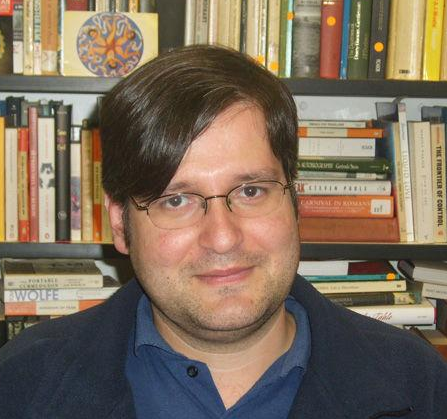
Dr. Binoy Kampmark was a Commonwealth Scholar at Selwyn College, Cambridge. He currently lectures at RMIT University. Email: [email protected]

Binoy Kampmark, © 2026
Dr. Binoy Kampmark was a Commonwealth Scholar at Selwyn College, Cambridge. He currently lectures at RMIT University. Email: [email protected]. More He is a Senior Lecturer in the School of Global, Urban and Social Studies, teaching within the Bachelor of Social Science (Legal and Dispute Studies) program.
Binoy’s research and teaching interests lie in the intersections of law, international relations and history. Much of his research and teaching involves the examination of conflict, diplomacy, and the various crises confronting international society including refugees, terrorism, ‘rogue’ states and undocumented citizens.
Binoy has written extensively in both refereed journals and more popular media on his research interest topics of the institution of war, diplomacy, international relations, 20th century history and law.
The quality of his research has been acknowledged in awards made by the US-based International Association for the Study of Forced Migration and Limina, journal of the History Department of the University of Western Australia.
Media expertise
Binoy is available for media interviews and comments as an expert on international and national security, terrorism, the war on terror and politics.
He has been interviewed for National Public Radio in the United States, Radio National in Australia, and radio stations in South Africa. He is also a regular contributor to online publications including The Conversation, Eureka Street, CounterPunch (US) and Scoop (NZ).
Binoy was also commissioned by the UK History Channel in December 2007 to January 2008 to write package descriptions for the American Civil War, and in March 2006 to write a package on World War II: The War in the West, 1943-1945.Column: Binoy Kampmark
Disclaimer: “The views expressed in this article are the author’s own and do not necessarily reflect ModernGhana official position. ModernGhana will not be responsible or liable for any inaccurate or incorrect statements in the contributions or columns here.”
Follow our WhatsApp channel for meaningful stories picked for your day.
Top Stories


Originally published on www.modernghana.com
