

August 1, 2026
Egypt To Host Meeting On Gaza Ceasefire Implementation
4 hours ago | Middle East
Egypt To Host Meeting On Gaza Ceasefire Implementation

Hamas, Palestinian factions inform mediators of approval for roadmap on second phase of ceasefire, source says.
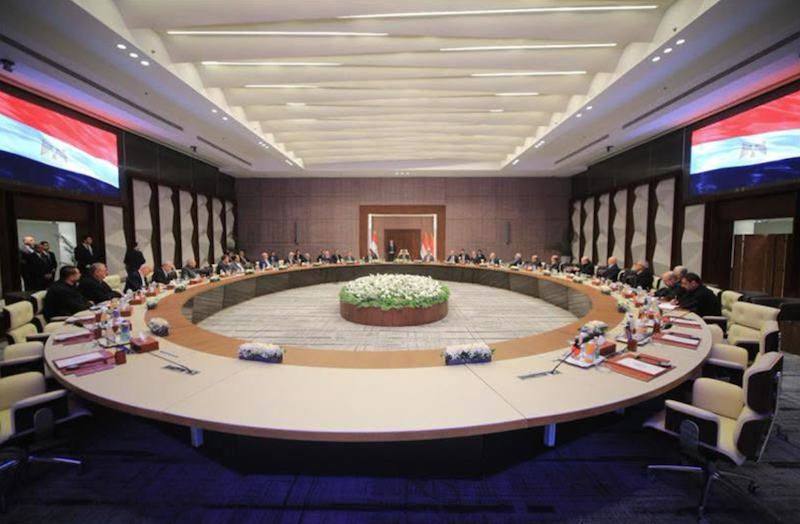
Egypt will soon host a meeting of mediators to reaffirm all parties’ commitment to implementing the second phase of the Gaza ceasefire agreement, an informed Egyptian source said Friday.
The source, quoted by Egypt’s Al Qahera News channel, said Hamas and other Palestinian factions had informed mediators of their approval of the roadmap for implementing the second phase of the ceasefire agreement in Gaza.
The remarks came after US President Donald Trump and the Board of Peace announced an agreement on implementing the next phase of the Gaza ceasefire, with the Board saying Hamas had approved a detailed roadmap.
Israel has yet to officially endorse it.
According to the source, the meeting in Cairo will bring together the mediators to confirm all parties’ commitment to implementing the agreement’s provisions.
Hamas said today Friday, July 31, 2026, that it and other Palestinian factions had dealt “responsibly and positively” with the negotiations and mediators’ proposals for completing the implementation of the agreement’s second phase, in line with Palestinian national consensus.
The group said Israel’s commitment to halting the killing and ending its attacks constitutes the essential first step toward implementation and establishing the framework and timetable for the agreed measures.
Hamas also said implementation of the second phase remains contingent on Israel fulfilling all commitments under the first phase of the agreement.
Regarding heavy weapons, Hamas said its agreement to include the issue in the implementation framework is conditional on a complete end to Israeli attacks, a full Israeli withdrawal from the Gaza Strip, the start of early recovery efforts, the entry of the National Committee for the Administration of Gaza, and the deployment of the International Stabilization Force.
The group added that its conditions also include the dismantling of what it described as armed gangs and militias established by Israel, the launch of reconstruction, guarantees for Palestinian self-determination, the establishment of an independent Palestinian state and the protection of Palestinian rights.
The first phase of the ceasefire agreement began on Oct. 10, 2025, providing for a ceasefire, hostage-prisoner exchanges and expanded humanitarian aid deliveries. Hamas says Israel has continued military attacks and imposed restrictions on aid entering Gaza despite the agreement.
Israel currently holds military control over about 70% of the Gaza Strip.
According to Amnesty International, an estimated of 70,000 people have been killed in Gaza since October 7 2023, most of them civilians
A ceasefire was reached in October 2025, bringing some relief to the besieged population in Gaza, and allowing some more of the Israeli hostages to return to their families.
Every atrocity is a tragedy. But unless the underlying causes of this conflict are addressed, Palestinians and Israelis cannot even begin to hope for a brighter future built on rights, equality and justice.
Genocide experts say that, Israel has shown brutal system of apartheid it imposes on Palestinians and end its unlawful occupation of the Occupied Palestinian Territory once and for all.
And that, there must be accountability on both sides for genocide and other crimes under international law.
Meanwhile, Israeli Defense Minister Israel Katz said Friday that his government approved the establishment of 104 illegal settlements and around 160 settlement farms in the occupied West Bank since it was formed in November 2022, Israel’s Channel 7 reported.
Speaking during a meeting with leaders of the ruling Likud party in Jerusalem, Katz said the government had taken “a series of important decisions regarding settlement expansion in Judea and Samaria,” using Israel’s term for the West Bank.
“We are not only strengthening security, but also strengthening settlement,” Katz said.
“The government approved the establishment of 104 new settlements in Judea and Samaria, along with nearly 160 new farms,” he added.
Katz described the move as “an unprecedented step that reflects the commitment to strengthening Israel’s control over the area.”
In recent weeks, the West Bank has seen a rise in occupiers establishing outposts in different areas.
Settlement outposts, which occupiers establish without official Israeli government authorization, often become the nucleus of settlements that are later legalized or connected to the infrastructure of existing settlements, according to Palestinian and Israeli groups monitoring settlement activity.
According to Israeli settlement watchdog Peace Now, there are currently 141 settlements and 360 settlement outposts in the West Bank, in addition to 15 settlements in East Jerusalem.
The United Nations (UN) Security Council Resolution 2334, issued in 2016, states that Israeli settlements in Palestinian territory occupied since 1967, including East Jerusalem, have no legal validity and constitute a flagrant violation of international law.
In July 2024, the International Court of Justice (ICJ) said in an advisory opinion that Israel’s continued presence in the occupied Palestinian territories is unlawful and must end as soon as possible.
Alongside the establishment of settlement outposts, the occupied West Bank has seen escalating occupier attacks on Palestinians and their property, amid accusations by Palestinians and Israeli and international rights groups that the Israeli army protects settlers and sometimes takes part in the attacks.
According to the Palestinian Colonization and Wall Resistance Commission, occupiers carried out 3,488 attacks against Palestinians and their property during the first half of 2026, including attacks on people, property and land, the establishment of settlement outposts and preventing farmers from accessing their land.
Palestinians warn that Israeli policies in the occupied West Bank, including home demolitions and settlement expansion, are paving the way for formal annexation, undermining the possibility of establishing a Palestinian state under relevant UN resolutions.
Originally published on www.thenigerianvoice.com
