August 1, 2026
Fuel prices increase in Ghana: Major OMCs announce new petrol and diesel prices – See latest prices
Advertisement
Fuel prices increase in Ghana: Major OMCs announce new petrol and diesel prices – See latest prices
)
,fit(700:467))
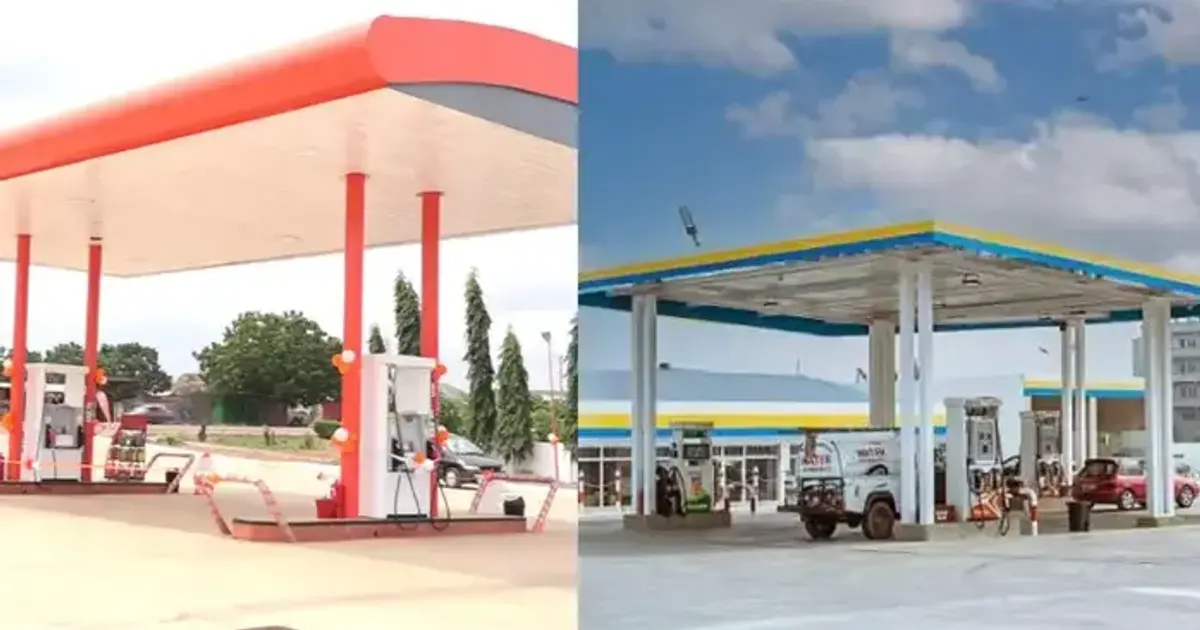
Goil fuel station (left) and Star Oil fuel Station (right).
Star Oil and GOIL have announced new fuel prices following the NPA’s revised August 2026 price floors. Here’s the latest prices.
Advertisement
Motorists across Ghana will pay more for fuel from August 1, 2026, after major Oil Marketing Companies (OMCs) announced new pump prices following the National Petroleum Authority’s (NPA) upward adjustment of benchmark fuel price floors for the first pricing window of August.
Advertisement
Among the first major OMCs to revise their prices are Star Oil and GOIL, with both reflecting the latest increases driven by higher international petroleum prices, exchange rate pressures and the NPA’s revised price floor.
Star Oil announced that, effective August 1, 2026, it will sell:
-
Super at GH¢14.53 per litre (the new NPA floor price)
-
Diesel at GH¢18.77 per litre
-
RON 95 at GH¢17.77 per litre
Advertisement
)
The company said the latest review reflects movements in international petroleum product prices, the prevailing exchange rate and the NPA’s revised pricing framework.
GOIL also revised its pump prices, with the new rates taking effect from 6:00 a.m. on Wednesday, July 29, 2026. The state-owned marketer announced:
-
Super XP – GH¢14.98 per litre
-
Diesel XP – GH¢17.71 per litre
-
Super XP 95 – GH¢17.30 per litre
READ ALSO: Armed robbers open fire on 2 VIP JEOUN buses in separate highway attacks; several injured
Advertisement
The revisions come after the NPA increased its benchmark fuel price floors for the first pricing window of August 2026. Under the new thresholds, the minimum price for petrol rose by 9.4% to GH¢14.53 per litre, while diesel recorded the steepest increase, climbing 18.3% to GH¢16.97 per litre. The benchmark price for Liquefied Petroleum Gas (LPG) also increased by 8.5% to GH¢11.06 per kilogram.
The benchmark price floor represents the minimum retail price at which OMCs can sell fuel. Final pump prices are typically higher after marketers factor in distribution costs, dealer margins and other operational expenses.
According to the NPA, the latest increases have been driven by rising international Brent crude oil prices, largely influenced by renewed geopolitical tensions involving the United States and Iran, as well as the continued depreciation of the Ghana cedi against the US dollar. Since Ghana imports refined petroleum products in dollars, fluctuations in the exchange rate significantly affect domestic fuel prices.
The latest adjustments are expected to have wider economic implications, with higher fuel costs likely to increase transportation fares, agricultural production costs, industrial operations and household expenditure, adding further pressure to the cost of living.
Advertisement
Industry observers expect more OMCs to announce revised pump prices in the coming days as the new pricing window takes effect nationwide.
Advertisement
Latest Videos
)
Advertisement
Videos
)
)
)
Advertisement
Advertisement
More from Pulse Ghana
,fit(112:112))
,fit(112:112))
)
)
,fit(112:112))
Advertisement

Originally published on www.pulse.com.gh