

August 26, 2026
EFCC Offers Whistleblowers Up To 5 Of Recovered Stolen Assets Abroad
4 hours ago | EFCC News & Reports
EFCC Offers Whistleblowers Up To 5% Of Recovered Stolen Assets Abroad

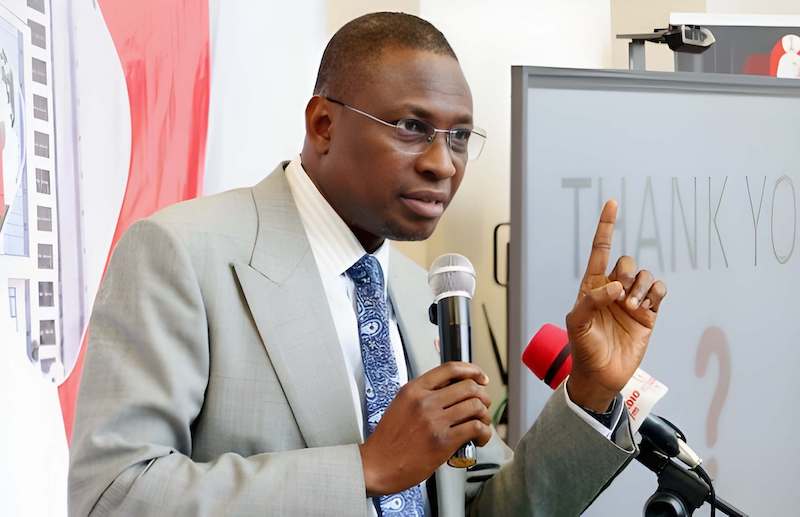
Ola Olukoyede ( Chairman of the Economic and Financial Crimes Commission (EFCC)
The Economic and Financial Crimes Commission (EFCC) has announced plans to reward Nigerians who provide credible information leading to the recovery of stolen Nigerian assets located outside the country.
EFCC Chairman, Ola Olukoyede, said whistleblowers could receive between 2.5 per cent and 5 per cent of the value of assets successfully recovered through information they provide.
Olukoyede made the disclosure on Wednesday while speaking at the Cambridge International Symposium on Economic Crime in the United Kingdom, where he advocated stronger protection and incentives for whistleblowers involved in the fight against corruption and financial crimes.
He urged Nigerians with knowledge of assets allegedly stolen from the country and moved abroad to provide such information to the commission.
“The citizens must be encouraged with your whistleblower protection,” Olukoyede said.
“If any of you is privy to where Nigerian asset is stolen or taken to anywhere in the world, we have an incentive for you. Between 2.5 and 5 percent is going to go back to you upon recovery.”
The EFCC chairman said the proposed incentive was designed to motivate individuals with reliable information to assist investigators in tracing illicitly acquired wealth, particularly assets concealed in foreign jurisdictions.
Giving an account of the commission’s recent recovery drive, Olukoyede said the EFCC had secured the forfeiture of cash and assets valued at more than $500 million to the Federal Government within the three years since he assumed office.
“Within three years of my assumption of office, we’ve been able to forfeit both cash and assets worth over half a billion dollars to the government,” he said.
He said asset tracing and recovery remained central to the EFCC’s strategy for tackling economic and financial crimes, especially where proceeds of alleged criminal activities had been converted into real estate or transferred outside Nigeria.
According to him, the country’s legal framework allows the commission to pursue the forfeiture of suspected proceeds of crime without necessarily waiting for the conclusion of a criminal trial.
Olukoyede explained that the EFCC could approach a high court through an ex parte application where there was probable suspicion that an asset represented proceeds of crime.
“We have similar to what is obtainable in Australia and Canada that empowers us to apply the forfeiture to proceeds of what is suspected to be proceeds of crime,” he said.
“You apply ex parte to the high court upon a probable suspicion of the proceeds of crime.”
The EFCC boss cited the forfeiture of an aircraft allegedly connected to a member of a monitoring committee overseeing a power project as an example of the commission’s asset recovery process.
He alleged that the individual collected a $30 million bribe and said the aircraft was subsequently subjected to forfeiture proceedings.
According to Olukoyede, the commission obtained the forfeiture order within two months of approaching the court.
He also disclosed that the EFCC had secured the forfeiture of a property comprising about 753 housing units from a former Governor of the Central Bank of Nigeria.
Olukoyede further said EFCC investigators had traced 57 properties allegedly linked to Abubakar Malami, former Attorney-General of the Federation, in connection with an investigation into alleged abuse of office.
The EFCC chairman maintained that effective asset recovery, coupled with adequate protection and incentives for whistleblowers, would strengthen Nigeria’s efforts to deny criminals the benefits of illicit wealth and recover public assets moved within and outside the country.
Originally published on www.thenigerianvoice.com
