

July 8, 2026
Demagogue Stunt: Nigel Farage’s By-Election Gambit


Demagogue Stunt: Nigel Farage’s By-Election Gambit
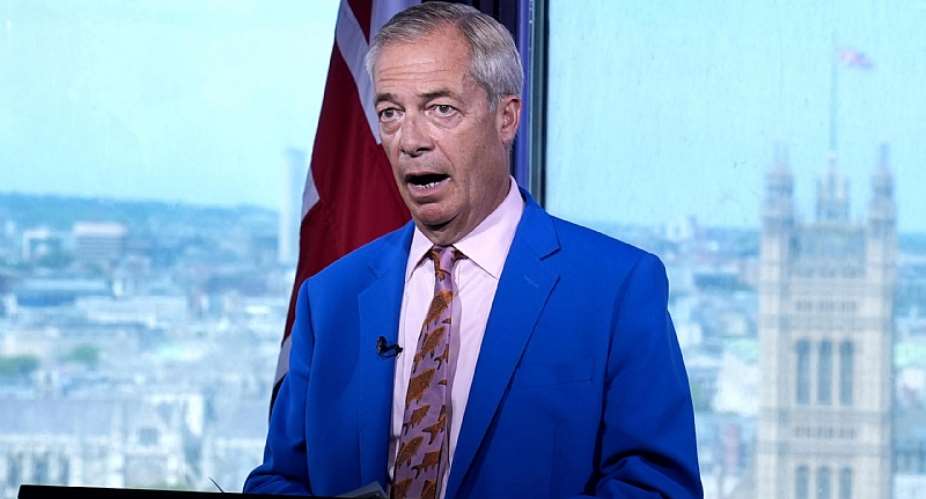
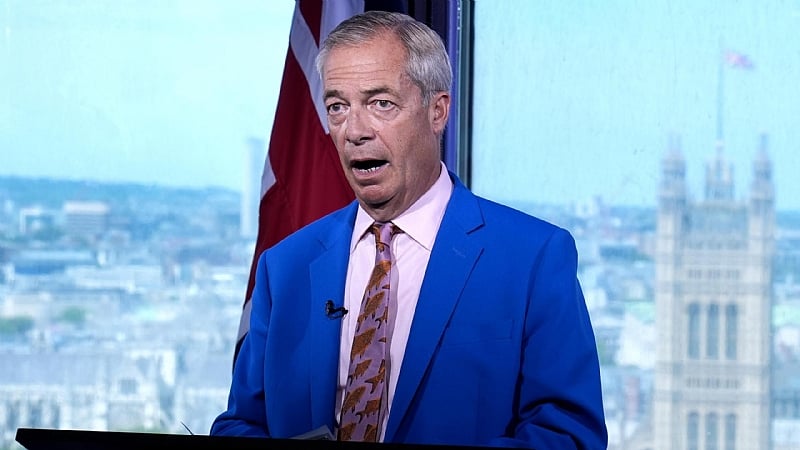
Nigel Farage is not a picture of happiness. As Britain’s version of Trumpism (only a version, never a facsimile), the leader of Reform UK had been flying high in the polls. But his themes are starting to tire: the anti-establishment figure who so happens to be profiting from it; the martyr who always falls just short of the sword; the erratic, even cranky bully who aims volcanic fury at media reports he doesn’t like.
A report from The Sunday Times was certainly one such example he did not take a shine to. According to the paper, George Cottrell, a long-time aristocratic aide and convicted criminal, provided funding to Reform UK covering various expenses, including private security, staffing for social media boosting and plush accommodation. These were not declared to parliamentary authorities. Cottrell’s copybook was somewhat blotted by an eight-month stretch in a US prison on wire fraud charges, not that it made much of a difference to Reform operators. (It could have been worse, given his agreement to launder drug money in an undercover FBI sting operation.) As Rob Lownie quipped in Unherd, “In a party with little fondness for strictures, Reform UK insiders maintain that there is one rule: ‘Don’t ask what Posh George does.’”
The Cottrell connection says much about Farage as populist manqué, one who heaps bile upon the powers that be only to cavort and revel with them. Posh George, suggests the political editor of The Independent, David Maddox, has the potential of cursing the Reform leader’s bid for prime ministerial honours. Maddox overeggs the pudding, but he offers that stern Pauline warning that people are judged by the company they keep. Think of Labour’s Keir Starmer and his insensible decision to allow Peter Mandelson (another creature of the “fix-it” school), friend of the late convicted paedophile Jeffrey Epstein, to become UK ambassador to Washington. Or the Conservative Boris Johnson’s dotty promotion of the insufferable Chris Pincher (“Pincher by name, pincher by nature”) to deputy chief whip.
To this can be added an April 2024 gift of £5 million from the cryptocurrency investor and billionaire donor Christopher Harborne, that great exemplar of Britishness who prefers to express his flagged patriotism from the distant climes of Thailand. Harborne’s generosity did not go unnoticed. Since May, Farage has been under investigation by the Parliamentary Commissioner for Standards for failing to declare Harborne’s gift.
According to the parliamentary rule book, members, subject to various qualifications, must register “any gifts, benefits or hospitality with a value of over £300 which they receive from a UK source.” Multiple benefits from the same source over the value of £300 in a calendar year must also be registered. An exemption does exist for those gifts and benefits deemed “purely personal”. On becoming an MP, Farage registered a trip to Belgium donated by Cottrell to the value of £9,253, and a subsequent £15,276 donation for a US domestic flight in December 2024. After that, nothing appears. Farage further argues that the gift from Harborne was “unconditional” and would go to costs incurred for personal security. The argument here is that it was also given in a personal capacity, thereby exempting it from declaration.
What, then, does a hassled demagogue do in such a situation? For the MP for Clacton, the choice was simple, largely because it was made for him. (The outcome inquiry by Daniel Greenberg, the Parliamentary Commissioner for Standards, could well have forced the issue.) The “people of Clacton,” Farage suggested in a live video statement, “should be the judges of my actions”. Here was a chance to “stick two fingers up at the entire establishment”. Public money had not been misused; no law had been broken.
Such gestures, to be invested with meaning, need fellow participants. And the other parties of British politics have made noises that they will not be fielding candidates in Farage’s forced by-election. The Liberal Democrat leader Ed Davey has suggested that all parties “stand aside” rather than involve themselves in “Farage’s vanity project”. The Tory leader, Kemi Badenoch, thought the exercise a “gimmick” designed to “distract people from what is happening”.
In such a situation, only suitable levels of disgust and disapproval will prevent Farage’s re-election. Reform voters have become fairly used to seeing their man of the long moment derided and mocked for not abiding by the rules. The party’s economic spokesperson, Robert Jenrick, gives some sense to this by claiming that the link with Cottrell was a “very old story that has been dredged up”. Besides, as Donald Trump’s electoral fortunes demonstrate, the iconoclastic rulebreaker who so happens to accuse everybody else for not following the rules is the very sort of record that can get you elected. That said, it is hard to shake off the feeling that being an elected MP is simply not something Farage is particularly fond of. He has always preferred to do things from outside the tent of representation, repeatedly failing to win a seat in the House of Commons, yet consistently present in British politics. Returning him to Westminster, and continuing investigations, may be exactly the sort of punishment he deserves.
Dr. Binoy Kampmark was a Commonwealth Scholar at Selwyn College, Cambridge. He currently lectures at RMIT University. Email: [email protected]

Binoy Kampmark, © 2026
Dr. Binoy Kampmark was a Commonwealth Scholar at Selwyn College, Cambridge. He currently lectures at RMIT University. Email: [email protected]. More He is a Senior Lecturer in the School of Global, Urban and Social Studies, teaching within the Bachelor of Social Science (Legal and Dispute Studies) program.
Binoy’s research and teaching interests lie in the intersections of law, international relations and history. Much of his research and teaching involves the examination of conflict, diplomacy, and the various crises confronting international society including refugees, terrorism, ‘rogue’ states and undocumented citizens.
Binoy has written extensively in both refereed journals and more popular media on his research interest topics of the institution of war, diplomacy, international relations, 20th century history and law.
The quality of his research has been acknowledged in awards made by the US-based International Association for the Study of Forced Migration and Limina, journal of the History Department of the University of Western Australia.
Media expertise
Binoy is available for media interviews and comments as an expert on international and national security, terrorism, the war on terror and politics.
He has been interviewed for National Public Radio in the United States, Radio National in Australia, and radio stations in South Africa. He is also a regular contributor to online publications including The Conversation, Eureka Street, CounterPunch (US) and Scoop (NZ).
Binoy was also commissioned by the UK History Channel in December 2007 to January 2008 to write package descriptions for the American Civil War, and in March 2006 to write a package on World War II: The War in the West, 1943-1945.Column: Binoy Kampmark
Disclaimer: “The views expressed in this article are the author’s own and do not necessarily reflect ModernGhana official position. ModernGhana will not be responsible or liable for any inaccurate or incorrect statements in the contributions or columns here.”
Follow our WhatsApp channel for meaningful stories picked for your day.
Top Stories


<!–
–>
Originally published on www.modernghana.com
