

July 9, 2026
Beyond The Boogeyman: Deconstructing Fifa’s Impunity And The Roadmap For Ghana Football
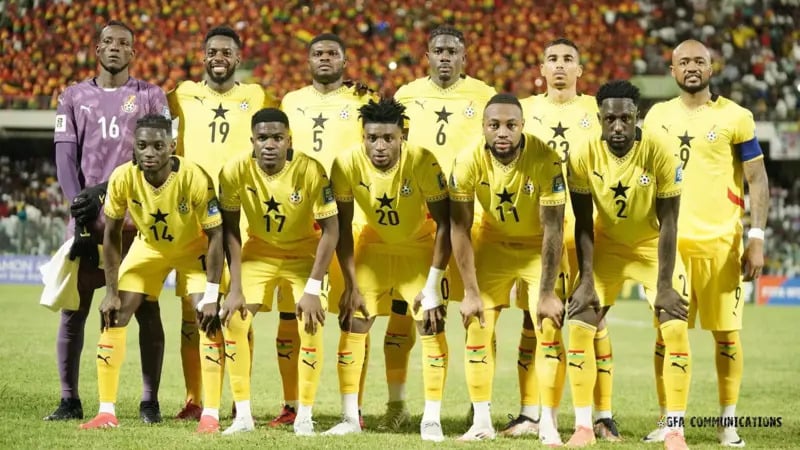


Beyond The Boogeyman: Deconstructing Fifa’s Impunity And The Roadmap For Ghana Football
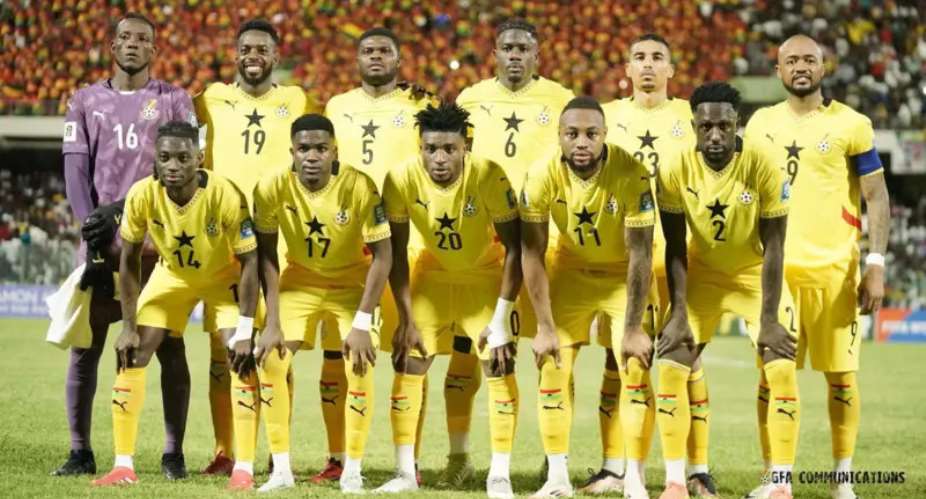
When Terry Pratchett wrote, “The thing about football – the important thing about football – is that it is not just about football,” in his 2009 novel Unseen Academicals, he outlined a landscape defined not by the beauty of the sport, but by global power dynamics, corporate sovereignty, and unchecked capital. In his poignant analysis of domestic football governance, commentator Tony Asare rightly frames the Ghana Football Association (GFA) as a private club quietly operating a taxpayer-funded financial siphon—effectively “using our national ATM card” while denying citizens the pin code.
However, to truly understand the crisis facing the Black Stars, the public conversation must expand beyond national borders. The institutional rot does not stop at the GFA’s offices in Accra; it is a structural feature hardwired into the global governance architecture of FIFA. For generations, African nations have been frozen into compliance by a singular, carefully engineered bogeyman: “Government interference.” We have been conditioned to believe that any state-led demand for financial transparency or judicial accountability will instantly trigger a FIFA ban, isolating our country from the world stage.
This narrative is a myth weaponized to protect institutional impunity. A critical look at both the history of world football and the ongoing 2026 FIFA World Cup reveals a stark reality: FIFA’s standards of sovereignty are deeply hypocritical, bending effortlessly to accommodate geopolitical and financial titans while crushing the self-determination of developing footballing nations.
The Architecture of the Cartel: Sovereignty vs. Impunity
To understand how our public purse is drained while our national pride is systematically compromised, we must parse the legal mechanisms that protect local and global soccer elites:
- The Private Club Illusion: The GFA operates as a private company registered under the Companies Act. Legally, it shares the same status as the Ghana Medical Association (GMA) or the Ghana Bar Association (GBA)—it is not a public sector agency, and the public holds no shares or votes in its elections.
- The FIFA Shield (Article 19): Despite its private status, the GFA answers to FIFA, a private Swiss non-profit corporation, and CAF. Under the guise of Article 19 of the FIFA Statutes (“independent management”), global football’s governing body acts as a protection racket, threatening international bans if domestic courts or state auditors investigate internal financial irregularities. This exposes a fundamental systemic flaw: local organizations, whose entire emotional and financial support structure is built by the people, are controlled from the outside without the host country possessing the baseline sovereign right to demand accountability.
- Monopolized Passion, Socialized Debt: This allows local football executives to remain cocooned in a fine cyst of total impunity. They retain exclusive control over millions of dollars in tournament revenues, while the Ghanaian taxpayer is left to foot the bills for flights, high-end hotels, coaches’ salaries, and player allowances. This constitutes the problematic institution of an autonomous corporate entity operating within our borders without any regard for local authority.
A History of Corruption and Selective Justice
FIFA’s demands for total independence are historically selective. When real power knocks on the door in Zurich, the “sanctity of football’s autonomy” instantly evaporates.
1. The Historical Scandals: Protecting Wealth, Indicting Poverty
FIFA has spent decades operating outside standard corporate norms, stepping into the crosshairs of criminal law only when forced by geopolitical superpowers:
- The ISL Collapse and the 2012 Unsealing: The 2001 bankruptcy of International Sport and Leisure (ISL), FIFA’s exclusive marketing partner, originally exposed a multi-million dollar web of bribes and kickbacks paid directly to senior FIFA executives, including former President João Havelange and CAF President Issa Hayatou. For years, FIFA fought aggressively in Swiss federal courts to keep these files sealed, going so far as to pay off prosecutors in financial settlements to bury the evidence. However, this legal cover-up collapsed in July 2012 when the Swiss Federal Supreme Court ordered the release of the damning 41-page investigation. The unsealed documents formally proved that Havelange received at least 1.5 million Swiss francs ($1.53 million) in bribes, while executive committee member Ricardo Teixeira pocketed 12.7 million Swiss francs ($13 million).
- The Repayment Loophole: The unsealed ISL files further revealed that Swiss prosecutors only dropped their formal criminal embezzlement investigation after Havelange and Teixeira agreed to repay 5.5 million Swiss francs ($5.9 million) in restitution to FIFA. Because Swiss corporate laws at the time failed to classify commercial bribery as a criminal offense, paying off the restitution and covering court costs allowed them to buy their way out of jail time. While CAF President Issa Hayatou received a formal reprimand from the International Olympic Committee (IOC), he maintained his soccer executive status for years by framing his illicit payout as a “donation” to CAF. This exposure shattered the myth of FIFA’s internal self-regulation and laid the legal blueprint for future judicial interventions.
- The 2015 DOJ Indictments and the 2026 Legacy: In 2015, the U.S. Department of Justice and Swiss authorities launched synchronized raids in Zurich, indicting 14 high-ranking FIFA officials for wire fraud, racketeering, and a 24-year, $150 million bribery scheme. As of 2026, the legacy of this case has fundamentally redefined global sports law. Through a masterful twist of corporate legal maneuvering, FIFA successfully positioned itself as a “damaged victim” of its own corrupt executives, prompting the DOJ to remit over $201 million USD in seized and forfeited assets back to the FIFA Foundation, CONMEBOL, and CONCACAF.
- The Supreme Court Legal Pivots (2023–2025): While the sprawling investigation originally yielded mass convictions and guilty pleas from power brokers like former CONMEBOL President Juan Ángel Napout, the legal landscape shifted dramatically between 2023 and 2025. Following U.S. Supreme Court rulings in Ciminelli v. United States and Percoco v. United States, which narrowed the scope of the federal “honest services fraud” statute, federal judges overturned several convictions of international sports marketing executives. The courts ruled that U.S. wire fraud laws do not automatically criminalize commercial bribery committed by foreign nationals acting outside U.S. borders.
- The Ultimate Paradox: Despite this massive judicial encroachment into football’s governing body, FIFA never banned the United States or Switzerland for “government interference.” Instead, the absolute proof of geopolitical leverage is on display right now: the United States was rewarded with the prime hosting rights for the expanded 2026 FIFA World Cup. FIFA’s ultimate compliance with the DOJ completely debunks the myth that its “independence” rule applies equally to all global actors. Conversely, when domestic governments across the Global South attempt to audit stolen World Cup allocations, FIFA instantly weaponizes international bans to lock out domestic criminal laws and protect corrupt local executives.
2. The 2026 Double Standards: Olise vs. Balogun
This systemic hypocrisy is playing out transparently at the current 2026 World Cup. On July 8, 2026, FIFA flatly rejected a formal appeal by the French Football Federation (FFF) to rescind a questionable yellow card handed to Michael Olise during their match against Paraguay, keeping the French winger on a strict disciplinary tightrope ahead of their quarterfinal with Morocco. FIFA claimed the referee’s field decision was absolute and the regulations unyielding.
Yet, just days earlier, FIFA completely bypassed its own regulatory framework for the tournament’s co-host. Following intense legal pressure from U.S. Soccer and direct, high-level backing from U.S. President Donald Trump, FIFA intervened to completely suspend a mandatory one-match red card ban for American forward Folarin Balogun. Citing an arbitrary interpretation of Article 27 of their disciplinary code, FIFA rewrote its rules in real time to allow the American star to play against Belgium, drawing widespread condemnation from the European Parliament for manipulating the competitive integrity of the tournament on the fly.
3. Inconsistencies on the Pitch: The African Disadvantage
This geopolitical leverage directly dictates how African nations are treated on the field. Throughout the 2026 World Cup, refereeing and VAR standards have selectively collapsed whenever African teams square off against global giants:
- The Egyptian Robbery (Egypt vs. Argentina): In a glaring display of officiating bias, Egypt was completely robbed during their match against Argentina after being denied a clear, stonewall penalty. Despite explicit contact inside the box that clearly warranted VAR intervention, the referee waived play on, and the system remained silent, showcasing a frustratingly familiar double standard where traditional powerhouses receive the absolute benefit of regulatory doubt.
- Ghana vs. England (2026): During Ghana’s group stage match against England at Boston Stadium, the Black Stars were subjected to similarly staggering officiating double standards:
- The Pickford Escape: England goalkeeper Jordan Pickford charged wildly out of his penalty box, wiping out Ghanaian forward Prince Abu in a clear red-card offense that was completely ignored.
- The Denied Penalty: Moments later, England defender Ezri Konsa visibly tripped Prince Abu inside the area. It was an undeniable penalty, yet VAR completely refused to review the play. The negligence prompted Ghana manager Carlos Queiroz to bitterly note that the VAR officials must have “gone for a coffee” or “gone on holiday.”
The Financial Siphon: Follow the Money
The financial asymmetry behind how our national football wealth is handled becomes glaringly obvious when you look at the raw numbers.
First, consider the Prize Money Accrued: the GFA pocketed a staggering $13.5 million USD immediately upon exiting in the Round of 32, which is part of a larger $24 million USD total tournament allocation.
Yet, despite these massive inflows, the Operational Funding of the team remains 0% self-funded. The GFA systematically keeps its massive corporate revenues and tournament earnings entirely private, but then turns around and relies almost completely on the Ministry of Youth and Sports to fund elite logistics like flights, hotels, and match bonuses using taxpayer money.
This setup is worsened by a complete lack of Public Transparency. Unlike their counterparts in European FAs, the GFA provides absolutely no open budgets, pays completely ambiguous taxes on its massive tournament prize earnings, and leaves our domestic referees chronically unpaid while top executives insulate themselves from financial oversight.
The Cost of Distraction: Sacrificing the National Spirit
While tracing this financial siphon, we must look directly at how this systemic prioritization of cash over chemistry manifests on the pitch. Ghana’s tight 1-0 exit against Colombia in Kansas City was not just a failure of tactical execution—it was a direct casualty of administrative chaos.
The match was lost because of unnecessary interference from those who mistakenly thought promising money was the same as carrying the national spirit. Instead of fostering focus, a wave of hollow financial posturing disoriented our players right when discipline mattered most. When administrators treat tournament progression as a transaction rather than a fierce psychological battle, the team pays the price. By the time Jhon Arias struck in the 14th minute, the damage was done; the Black Stars were left chasing a game they lacked the clarity to salvage, precisely because their internal harmony had been fractured by outside noise.
A Diligent Roadmap for the Black Stars’ Venture into the Future
Ghana must stop acting as a passive victim of FIFA’s global biases. If the GFA wishes to claim the complete independence of a private club, the state must treat it like one and close the public vault. We must deploy an assertive framework to protect our national wealth and the integrity of our football:
- Enact a National Teams Accountability Act, or something regulatory
Parliament must end unconditional state bail. New legislation must mandate that public funds will only be disbursed to independent sports bodies that submit to strict transparency checks. Before a single public dollar is approved for international tournaments, the GFA must present fully audited corporate accounts, itemized budgets, and clear domestic tax compliance. FIFA’s statutes govern its internal elections; they have absolutely no legal jurisdiction over how a sovereign nation manages its own national budget. If the GFA refuses an audit, they must fund their own flights, hotels, and bonuses out of their $24 million plus allocation.
- Reframe the National Team as a Commercial Franchise License
The “Black Stars” brand is a public intellectual asset rooted in the national identity of Ghana, not the property of a private cartel. The state should reframe its relationship with the GFA, treating the association as a private licensee managing a state asset. If the licensee fails to invest in the domestic game, evades financial transparency, or mismanages international prize allocations, the state retains the right to revoke access to national infrastructure—including state-owned stadia and national branding.
- Decentralized Funding for the Domestic Foundation
We must stop flying suitcases of hard-earned US dollars across the globe to pay astronomical match bonuses to foreign-based players while local football infrastructure rots. Our competitive resilience relies on the grit of domestic talent, excelled by the heroics of local stars like goalkeeper Benjamin Asare. Public funding must be structurally redirected away from executive junkets and into state-owned football academies, community pitches, and grassroots youth training facilities that private executives cannot gatekeep or exploit.
- Forge a Voting Bloc for CAF and FIFA Reform
Ghana cannot contest these international double standards in isolation. The Ministry of Youth and Sports must align with forward-thinking member associations across the Confederation of African Football (CAF) to build a unified voting coalition. This bloc must demand that disciplinary variances and regulatory exemptions – such as the unprecedented intervention seen in the Balogun case – be strictly codified and applied equally to all member nations, rather than utilized as political currency for wealthy host countries.
- De-weaponize the Myth of the “FIFA Ban”
The public and media must shed their fear of the FIFA bogeyman. History demonstrates that FIFA does not execute international suspensions for standard tax audits, financial tracking, or the enforcement of domestic corporate transparency laws. But even if enforcing accountability brings systemic friction, a temporary period of international isolation to rebuild our domestic foundation from the ground up is infinitely better than enduring generational, taxpayer-funded corruption.
Conclusion
The illusion of a neutral global footballing authority is completely shattered. While the Black Stars will always stir our collective passion, our national emotions can no longer be used as an excuse to validate bad financial decisions.
The passion belongs to the fans; the money belongs exclusively to the Ghanaian taxpayer. Private executives cannot be permitted to hide within a fine cyst of impunity, waiting for the next international tournament cycle to deplete public cash with zero accountability. If the GFA and FIFA insist on absolute private autonomy, it is time for the state to close the vault and let them pay their own way, or maybe say welcome to the BRICS Games!
It is time to lift the veil from our eyes.

Yao Ababio, © 2026
Yao Ababio. More With a rare blend of technical mastery and civic passion, Yao Ababio operates at the intersection of global infrastructure and national progress. As a process engineering leader and IT executive holding a PhD in Chemical Engineering and an MBA, he applies Lean and Six Sigma methodologies to large-scale systemic challenges, diagnosing root causes and engineering actionable solutions. Through his writing, Dr. Ababio advocates for a new era of sustainable development—one driven by strict institutional accountability, civic discipline, and a cultural transition toward selfless public service.Column: Yao Ababio
Disclaimer: “The views expressed in this article are the author’s own and do not necessarily reflect ModernGhana official position. ModernGhana will not be responsible or liable for any inaccurate or incorrect statements in the contributions or columns here.”
Follow our WhatsApp channel for meaningful stories picked for your day.
Top Stories


<!–
–>
Originally published on www.modernghana.com
