

July 31, 2026
Between Kumasi and Accra: A Highway of Hope and Hazard


Between Kumasi and Accra: A Highway of Hope and Hazard
Part Two of the Road Story Series
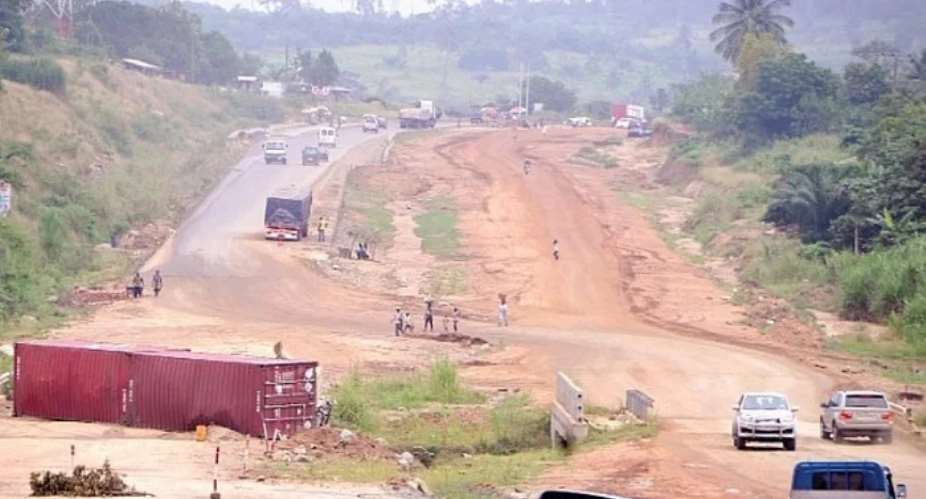
The return journey from Kumasi to Accra often begins with mixed emotions. There is always the joy of leaving the Garden City after accomplishing one’s mission, but there is also the lingering anxiety of confronting one of Ghana’s most talked-about highways: a road that has stubbornly refused to match the economic importance of the cities it connects.
Before leaving Kumasi, however, one cannot help but admire the city’s impressive road network. Over the years, Kumasi has witnessed significant improvements in its urban roads. Wide dual carriageways, neatly paved streets and well-designed interchanges have transformed movement within the metropolis. Whether travelling through Asokwa, Ahodwo, Santasi, Suame or Adum, the driving experience is largely pleasant.
The only real adversaries are traffic congestion during peak hours and the intimidating procession of long articulated trucks that snake through the city’s undulating landscape. Watching these giant machines descend and climb Kumasi’s hills in convoy is enough to make even experienced motorists grip their seats a little tighter. Fortunately, the city’s road engineering generally gives both small and heavy vehicles enough room to coexist.
Our return to Accra was made even more comfortable by an unexpected privilege. Instead of joining the usual commercial transport, I secured a seat in our office’s 15-seater van, a modern 2021 Nissan Urvan that looked every bit prepared for the journey ahead.
Departure was exactly 5:00 p.m.
As I settled into my seat, my eyes caught the unmistakable mark of the cross on the driver’s forehead. Whether it was simply a declaration of faith or a silent prayer for the demanding journey ahead, only he could tell. On roads like these, many drivers entrust as much to divine protection as they do to their driving skills.
Yet, if experience has taught me anything, it is that the driver is not always the biggest variable on Ghana’s highways. Drivers are human. Our driver had left Accra at 4:00 a.m., successfully driven to Kumasi, completed his day’s assignment and managed only about two hours of rest before embarking on the return trip. His deep, uninterrupted snores during that brief rest spoke volumes about the exhaustion his body had accumulated. Fatigue is a silent passenger on many commercial journeys.
Thankfully, the vehicle inspired confidence. The Nissan Urvan was mechanically sound, clean and comfortable. There was little reason to doubt its ability to faithfully discharge its duties over the nearly 250-kilometre journey back to the capital.
The real enemy was waiting outside.
Darkness descended quickly, exposing the true condition of the Accra-Kumasi highway. The beautifully smooth roads we had enjoyed within Kumasi suddenly gave way to a highway whose battered surface seemed to tell stories of neglect. The potholes that appeared harmless during daylight transformed into what looked like open manholes at night. Every approaching headlamp concealed another depression waiting to jolt passengers from their seats.
From Nkawkaw through Suhum to Accra, the van pressed on at remarkable speed, weaving through patched sections of asphalt interrupted by fresh craters. It become a continuous rhythm of acceleration, braking, swerving and bouncing. Every successful avoidance of a pothole seemed to be followed immediately by another that could not be escaped. Eventually, we got to the Nsawam to Amasaman stretch where the co-driver who had had a good doze from Konongo took over. He was no better than the first in terms of speed.
As the van continued slicing through the night, one thought remained persistent. Modern vehicles can cushion the discomfort. Skilled drivers can reduce the danger. Prayer may calm anxious hearts. Yet none of these should replace what every traveller deserves, i.e. a safe, durable and reliable highway connecting Ghana’s two largest cities.
Whatever it was, the journey still took us 6 hours till we arrived at our destination. What a ride back to Accra!
Now, one begins to wonder how a road that serves as Ghana’s principal economic artery has deteriorated into such a demanding obstacle course. This highway carries traders, students, tourists, heavy cargo, public transport and private vehicles every single day. It links two of the nation’s largest commercial centres, yet portions of it continue to challenge both man and machine.
It is impossible not to admire the resilience of Ghanaian drivers. They have developed an almost instinctive ability to memorise the geography of potholes, anticipate broken shoulders and negotiate dangerous sections with remarkable precision. But resilience should never become a substitute for infrastructure.

Ransford Bekoe, © 2026
Ransford Bekoe works with the Association of African Universities (AAU) whose headquarters is in Ghana. He is currently the Partnership Manager of the AAU. He writes about educational, health and social issues and also interviews academic mentors on their life achievements.. More A motivational speaker, reader and leadership training facilitator.
Column: Ransford Bekoe
Disclaimer: “The views expressed in this article are the author’s own and do not necessarily reflect ModernGhana official position. ModernGhana will not be responsible or liable for any inaccurate or incorrect statements in the contributions or columns here.”
Follow our WhatsApp channel for meaningful stories picked for your day.

Top Stories


Originally published on www.modernghana.com
