

July 30, 2026
Stop Building Unnecessary Flyovers, Improve Citizens Lives— Tinubu Urges Governors
4 hours ago | General News
Stop Building Unnecessary Flyovers, Improve Citizens’ Lives— Tinubu Urges Governors

President Bola Tinubu has urged state governors to stop investing in flyovers in areas with little traffic and instead deploy their increased federal allocations to road infrastructure that would improve the quality of life of citizens and strengthen security operations across the country.
This was just as the president said states were now receiving between four and five times the allocations they previously got from the Federation Account and should utilise the resources to expand road networks that would connect rural communities and improve access for security agencies.
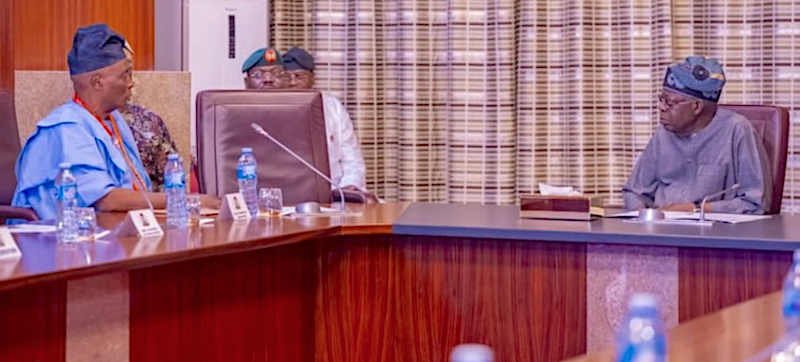
Tinubu spoke on Thursday at the Presidential Villa, Abuja, while receiving a delegation of traditional rulers from Oyo State led by the Olubadan of Ibadanland, Oba Rashidi Ladoja, who visited to congratulate him on the successful rescue of schoolchildren and teachers abducted in Oriire Local Government Area after spending 56 days in captivity.
Addressing members of the delegation, including former governors, the President said the financial position of states had improved considerably under his administration.
“The cost of operation is high. But the money that I’m pushing to the states, if you had it during your own time, or during my time, it would have been different,” Tinubu said.
“They are taking four to five times their money. Nobody is borrowing money to pay salaries now. Pensioners are receiving their pay.
“They should do more instead of building flyovers where there is no numeric traffic; build roads and artery networks to really enhance the quality of life and the accessibility of the security agencies to penetrate those areas.’’
The President also revealed that the terrorists behind the Oriire school abduction demanded the release of detained members of their group in addition to ransom but that the Federal Government rejected the conditions outright.
According to him, his administration remains committed to a policy of refusing negotiations with terrorists or paying ransom for abducted victims.
“We refuse to negotiate for ransom. These criminals wanted us to release from detention members of their criminal gangs that were already arrested, that was one of their conditions, outside of the money they were looking for,” he said.
“And we said no deal. We are not going to negotiate with criminals.”
Tinubu disclosed that the security challenge exposed by the Oriire abduction informed his directive to expand the Nigerian Army from eight to 12 divisions, saying the move was intended to reduce response time and improve the military’s operational capacity against terrorism and banditry.
He explained that the successful rescue mission was aided by the military’s knowledge of the forest terrain, stressing that every major security incident offered lessons that required changes in operational strategy.
“As we emphasise the question of security, each event teaches us new methods, opens our eyes, challenges us to examine and re-examine our architecture, our strategy, our map and operations,” he said.
“We refused to pay ransom. We have the geography of the forest. We know what it is, and in answer to it, you’ve seen that from eight divisions, we are now moving to 12 divisions, to shorten the response time, to give that response time the teeth that is needed for us to defeat terrorism and banditry.”
The President further reaffirmed his administration’s commitment to establishing state police, saying the proposed policing system would operate with safeguards against abuse while assigning traditional rulers greater responsibility in local security.
“There will be state police, and that state police will have guardrails from abuses. We will protect it from abuses, and you traditional rulers too will have a role to play more,” he said.
Tinubu also linked the worsening security situation in Nigeria to instability in neighbouring Sahel countries, including Mali, Burkina Faso and Niger Republic, noting that cross-border insecurity had compounded the country’s security challenges.
He added that the Federal Government was strengthening the capacity of forest guards alongside plans to establish state police as part of broader efforts to tackle terrorism, banditry and kidnapping nationwide.
Originally published on www.thenigerianvoice.com
