

July 24, 2026
Germany Flexes Its Muscles for Africa’s Youth, But Can It Outrun China and Russia?


Germany Flexes Its Muscles for Africa’s Youth, But Can It Outrun China and Russia?
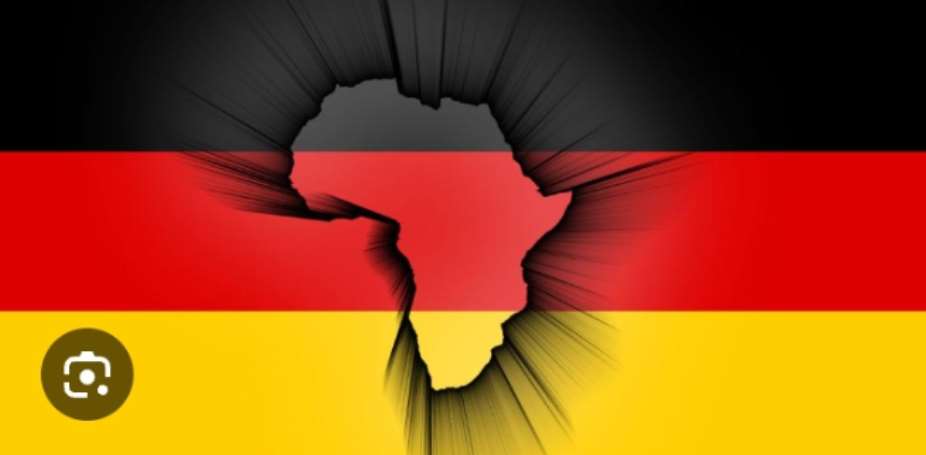
Berlin has decided it can no longer afford to watch Africa’s youthful energy drift toward Beijing and Moscow without a fight. German Foreign Minister Johann Wadephul is currently on his third Africa tour of 2026 alone a rhythm of engagement that would have been unthinkable for German diplomacy a decade ago, when Africa policy was largely an afterthought bolted onto trade communiqués.
A Diplomat on the Move
The itinerary tells its own story. Wadephul followed up on earlier journeys to Ethiopia and Kenya in January and Morocco in April with a swing through Mauritania, Nigeria, and South Africa this month. He is currently in Nigeria after a major stopover in Mauritania, before concluding in South Africa. By his own account, these repeated trips reflect a strategic necessity as Germany widens its engagement with the continent.
In Mauritania, the visit leaned hard into security: Wadephul’s stop touched on security cooperation, migration management, and regional stability, with an analyst noting Berlin’s particular interest in Mauritania as a node on the Atlantic migration route toward Europe. Tellingly, his delegation visited the Mourchidates, the state-trained corps of female Islamic spiritual guides deployed to counter extremism a signal that Berlin sees grassroots, community-based counter-radicalization work, not just hardware, as central to its Sahel-adjacent strategy.
Nigeria: Courting the Creative Generation
The Nigerian leg reads differently less counterterrorism, more courtship of a demographic dividend. Wadephul met entrepreneurs, creative’s, influencers, filmmakers, and students, describing Nigeria as a striving powerhouse brimming with creative ideas and declaring that Germany is looking to Africa for new global partners. Vocational education, skills development, and cooperation in science, technology, and innovation were flagged as priority areas, alongside expanded commercial ties and German investment.
This is not incidental branding. Programmes such as AFRIKA KOMMT, which places young African professionals inside leading German companies for a year of structured leadership training, and AGYLE’s green-tech leadership track for young Africans and Germans working at the intersection of technology and sustainability, point to a deliberate Berlin strategy: capture the continent’s brightest young minds early, embed them inside German institutional and corporate culture, and let the relationship compound over a career rather than a single grant cycle.
South Africa: The Anchor Economy
The tour closes in Pretoria and Johannesburg, where the numbers are already substantial. South Africa hosts more than 600 German companies, with German direct investment reaching €7.99 billion in 2023 against €2.6 billion flowing the other way. Talks here are expected to centre on industrial cooperation and the energy transition, even as recent xenophobic attacks put pressure on Wadephul to press the case for shared democratic values.
The Wider Frame: Berlin’s Africa-AU Compact
None of this is happening in isolation. The trip builds on a strategic dialogue on foreign and security policy that Germany launched with the African Union last year in Addis Ababa, backed by more than €100 million in pledged funding. Wadephul’s own framing is instructive: he has argued that Europe and Africa are closely interconnected politically, economically, and in security terms, facing many of the same challenges, and that a strong Africa serves Germany’s own interest.
The Shadow of Beijing and Moscow
Here is where the muscle-flexing meets its limits. The contest for Africa’s youth is not one Germany is entering from a position of comfort. Survey data from the African Youth Survey has shown large majorities of young Africans rating China as the most influential and most positively viewed global power on the continent, with Russia’s standing also recovering in the years since the invasion of Ukraine despite Western sanctions pressure. China’s trade with Africa has swelled toward the $300 billion mark, reinforced by Beijing’s decision to extend zero-tariff access to all African states with diplomatic ties, and by the tens of billions pledged at the last Forum on China-Africa Cooperation summit sums no European power, Germany included, currently matches in comparable form.
Russia, for its part, continues to lean on hard security offerings mercenary deployments once badged as Wagner and now folded into the Africa Corps, arms sales, and regime-protection deals a transactional model that has proven attractive to juntas across the Sahel precisely because it asks fewer governance questions than Western partners typically do.
Germany’s comparative advantage, if it has one, is precisely the opposite of that transactional logic: vocational training pipelines, corporate apprenticeships, university partnerships, and civil-society investment of the kind on display in Mauritania and Nigeria this month. It is a slower, more institutional form of influence-building betting that a Nigerian engineer trained in Germany or a South African firm partnered with a German manufacturer becomes a durable bridge in a way that a Kalashnikov shipment or a stadium gift never quite does.
Ghana’s Vantage Point
For Ghana and West Africa more broadly, the calculus is familiar. We have already watched Türkiye’s Maarif Foundation, TIKA, and TRT Afrika build cultural and educational footholds here through patient, youth-focused programming the same playbook Germany now appears to be running, if a few years behind. The African Union’s own youth institutions, from the Specialized Technical Committee on Youth to the new UNDP-backed African Youth Co-Creators Council, give the continent’s 532 million young people a share of the population set to keep growing through the 2070s while every other region’s youth cohort shrinks real leverage to make these external suitors compete on African terms rather than accept whatever is offered.
The muscle Germany is flexing is real. Whether it can out-lift China’s chequebook and Russia’s guns in the contest for the continent’s youngest and largest generation is a different question and one that will be decided less in Berlin’s foreign ministry than in the vocational classrooms, tech hubs, and university lecture halls of Lagos, Accra, and Johannesburg over the next decade.
Mustapha Bature Sallama.
Medical/ Science Communicator,
Private Investigator, Criminal investigation and Intelligence Analysis.
International Conflict Management and Peace Building.USIP
[email protected]
+233-555-275-880
Sources
Adwoa Tenkoramaa Domena, “Africa: Germany’s Growing Interest in Africa – A Win for Both Sides?”, Deutsche Welle via AllAfrica, 22 July 2026: https://allafrica.com/stories/202607230187.html
“AFRIKA KOMMT Programme for Young African Professionals,” fundsforNGOs: https://www2.fundsforngos.org/leadership/afrika-kommt-programme-for-young-african-professionals/
“AGYLE 2026 GreenTech for Impact: Fully Funded Leadership Programme for Young Leaders from Africa & Germany,” Opportunities for Youth: https://opportunitiesforyouth.org/2026/02/23/apply-to-become-part-of-agyle-2025fully-funded-and-open-to-young-leaders-from-africa-and-germany/
“How Russia, China, France, America, Britain and Turkey Are Fighting for Africa’s Mind, Body and Soul,” ModernGhana.com, 21 May 2026: https://www.modernghana.com/news/1495086/how-russia-china-france-america-britain-and.amp
“The New Scramble for Africa: How Russia and China Are Reshaping the Continent,” Defense.info, 31 August 2025: https://defense.info/highlight-of-the-week/the-new-scramble-for-africa-how-russia-and-china-are-reshaping-the-continent/
“U.S. Loses Soft Power Edge in Africa,” Gallup, 11 February 2025: https://news.gallup.com/poll/644222/loses-soft-power-edge-africa.aspx
“Africa Youth Employment Outlook 2026,” Mastercard Foundation / World Data Lab / University of Cape Town: https://mastercardfdn.org/en/our-research/africa-youth-employment-outlook-2026/
“Call for Applications: African Youth Co-Creators Council,” UNDP, 2026: https://www.undp.org/africa/blog/call-applications-african-youth-co-creators-council

Mustapha Bature Sallama, © 2026
This Author has published 1587 articles on modernghana.com. More COE Hijama Healing Cupping therapy ,Mini MBA in Complimentary and Alternative Medicine .Naturopathy and Reflexologist. Private Investigation and Intelligence Analysis,International Conflict Management and Peace Building at USIP. Profession in Journalism at Aljazeera Media Institute, Social Media Journalism,Mobile Journalism, Investigative Journalism, Ethics of Journalism, Photojournalist, Medical and Science Columnist on Daily Graphic. Column: Mustapha Bature Sallama
Disclaimer: “The views expressed in this article are the author’s own and do not necessarily reflect ModernGhana official position. ModernGhana will not be responsible or liable for any inaccurate or incorrect statements in the contributions or columns here.”
Follow our WhatsApp channel for meaningful stories picked for your day.

Top Stories


Originally published on www.modernghana.com
