

August 22, 2026
Classrooms for Learning, Not for Likes: Ghana Must Stop Teachers Livestreaming Its Children


Sat, 22 Aug 2026 Feature Article
Classrooms for Learning, Not for Likes: Ghana Must Stop Teachers Livestreaming Its Children
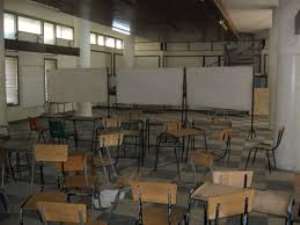
Somewhere in Ghana, right now, a classroom of eight-year-olds is being filmed for an audience they did not consent to and cannot comprehend. A teacher’s phone is propped against a chalkboard. The red “LIVE” indicator is on. Comments scroll past — hearts, laughing emojis, strangers’ usernames — as thirty small faces, thirty names, thirty daily routines, and the exact location of the school become searchable, screenshot-able, and permanent.
This is not a hypothetical. It is a visible and growing pattern across Ghanaian basic and second-cycle schools, documented in recent academic research on teachers’ social media use in the classroom, and increasingly normalised as a form of “engagement” or school promotion. It should concern every parent, headteacher, and regulator in the country — not because teachers filming their pupils is automatically malicious, but because Ghana already has a body of law built specifically to prevent exactly this kind of exposure, and that law is being ignored by default rather than by design.
The Law Ghana Already Has
Ghana is not short of legal protection for children’s privacy and image. What it is short of is enforcement reaching into the classroom.
- The 1992 Constitution. Article 28 places special constitutional obligations on the state to protect children from exploitation and from treatment that is harmful to their wellbeing, development, or dignity — a foundation from which every subsequent child protection statute in Ghana draws its authority.
- The Children’s Act, 1998 (Act 560). Enacted to give domestic effect to the UN Convention on the Rights of the Child, which Ghana ratified in 1990, the Act entrenches a child’s right to privacy and to protection from degrading treatment. Ghana Education Service’s own Code of Conduct for staff is explicitly built on this Act and the Convention — meaning teachers are already bound by professional rules drawn from the same source as the privacy protections routinely being ignored on TikTok.
- The Data Protection Act, 2012 (Act 843). Section 44 classifies personal data relating to “a child who is under parental control” as special personal data — a heightened protection category that a data controller may not process without meeting strict conditions. A pupil’s face, voice, name, and school location, captured on a livestream and transmitted to a platform’s servers, is personal data by any reasonable reading of this Act. A teacher filming a class without parental consent is, in the plain language of the statute, a data controller processing special personal data without lawful basis.
- The Cybersecurity Act, 2020 (Act 1038). Sections 62 to 68 establish Ghana’s child online protection framework, and Section 87 empowers the Cybersecurity Authority to order the blocking, filtering, or takedown of content on grounds that include the protection of children. The Act was built, in the words of the officials who championed it, to keep Ghanaian children safer online — not only from predators seeking out content, but from institutions that generate exposure carelessly in the first place.
Taken together, these are not vague ethical suggestions. They are a coherent legal architecture that already answers the question of whether a teacher may livestream a classroom of minors without consent. The answer, on the current state of the law, is no — not casually, not for engagement, and not without a documented, informed, opt-in decision by parents or guardians.
Why This Is Not a Small Thing
The instinct to wave this off as harmless; a proud teacher showing off an engaged classroom, misunderstands what livestreaming actually does. A livestream is not a photograph in a school newsletter. It is real-time, geolocatable, screen-recordable, and permanently indexable content, broadcast to an audience the teacher does not control and often cannot even see. Once a child’s face, voice, and school are public and searchable, that exposure cannot be recalled. There is no consent form a parent can retroactively decline.
This matters most for the youngest children the very group least able to understand what a camera is doing, let alone object to it — and it matters more, not less, in under-resourced schools, where families are least likely to have the digital literacy to know their child has been exposed, or the means to do anything about it once they find out.
A Call to Action
Ghana does not need new legislation to fix this. It needs the legislation it already has to be applied to classrooms, deliberately and soon.
- Parents and guardians should treat a teacher’s request to film or livestream their child exactly as they would treat any other request to process their child’s personal data: ask what platform, ask who sees it, ask how long it stays online, and say no by default until a clear answer is given in writing.
- Head teachers and School Management Committees should adopt an explicit, written classroom media policy — no livestreaming of pupils without documented parental consent, no exceptions for “just a quick video.” This costs nothing to implement and closes the single largest gap in the current system: the absence of any institutional rule at the point where the filming actually happens.
- Ghana Education Service and the Ministry of Education should issue explicit guidance extending the existing Rules of Professional Conduct for Teachers to cover social media and livestreaming, so that the Children’s Act and Data Protection Act obligations already binding on the Service are stated in language a classroom teacher can act on, not left buried in statute.
- The Data Protection Commission and the Cybersecurity Authority should treat schools as the accountability gap they are. Neither agency needs new powers to act here both already have jurisdiction. What is missing is visible enforcement that signals to schools that this is a live legal risk, not a theoretical one.
None of this asks Ghana to fear technology or retreat from digital classrooms. Properly consented, well-governed use of social media in schools can be a genuine asset for parent communication, for celebrating pupil achievement, for showcasing good teaching. But that value depends entirely on consent being sought, not assumed. A classroom is a place of learning, held in trust for children who did not choose to be there and cannot yet advocate for themselves. It should never quietly become a content studio.
Ghana wrote the rules that protect its children online more than a decade before this problem became visible in classrooms. The task now is simply to enforce them where the children actually are.
Rexford Adjei Darko is a Public Relations Practitioner, Governance & AI Advocate and CSR Researcher based in Udon Thani, Thailand, and a primary school teacher at Anuban Udonthani School.
Contact: [email protected] | +233 244 769 456 | +66 065 973 3550

Rexford Adjei Darko, © 2026
Public Relations Practitioner, Governance & AI Advocate and CSR ResearcherColumn: Rexford Adjei Darko
Disclaimer: “The views expressed in this article are the author’s own and do not necessarily reflect ModernGhana official position. ModernGhana will not be responsible or liable for any inaccurate or incorrect statements in the contributions or columns here.”
Follow our WhatsApp channel for meaningful stories picked for your day.

Top Stories


Originally published on www.modernghana.com
