

July 31, 2026
After the demolition: what fate awaits the Kan Bola land, and who absorbs the jobs it took with it?
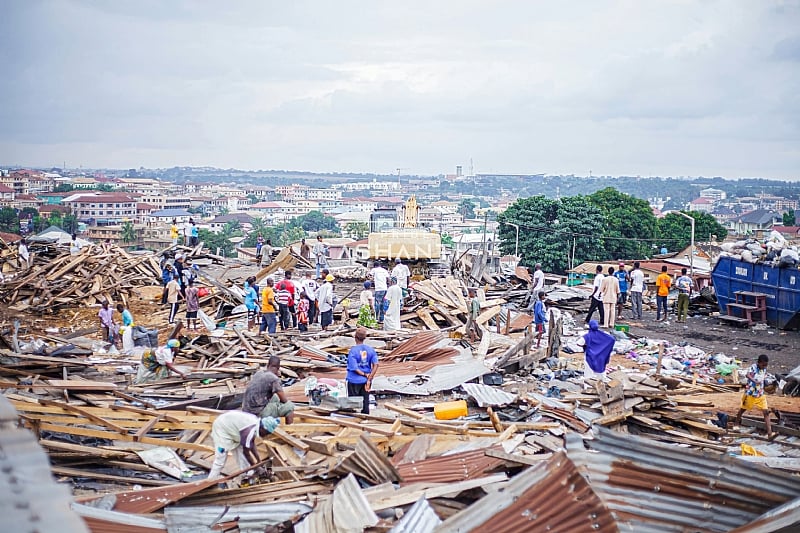


After the demolition: what fate awaits the Kan Bola land, and who absorbs the jobs it took with it?
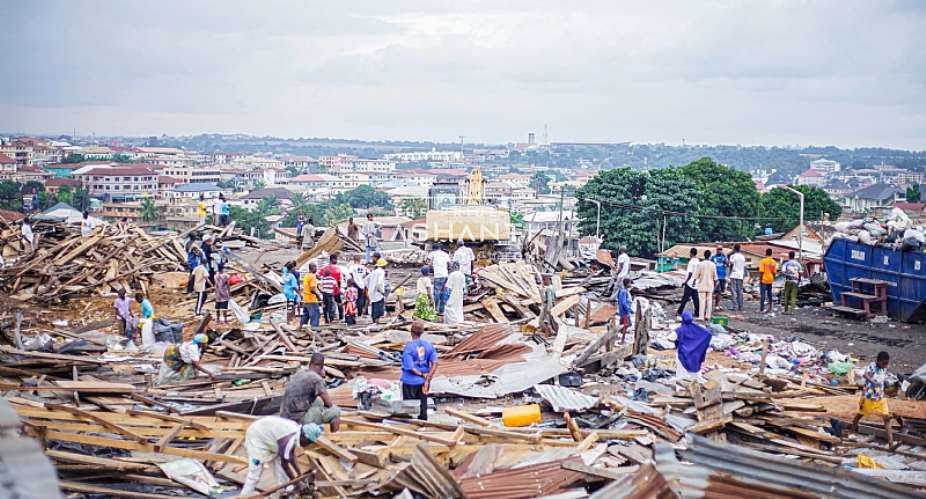
The bulldozers that moved into the Kan Bola site at Asawase Sabon Zongo, Kumasi, and this week were not clearing land for development. They were clearing a crime scene and, in the process, clearing away the livelihoods of an untold number of herdsmen, cattle traders, mechanics and petty workers who had built their daily bread around a cattle kraal that had stood at the heart of the community for years.
A killing that triggered a demolition order
The demolition follows the killing of 27-year-old Yusuf Zakari, who was set upon by a mob at the Kan Bola cattle kraal on 19 July after being accused of stealing GH¢4,800. He died at Komfo Anokye Teaching Hospital after being referred from Manhyia Government Hospital. Five suspects among them a plumber, a herdsman and a motor mechanic have since been remanded by the Asokore Mampong District Court, with police still pursuing others believed to have taken part in the attack. The case returns to court on 7 August.
In the aftermath, the Asokore Mampong Municipal Security Council (MUSEC), chaired by Municipal Chief Executive Ben Abdullah Alhasan and attended by the Manhyia Divisional Police Commander, ordered all occupants of the Kan Bola site to remove their structures and belongings ahead of a demolition exercise, citing the killing as part of a broader cluster of security concerns in the area including a recent drugs bust at the nearby Asawase Market. Residents were warned to vacate before the deadline or risk losing their property outright.
A security fix with an unaddressed economic tail
What the MUSEC directive settles on paper is a security question: remove the site that hosted a lynching, and the state is seen to be acting. What it leaves entirely open is the economic question that the community itself is now grappling with what happens to the people whose work depended on that patch of land?
Cattle kraals of this kind are not merely holding pens. They anchor a whole informal micro-economy: herdsmen who tend the animals, traders who buy and sell livestock, butchers who source from the kraal, transporters who move animals in and out, artisan’s mechanics, welders, plumbers who service the trucks and structures around it, and petty traders, hairdressers and tailors who feed and clothe the workers who pass through daily. The occupational mix of the suspects already arrested in the Zakari case is itself instructive: a herdsman, a plumber, a motor mechanic. That is the kraal’s informal supply chain, visible even in a crime docket.
When that land is cleared and its occupants dispersed, that entire chain does not relocate itself neatly elsewhere. It scatters, and in scattering, it often disappears at least for the weeks or months it takes displaced workers to find new footing, if they find it at all. For a community like Sabon Zongo, where formal employment is scarce and informal, low-skill self-employment is the norm, the loss of a site like Kan Bola is not incidental. It is a direct hit to household income in a neighborhood that can least absorb it.
The land question the demolition order does not answer
Beyond the immediate unemployment shock sits a longer-term question the Municipal Assembly has not yet publicly addressed: what becomes of the Kan Bola land itself? Ghana’s recent record on demolition exercises from the Pokuase–Amasaman–Nsawam road corridor to other Greater Accra clearances shows a recurring pattern: security or planning justifications trigger swift demolition, but resettlement, compensation and land-reuse plans typically lag far behind, sometimes never materializing in a form residents recognize as fair.
Three questions ought to be put directly to the Asokore Mampong Municipal Assembly and MUSEC:
Is the clearance permanent or temporary? Will the cattle kraal be permitted to reopen at Kan Bola under tighter security oversight, or is this a de facto closure of the site?
Is there a relocation plan? If the kraal is to be permanently removed, has an alternative site been identified for the herders and traders who depended on it, and on what timeline?
What is the intended future use of the land? Redevelopment, a new market, public infrastructure, or simply an empty, contested plot each carries very different implications for who benefits and who loses.
Without answers, the demolition risks becoming another instance of a familiar Ghanaian pattern: a security response that solves the optics of a crisis while quietly manufacturing a slower-burning one unemployment, resentment, and a community left to wonder whether it was punished collectively for the actions of a mob it did not sanction.
A security crisis that needs an economic answer too
Mob justice at Kan Bola was a failure of the formal justice system’s perceived speed and accessibility, not a failure that unemployment caused but unemployment is precisely the terrain in which frustration, informal policing and vigilante violence tend to take root. If the municipal authorities want the demolition to actually improve security in Asawase Sabon Zongo rather than simply relocate its pressures, the exercise cannot end with bulldozers. It has to be followed, quickly and visibly, by a resettlement and livelihood plan for the traders, herders and artisans the Kan Bola economy supported and by transparency on what the land itself will ultimately become.
The community is watching to see whether MUSEC’s next move is administrative silence, or a plan.
Mustapha Bature Sallama.
Medical/ Science Communicator,
Private Investigator, Criminal investigation and Intelligence Analysis.
International Conflict Management and Peace Building.USIP
[email protected]
+233-555-275-880
References
Asaase Radio, “Two more remanded over Sabon Zongo killing; authorities order demolition at crime scene,” 29 July 2026. https://asaaseradio.com/two-more-remanded-over-sabon-zongo-killing-authorities-order-demolition-at-crime-scene/
ModernGhana, “Manhunt in Sabon Zongo: Three Arrested After Mob Killing Over GH¢4,800 Theft Accusation in Kumasi.” https://www.modernghana.com/news/1513263/manhunt-in-sabon-zongo-three-arrested-after-mob.html

Mustapha Bature Sallama, © 2026
This Author has published 1629 articles on modernghana.com. More COE Hijama Healing Cupping therapy ,Mini MBA in Complimentary and Alternative Medicine .Naturopathy and Reflexologist. Private Investigation and Intelligence Analysis,International Conflict Management and Peace Building at USIP. Profession in Journalism at Aljazeera Media Institute, Social Media Journalism,Mobile Journalism, Investigative Journalism, Ethics of Journalism, Photojournalist, Medical and Science Columnist on Daily Graphic. Column: Mustapha Bature Sallama
Disclaimer: “The views expressed in this article are the author’s own and do not necessarily reflect ModernGhana official position. ModernGhana will not be responsible or liable for any inaccurate or incorrect statements in the contributions or columns here.”
Follow our WhatsApp channel for meaningful stories picked for your day.

Top Stories


Originally published on www.modernghana.com
