

August 24, 2026
Why A Defence Plan Without The Police Is A Security Plan That Will Fail
4 hours ago | Opinion
Why A Defence Plan Without The Police Is A Security Plan That Will Fail
The Missing Link In Nigeria’s Five-year Strategic Defence Operations Plan

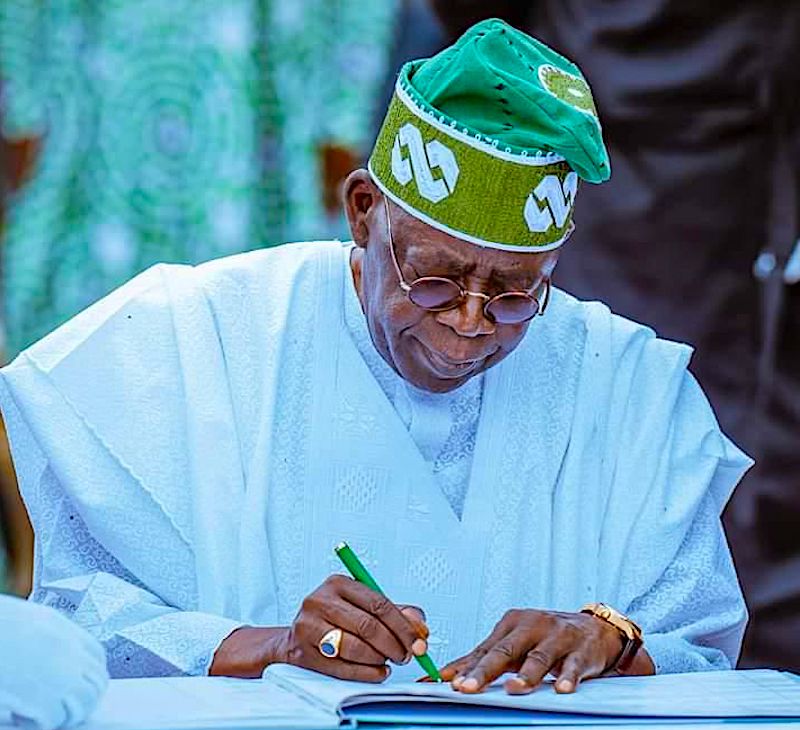
His Excellency, Bola Ahmed Tinubu, GCFR, President and Commander-in-Chief of the Armed Forces, Federal Republic of Nigeria.
DSP Ahmad Yusuf Ibrahim (Rtd) from Kano has asked the one question the Presidency must not avoid: How do you conduct a National Threat Assessment without the Nigeria Police Force?
His intervention is not emotional. It is strategic. And every serious student of security architecture knows he is right.
Nigeria is about to make a historic mistake if it proceeds with a Five-Year Strategic Defence Operations Plan that treats national security as a purely military affair. The nine-member committee announced — comprising the defence establishment, DSS and NIA — is excellent for planning a war. It is grossly inadequate for planning national security in Nigeria of 2026.
Here is why DSP Ibrahim’s warning must be taken as a national emergency, not a departmental complaint.
1. Nigeria’s Threats Are Predominantly Police Threats
The official language says the plan will identify principal threats, operational priorities, capability gaps and future procurement.
Let us be honest about what threatens Nigeria today.
Is it an invading army massing at our borders? No.
Our principal threats as listed in every intelligence briefing are: kidnapping for ransom, banditry, farmer-herder killings, IPOB/ESN attacks, communal clashes, cultism, armed robbery, cybercrime, transnational trafficking, crude oil theft, illegal mining, extrajudicial killings, mob action, and the criminal exploitation of ungoverned spaces.
Section 214 of the 1999 Constitution (as amended) makes the Nigeria Police Force the lead agency for internal security and law enforcement. Section 4 of the Police Act 2020 is even clearer.
You cannot assess these threats without the institution that confronts them daily. The military is called in as aid to civil authority. The Police live in that civil authority.
To plan a threat assessment without the Police is like planning a hospital reform without doctors.
2. We Have Seen This Failure Before – And Paid For It
This is not theoretical. Nigeria has a pattern.
We spend billions on military hardware — fighter jets, armoured tanks, naval vessels — and then expect a constable with an AK-47 manufactured in 1978, no radio, no body camera, no forensic support and N15,000 operational allowance to hold a community after the Army has conducted a clearance operation.
What happens? The military clears, but the Police cannot hold. The criminals return.
In the North-West, this cycle has become routine. Operation Hadarin Daji clears a bandit enclave. Two weeks later, because there is no permanent, well-equipped police presence to investigate, arrest, prosecute and provide community reassurance, the bandits regroup.
That is not a failure of gallantry. It is a failure of strategic planning.
A five-year procurement plan that prioritizes fighter aircraft over police communications, forensic labs, digital investigation capacity, protected mobility and police intelligence fusion centres is planning for a parade, not for security.
As DSP Ibrahim rightly asks: Who will articulate the Police requirements if the Police are not at the table?
3. The Legal Reality: No Policing, No Justice
There is a fundamental legal difference the committee must understand.
The military can neutralize a target. It cannot prosecute him.
Under our criminal justice system, sustainable security ends in court. Evidence must be gathered professionally, chain of custody maintained, confessions obtained lawfully, suspects paraded within constitutional timelines, and investigations that can withstand the scrutiny of a judge.
That is police work. It is not taught in military staff college.
The DSS can generate intelligence. The NIA can provide external intelligence. But only the Police, working with the Attorney-General, can convert intelligence into admissible evidence for conviction.
If we continue to militarize internal security without strengthening the evidentiary and investigative arm, we will continue to have high body counts and low conviction rates. That is not security. That is vengeance without justice.
4. The Oyo Success Story Proves DSP Ibrahim’s Point
President Bola Ahmed Tinubu was right to cite the rescue of pupils and teachers in Oyo State as a model of inter-agency coordination.
But the President inadvertently made DSP Ibrahim’s argument for him.
Why was that Oyo operation successful? Because it was coordinated. Because everyone — Army, DSS, Police, Amotekun, local hunters — played their role.
You cannot praise coordination as a success and then institutionalize exclusion in your strategic plan.
If coordination is the lesson, then inclusiveness is the policy.
A National Threat Assessment that excludes the Police sends a dangerous signal to the field: that internal security is an afterthought. Field commanders take cues from Abuja. If the Police are not in the room in Abuja, they will be ignored in Zamfara.
5. The Economics of Exclusion: The Cost of a Weak Police Force
Let us talk procurement justice, as DSP Ibrahim calls it.
A five-year defence expenditure plan will lock in budget priorities until 2031. If police needs are not embedded now, they will not be funded later.What does the Nigeria Police need to police a nation of 230 million people with less than 400,000 personnel?
It needs at minimum:
A national police communication network that does not rely on personal phones; functional forensic laboratories in six zones; real-time crime data infrastructure; drones and helicopters for surveillance and rapid response; modern protected vehicles for high-risk terrain; anti-kidnapping units with tracking technology; and decent barracks, insurance and welfare to reduce compromise.
Without these, we will keep asking a starving man to guard a bakery.
No nation in the world has achieved sustainable security by investing only in its military while starving its police. The United States, UK, and even smaller African countries like Rwanda and Botswana spend heavily on policing technology because they understand: the military wins wars, the police wins peace.
Nigeria is losing the peace because we have not invested in those who keep the peace.
6. Complementarity, Not Competition
DSP Ibrahim makes a crucial intellectual distinction that detractors must not distort.
No one is asking the Police to take over military operations in the North-East. No one is asking the IGP to command a theatre.
The argument is complementarity.
Give the Police an institutional voice commensurate with their constitutional mandate. Create a true National Security Planning Architecture, not a Defence Planning Architecture wearing the borrowed clothes of national security.
The model exists. In the US National Security Council system, the FBI, Department of Homeland Security and law enforcement have permanent representation. In the UK, the National Security Council includes the Home Office and policing structures.
Nigeria must evolve beyond the colonial mentality that the military is the senior partner and the police is the junior errand boy.
The Way Forward
The Presidency should immediately correct this contradiction:
(1) Re-designate the exercise as a National Security Assessment and Five-Year Strategic Security Operations Plan.
(2) Include the Inspector-General of Police as a statutory member of the committee, with the DIG Operations and DIG Force Intelligence Bureau as working members.
(3) Create two distinct but linked workstreams: External Defence and Internal Security, with the Police leading the second.
(4)Mandate that the final procurement plan must have a Police Capability Development chapter with ring-fenced funding.
If we fail to do this, by 2031 we will have a more lethal military and the same dying communities. We will have jets that can bomb a forest but no investigator who can trace a ransom payment. We will have won battles and lost the country.
DSP Ahmad Yusuf Ibrahim has done the nation a service. He has spoken not as a retired officer seeking relevance, but as a citizen who understands that security without policing is a body without a soul.
The military may defeat enemies. Intelligence may expose them. But only the Police can make Nigerians feel safe enough to sleep at night.
And in the end, that is what national security means.
God bless the Federal Republic of Nigeria.
Disclaimer: “The views expressed on this site are those of the contributors or columnists, and do not necessarily reflect TheNigerianVoice’s position. TheNigerianVoice will not be responsible or liable for any inaccurate or incorrect statements in the contributions or columns here.”
Originally published on www.thenigerianvoice.com
