

August 25, 2026
Where Are Todays Nathans? Nigeria Still Needs Men of God Who Can Speak Truth to Power
4 hours ago | Opinion
Where Are Today’s Nathans? Nigeria Still Needs Men of God Who Can Speak Truth to Power

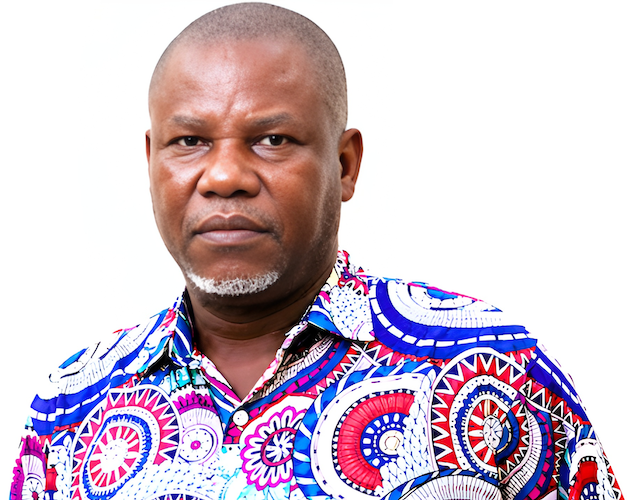
Isaac Asabor
Ten years ago, I asked a question in an opinion article published by The Nigerian Observer: “Where Are Today’s Nathans?” It was published on the 25th day of August in 2016.
I asked the question against the backdrop of a Nigeria in which many citizens appeared increasingly desperate for moral voices capable of confronting political power without fear, favour or partisan calculation. I drew inspiration from the biblical prophet Nathan, who did something that remains remarkably relevant to Nigeria today: he looked a powerful king in the face and told him the truth. A decade later, the question has not lost its relevance. If anything, it has become more urgent.
But perhaps the question now deserves to be asked differently: “Where are the Nathans who can speak truth to power in a Nigeria where political influence, religious authority, wealth and personal relationships have become increasingly intertwined?”
Nathan was not a prophet who ran with the hare and hunted with the hounds. He did not tailor his message according to the political identity of his audience. When King David abused his power and arranged the death of Uriah so that he could take Uriah’s wife, Bathsheba, Nathan confronted him.
He did not wait for David to become an opposition politician before speaking. He did not condemn wrongdoing only when it was committed by an enemy. He did not first calculate what David could do for him, his ministry or his followers. He simply told the king the truth. That is the kind of moral courage Nigeria desperately needs today.
The Nigeria of 2026 is not the Nigeria of 2016. The country has passed through enormous political, economic and social changes. Nigerians have experienced the removal of fuel subsidy, dramatic increases in the cost of living, a prolonged struggle with inflation, pressure on household incomes, rising housing costs, unemployment and underemployment, insecurity and growing public frustration over the quality of governance.
For millions of Nigerians, these are not abstract statistics. They are realities experienced at the kitchen table, in the market, at the petrol station, in rented apartments, in hospitals and on public transport.
Parents are struggling to keep children in school. Workers are discovering that salaries that once sustained their families now disappear with frightening speed. Young people are confronting an economy in which education does not always guarantee employment. Businesses are battling rising operating costs. Pensioners and vulnerable citizens are struggling to cope with a cost-of-living crisis that often makes survival itself an achievement.
In such circumstances, the church cannot afford to be indifferent. Neither can pastors and prophets who command enormous followership and whose words can influence millions of Nigerians.
The biblical Nathan provides a useful standard because his relationship with political authority did not silence his conscience. His proximity to the palace did not prevent him from criticizing the occupant of the palace. That distinction is crucial.
There is nothing inherently wrong with pastors, bishops, prophets and other religious leaders maintaining relationships with political leaders. Indeed, such relationships can be useful if they enable religious leaders to counsel those in authority and advocate for the welfare of the people.
The problem begins when access to power becomes more important than accountability to truth.
A religious leader who has the president’s telephone number, enjoys access to governors, ministers and legislators, attends political gatherings and is welcomed into the corridors of power occupies a potentially influential position. But that access should not become an invitation to silence.
If anything, greater access should create greater responsibility. A Nathan does not merely gain entry into the palace. He enters the palace carrying the concerns of the people outside its walls. That is precisely what Nigeria needs today.
The country has no shortage of churches. Places of worship can be found virtually everywhere, particularly in Nigeria’s major cities. The country also has no shortage of highly educated and influential clerics whose voices command attention far beyond the walls of their churches.
What appears to be in shorter supply is the willingness to consistently deploy that influence in defense of the public interest, irrespective of the political party in power. This is not a call for pastors to become politicians.
It is not a call for churches to endorse political parties. Nor is it a demand that every cleric should become a political commentator. The church has a legitimate reason to remain above partisan politics. But being above party politics should never mean being above the truth. A pastor can refuse to endorse a political party and still condemn corruption. A bishop can remain politically neutral and still criticize a policy that impoverishes citizens.
A prophet can pray for a president and, at the same time, tell the president that a particular decision is hurting the people. A cleric can maintain friendship with a governor and still tell him when his administration is failing. That is the difference between “political partisanship and moral accountability”.
Unfortunately, Nigeria’s political environment has often made this distinction difficult. Religious leaders, like everyone else, operate in a society where political power comes with enormous influence and resources. Political leaders also understand the power of religion in Nigerian society. They know that prominent clerics can mobilize enormous audiences, shape public opinion and influence how millions of citizens perceive political events. This creates a delicate relationship.
The temptation for some religious leaders may be to become too close to those in power, while the temptation for politicians may be to cultivate religious relationships that provide legitimacy, social acceptance or political goodwill.
But the closer a religious leader gets to power, the greater the danger that he or she may become reluctant to challenge that power. That is where the Nathan principle becomes indispensable. Nathan did not tell David what David wanted to hear. He told David what David needed to hear. Nigeria needs more people willing to do the same.
Ten years ago, I referenced several religious figures who had demonstrated courage in speaking on national issues. A decade later, the country still has clerics who speak boldly and independently. Some have criticized governments, policies and political actors from time to time. Others have raised their voices on issues affecting the poor, vulnerable and marginalized. Therefore, this is not an accusation that every Nigerian pastor has become silent. Far from it.
The real concern is whether moral courage has become sufficiently widespread, consistent and independent across the Christian community and, indeed, across Nigeria’s religious establishment. It is one thing for a cleric to criticize a government when he is in opposition to it. The real test comes when the same government is friendly to him. It is easy to condemn corruption when the alleged offender belongs to a rival political party. The real test comes when the accused is a political ally, benefactor, friend, associate or member of one’s congregation. That is where Nathan’s example becomes uncomfortable, and therefore necessary.
The prophet did not ask whether David belonged to the ruling party before confronting him. He did not ask whether David had sponsored his ministry. He did not ask whether David could withdraw his support. He did not calculate the consequences for his personal comfort. He spoke. And David listened.
Perhaps one of the greatest lessons Nigeria’s religious leaders can learn from this story is that “moral authority is ultimately measured by what one is willing to say when silence would be more convenient.” Nigeria’s present circumstances demand that kind of courage.
As the country moves towards the 2027 general elections, the temptation will once again be strong for politicians to seek religious endorsements, blessings and favourable declarations. This is where the country’s pastors and prophets must be particularly careful. The church should not become a campaign headquarters. The pulpit should not become a political rally ground.
And prophecy should not become a disguised instrument of partisan mobilization. But neither should the church retreat into silence while politicians make promises, implement policies and exercise power that directly affect the lives of its members.
The millions of Nigerians sitting in churches every Sunday are also taxpayers, workers, traders, farmers, entrepreneurs, students, pensioners, landlords, tenants and parents. They are the same people who suffer when public policy fails. They are the same people who pay more for food when inflation rises. They are the same people who struggle when electricity costs increase. They are the same people who feel the consequences when public hospitals fail, schools deteriorate, jobs disappear or insecurity disrupts economic activity. If these citizens can bring their spiritual problems to the church, why should the church be indifferent to the policies that create or worsen some of their economic and social problems?
Prayer is important. But prayer cannot be a substitute for civic responsibility. James 2:17 puts the principle bluntly: faith without corresponding action is dead. That does not mean every pastor must organize a protest or every bishop must hold a press conference. It means religious faith should have consequences for how society treats the vulnerable, how leaders exercise power and how citizens respond to injustice.
Given the backdrop of the foregoing view, it is germane to opine that the modern-day Nathan can therefore take many forms. He can be the bishop who privately tells a governor that his administration is failing. He can be the pastor who publicly condemns corruption even when the corrupt politician is a member of his congregation. He can be the prophet who refuses to manipulate divine revelation for political patronage. He can be the cleric who tells both government and opposition that Nigerians deserve better. He can be the church leader who uses his platform to educate citizens about their civic responsibilities rather than simply mobilizing them for political causes.
In a similar vein, he can be the religious leader who reminds politicians that public office is temporary, while the consequences of their decisions can last for generations. And perhaps most importantly, he can be the man of God who understands that access to political power is not an achievement in itself. The real achievement is what one does with that access.
Nigeria has seen too many instances in which politicians who were once enormously powerful eventually left office. Some disappeared from public relevance. Some became subjects of investigations. Some became forgotten figures in the political history of their states. That is the uncomfortable lesson of power. It does not last forever.
This is why the message of Ecclesiastes remains relevant. Human beings accumulate wealth, build careers, acquire political influence and seek recognition, but none of these things is permanent. Political office is temporary. Political appointments are temporary. Government contracts are temporary. Influence is temporary. Even life itself is temporary.
The responsibility of religious leaders, therefore, is not to help politicians preserve their power at all costs. It is to help them use power responsibly while they have it. A true Nathan should be able to tell a president: “Sir, this policy is hurting the people.” He should be able to tell a governor: “Your citizens deserve better.” He should be able to tell a legislator: “You were elected to represent the people, not your personal interests.” He should be able to tell a political party: “Your candidate is wrong on this issue.” And he should be able to tell his own congregation: “Our preferred politician is wrong.” That last one may be the most difficult.
For a religious leader to condemn an opponent is ordinary politics. For him to condemn his own political favorite is moral courage. That is the standard Nathan represents.
It is also important to acknowledge that the responsibility does not belong exclusively to pastors. Nigeria’s traditional rulers, academics, journalists, civil society organizations, professional associations, intellectuals and other influential members of society all have roles to play in holding power accountable.
But pastors and other religious leaders occupy a unique position because of the moral authority they command. Millions of Nigerians voluntarily listen to them every week.
Their words can comfort the suffering, challenge the powerful and inspire citizens to demand better governance. That influence should therefore be regarded as a public trust.
The danger is that when the pulpit becomes too close to the palace, the people may lose one of their strongest avenues for moral accountability. This is why Nigeria still needs its Nathans. Not prophets who predict victory for politicians. Not clerics who turn every political gathering into an opportunity for spiritual endorsement. Not religious leaders who discover the sins of political opponents but remain mysteriously blind to the shortcomings of their friends.
Nigeria needs Nathans who can stand before power and say, respectfully but firmly: “You are the man.” That was Nathan’s message to David. It remains a powerful message for Nigeria in 2026.
The country does not need pastors who are permanently hostile to government. It needs pastors who are permanently committed to truth. It does not need prophets who condemn every politician. It needs prophets who condemn wrongdoing wherever they find it.
It does not need religious leaders who become partisans. It needs religious leaders who become principled.
And it certainly does not need a church that is silent in the face of suffering simply because speaking may offend those in power. Ten years after I first asked, “Where Are Today’s Nathans?”, I am tempted to ask the question again. But perhaps the more important question is not where the Nathans are. It is whether those who already occupy positions of moral authority are willing to become Nathans. Because Nigeria does not lack churches. It does not lack pastors. It does not lack prophets. It does not lack politicians.
What it desperately needs is “the courage to tell the truth to power, and to tell that truth consistently, regardless of who occupies the palace.” That is the real test of today’s Nathans.
Disclaimer: “The views expressed on this site are those of the contributors or columnists, and do not necessarily reflect TheNigerianVoice’s position. TheNigerianVoice will not be responsible or liable for any inaccurate or incorrect statements in the contributions or columns here.”
Originally published on www.thenigerianvoice.com
