

July 31, 2026
What we know about the Hamas disarmament deal announced by Trump


What we know about the Hamas disarmament deal announced by Trump
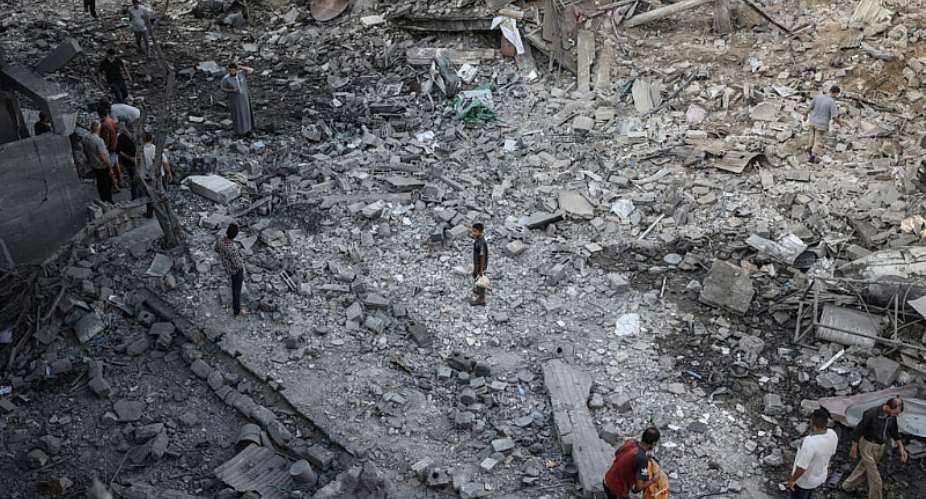
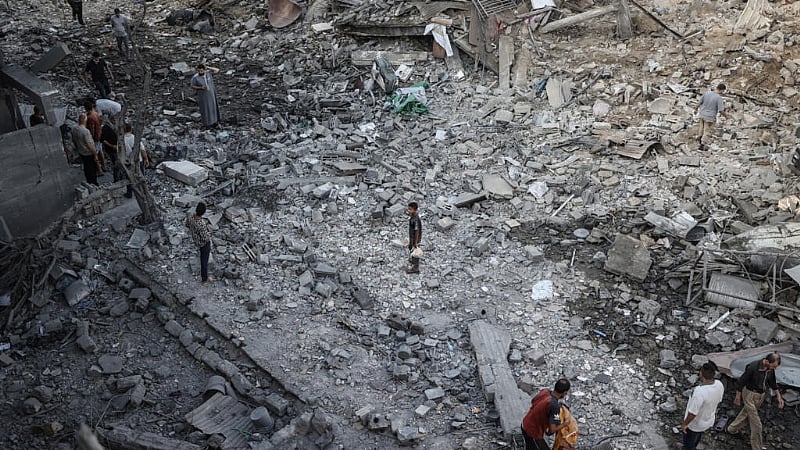
Palestinians inspect destroyed buildings after they were targeted by Israeli strikes the previous night in Deir al Balah, central Gaza Strip on July 29, 2026. – © Eyad Baba, AFP
Hamas said on Friday it agreed to a deal to end the war with Israel that included provisions addressing its weapons and the gradual withdrawal of Israeli forces from the devastated Gaza Strip.
The text of the deal has not been released publicly, and there was no immediate statement from Israel.
Here is what we know about the announced agreement:
What’s in the deal?
US President Donald Trump announced the “complete disarmament” of Hamas, calling it a critical step towards a new Palestinian government in Gaza.
He said Israeli forces would withdraw from Gaza “as disarmament is completed”.
Israel’s military now occupies more than half of the Palestinian territory, leaving Palestinians confined to squalid tent camps and bombed-out urban neighbourhoods. Palestinians salvage their belongings from the rubble of a building and tents destroyed in an Israeli air strike in Gaza City on July 30, 2026.
Hamas officials told AFP a committee established by Trump’s Board of Peace to govern Gaza would oversee the process of storing the Islamist movement’s weapons.
The group said it expected mediators and the Board of Peace to ensure Israel complied with the deal’s terms, which included Israel’s “gradual withdrawal” from Gaza.
Read more Trump Board of Peace’s official Gaza fund is empty despite billions pledged, source says
Ghazi Hamad, a member of the group’s negotiating team, said the movement was making “concessions for the sake of our people in the Gaza Strip, to save them from killing and displacement”.
“The agreement contains a clear provision stating that Israel must commit to and implement its obligations. If Israel does not implement the agreement, neither will we,” Hamad said.
A diplomatic source told AFP before the deal’s announcement that the plan would create “a process for the elimination of all tunnels, depots of weapons and any weapons production facilities”.
Who will implement the deal?
The Board of Peace confirmed in a post on X that Hamas had “agreed to a detailed Roadmap for implementing the next phases of the Gaza ceasefire”.
“Our focus now turns to implementation,” the organisation wrote, adding that the National Committee for Administration of Gaza (NCAG), established by Trump’s Board of Peace, will “soon begin a phased transition toward full authority”.
Read more Hamas withdrawal from Gaza governance a bid to unblock ‘deadlocked’ peace plan
Trump said in a social media post the International Stabilization Force “will work with a new Palestinian police force to take responsibility for Gaza being safe for its residents and its neighbours”.
Hamas announced earlier this month that it had dissolved its government in Gaza and was preparing to transfer power to a technical committee backed by the United Nations as part of the ceasefire deal
What is the situation in Gaza?
An October ceasefire remains in place between Israel and Hamas, but it has not halted the violence in Gaza. Efforts to secure a lasting agreement to end the war have stalled.
Israel has continued carrying out near-daily air and artillery strikes across the territory, more than 60 percent of which it occupies, since the fragile truce came into effect. Palestinians pray as they attend the funeral of Palestinians who were killed in Israeli strikes on tents, according to medics, at Nasser Hospital in Khan Younis, in the southern Gaza Strip, July 30, 2026.
At least 1,214 Palestinians have been killed in Gaza since the ceasefire, according to the territory’s health ministry, whose figures the United Nations considers reliable.
Israeli strikes on Thursday killed at least four people, including two children, health officials said.
Watch more Israel kills one child per day on average in Gaza since the October ceasefire
Tens of thousands of people in Gaza still live in tents, after nearly three years of Israeli air strikes flattened much of the Palestinian territory’s standing structures.
Hamas has accused Israel of repeated ceasefire violations, including air strikes, firing on civilians and advancing the so-called Yellow Line, an informal boundary separating areas under Israeli military occupation from those under Hamas authority.
What happens next?
Israel has yet to respond to the announced deal.
Egypt‘s state-linked Al Qahera News said early on Friday that Cairo is set to host a meeting “soon” of the Gaza truce mediators, which also include the United States, Qatar and Turkey, focused on the second phase of the Gaza ceasefire plan.
Nickolay Mladenov, the Board of Peace’s high representative for Gaza, said the implementation stage of the plan “matters even more” than the initial deal.
“Implementation and verification have to be real,” Mladenov wrote on X. “Withdrawal must move in lockstep with decommissioning.”
Hamad told AFP Hamas would now discuss the implementation details with the mediators and agree on a timetable for carrying out the deal.
“This process will take about 14 days, or perhaps longer. We must agree on every detail: how the agreement will be implemented, when it will be implemented and the mechanisms for carrying it out. This is what will take place in the coming days.”
(FRANCE 24 with AFP and Reuters)

FRANCE 24
International breaking news, top stories and headlinesPage: france24

Top Stories


Originally published on www.modernghana.com
