

July 16, 2026
Two Girls, Two Houses, And Nigerias Unfinished War Against Rape

5 hours ago | Feature Article
Two Girls, Two Houses, And Nigeria’s Unfinished War Against Rape

By July 15, 2026, Nigeria was reading two headlines that felt like echoes of the same wound. In Delta, a 20-year-old named Favour filmed a tearful goodbye, naming a popular Asaba content creator as the reason she was about to die. In Ebonyi, questions swirled around the death of nurse Mary Habila inside the Ebonyi residence of Works Minister Dave Umahi. Both cases landed on the same national fault line: sexual and gender-based violence, stigma, and the long wait for justice. This is the story of Favour’s last hours, the arrest that followed, the questions around Mary’s death, and the data that shows why too many Nigerian women still die in silence, ODIMEGWU ONWUMERE examines
She pressed record on her phone because she said no one was listening anymore.
“My name is Favour from Warri. This will be the last video of me in the whole world you’ll be seeing. By the time you see this video, I will already be dead, and the cause of my death is Odogwu Asaba.”
Her voice shook. Her eyes were red. In the background of the clip shared by Delta State Police, you could hear the kind of quiet that comes after someone has cried for a long time. She was 20.
By July 15, 2026, Nigerian news sites and WhatsApp groups were full of the same headline: “Rape survivor narrates ordeal in emotional video before committing suicide.” People watched it in buses, in markets, in offices, and then they put their phones down and stared. Because what Favour said was not new, but the way she said it made it impossible to look away.
Favour said she met the man she named, Ifeanyi Ogbonna, popularly known as “Odogwu of Asaba,” online. He was a content creator with a big following in Asaba. He also ran a boutique out of a hotel. She told him she had problems and needed money. Another man, she said, had told her he would help only if she slept with him first. She didn’t want that. So she reached out to Odogwu, thinking maybe a public figure would be safer.
“He asked me to meet him in Asaba on Friday, that he was going to help me,” she said in the video.
“He did not tell me that he was going to sleep with me before helping me.”
According to the Delta State Police Command, Favour travelled from Warri to Asaba on June 1, 2025, after the suspect allegedly offered to mentor her in content creation through a program he promoted online.
Police spokesman Bright Edafe told reporters that upon arrival, she was taken to a hotel where she was raped and assaulted before returning home and telling her parents what happened. The family then filed a petition.
In her video, Favour said she told only her twin sister where she was going. She gave her sister the man’s name and number. She said she didn’t keep screenshots because she had turned on WhatsApp’s disappearing messages.
“He did not engage in any conversations with me on sex that I would now say, okay, I’m going there,” she said.
She described being taken from his shop to a car wash, then to the hotel.
“I didn’t have it in mind that he would demand sex because he is a popular person and would not try rubbish because people would drag him online. That is where my mistakes came from.”
Then, according to her account, he told her he liked her and wanted sex.
Days later, Favour was gone. Police said she ingested a toxic substance. Doctors tried to save her, but she died. Before she did, she left the video.
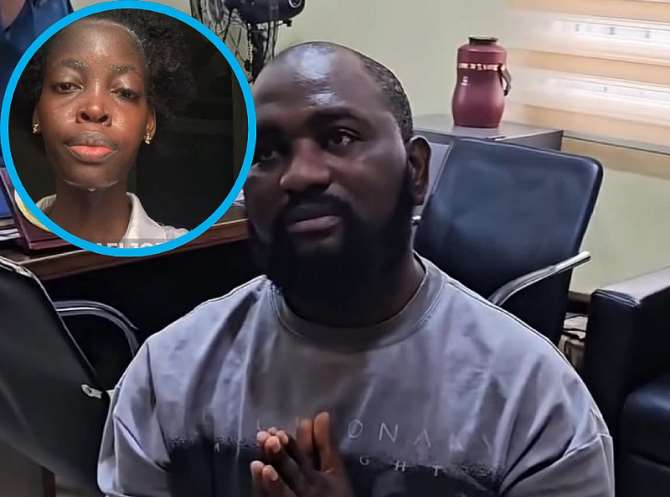
After the petition, Commissioner of Police Yemi Oyeniyi directed the Area Commander in Effurun to investigate. That led to Ogbonna’s arrest. In a short clip released by police, the handcuffed suspect was seen talking to two people believed to be Favour’s parents inside a police facility. He hit the table and said, “This is a very terrible mistake.” The police said he made “useful statements” during interrogation and that investigation was ongoing.
Favour’s last words were not just about one man. They were about a country where young women keep saying the same things and keep dying the same way.
Nigeria has been living with this for years. The numbers are heavy and they are also incomplete, because so much never gets reported. UNICEF data shows nearly one in four Nigerian women aged 18 to 24 experienced sexual abuse before age 18. About 31 percent of women aged 15 to 49 have faced physical or sexual violence. In clinics, a large share of rape cases involve girls under 18. Those are the ones that make it to a hospital. Most don’t.
The law says it should be different. The Violence Against Persons Prohibition Act, VAPP, was passed in 2015. It defines rape more broadly and sets a minimum sentence of 12 years to life. But Nigeria runs a federal system, so each state has to adopt it.
Some have. Some haven’t. Where it is not law, prosecutors fall back on the older Criminal Code in the south and Penal Code in the north. In some places, customary and Sharia courts add another layer of complexity.
Even where VAPP exists, convictions are hard. Courts often ask for corroboration — eyewitnesses, immediate medical reports — that survivors rarely have. And then there is the silence. Families beg victims not to “spoil the family name.” Husbands threaten divorce. Communities ask what the girl was wearing, where she was going, why she went at all.
That is why Favour’s video mattered. She spoke first, before anyone could speak for her. She named her town, her age, and the man. She said she had no friends to talk to. She said she was trying to avoid one bad situation and walked into another.
While Delta police were processing that case, another story was moving on social media, this time from Ebonyi. Posts claimed there was secrecy around the death of a nurse, Mary Habila, inside the Ebonyi residence of Minister of Works, Senator David Umahi.
Umahi responded publicly while inspecting work on the Calabar–Ebonyi–Benue–Nasarawa–Abuja Super Highway. He said the reports were false and that he had briefed lawyers to sue those spreading them. According to him, the family became concerned, broke into her room, and called doctors from the David Umahi Federal University Teaching Hospital, DUFUTH, who took her to hospital but could not revive her.
“The family reported the matter to the police, so where is the secrecy?” he asked. He said an autopsy would be done with the parents’ consent and that the deceased’s parents would also speak to journalists and take legal action against those spreading falsehoods. He described Mary as a dedicated employee of DUFUTH.
The opposition African Democratic Congress, ADC, pushed back. In a statement, the party said the death of a citizen inside the residence of a serving cabinet minister is a matter of public interest that requires transparency. It called for an independent investigation completely removed from executive influence, including a full autopsy and a public report. “Anything short of an independent probe would only fuel public suspicion and weaken trust in state institutions,” the party said.
The two cases — Favour in Delta, Mary in Ebonyi — are different in facts and in how they are being handled. But in the public mind they sit side by side because both raise the same questions. Who gets believed? Who gets investigated? Who gets to walk away?
The police in Delta said they would not overlook any part of the case. That is what families always hear. What they rarely see is speed. In Nigeria, rape cases can take years. Files get lost. Witnesses disappear. Medical evidence is delayed. Survivors are asked to retell the story to police, to doctors, to judges, to relatives, until the story itself starts to feel like the punishment.
And the context makes it worse. In parts of the northeast, women in IDP camps face assault and have nowhere to go. In the northwest, banditry has displaced communities and left girls exposed. In cities, there are Sexual Assault Referral Centres, SARCs, and shelters in Lagos and Abuja. In rural areas, there is often nothing. No counselor. No rape kit. No safe house. Just a long road to the nearest station and a prayer that someone will take the report seriously.
Favour tried to do everything “right” by the advice people give girls. She didn’t go to Abuja with the other man. She chose someone she thought was visible, someone with a brand to protect. “People would drag him online,” she said. That was her logic. It didn’t protect her.
Her twin sister knew she was going. Her parents didn’t. That small detail says a lot about how young women navigate risk. They tell a sister, not a mother, because a sister won’t preach. They delete chats because they don’t want evidence used against them later. They take transport money from a stranger because rent is due.
When the video came out, people argued in the comments. Some said she should have reported earlier. Some said the man should be presumed innocent until proven guilty. Some asked why she killed herself. Others answered that question with their own stories. Of being touched and told to keep quiet. Of being blamed. Of going to the police and being asked for money to “process” the case.

The suspect’s words in custody — “This is a very terrible mistake” — did not answer Favour. She was already dead. The police said investigation continues. Under VAPP, if convicted of rape, the penalty is severe. But conviction depends on evidence, on testimony, on a system that does not wear down the people seeking justice.
In Ebonyi, the demand is for independence. The ADC said the probe must be outside executive control. Umahi said there is no secrecy and that the family invited doctors and police. The parents, he said, would address the press. Until an autopsy report is made public, the space will be filled with rumors. That is what happens when trust is low.
These are not isolated incidents. In 2022, NAPTIP and Malian authorities rescued 26 Nigerian girls from a camp in Bamako. In 2021, the Nigerian Embassy in Bamako facilitated the return of over 100 women who said they were trafficked. Survivors described sleeping on floors, being forced to remit money, and being threatened. The pattern is the same: promise of help, movement, isolation, control.
For Favour, the promise was mentorship. For many others, it is a job, a visa, a husband. The mechanism is exploitation. And the result, too often, is a body.
What do you do with that? The government says it is doing more. NAPTIP reports convictions and rescues. States are setting up GBV desks. Civil society groups run campaigns in schools and markets. But the scale is bigger than the response. And the stigma is deeper than the law.
Onwumere is Chairman, Advocacy Network on Religious and Cultural Coexistence (ANORACC). Email: anoracc(at) rescueteam(dot)com
Disclaimer: “The views expressed on this site are those of the contributors or columnists, and do not necessarily reflect TheNigerianVoice’s position. TheNigerianVoice will not be responsible or liable for any inaccurate or incorrect statements in the contributions or columns here.”
Originally published on www.thenigerianvoice.com
