

August 8, 2026
Three Years After Subsidy Went, Nigerians Are Still Paying The Price
4 hours ago | Opinion
Three Years After Subsidy Went, Nigerians Are Still Paying The Price

In May 2023, Nigeria removed fuel subsidy to “save the country from going under.” The government promised the money would build roads, power, schools and hospitals. Three years later, the treasury has more savings on paper, but on the streets of Port Harcourt, Kano and Makurdi, the story is different. ODIMEGWU ONWUMERE in this report examines that transport costs have tripled, food is heavier on the pocket, and poverty has climbed by millions. For families who queue for fuel, trek to work, and ration generator hours, the long-term gain feels distant. This is the story of a reform with a promise ahead, and a present filled with sacrifice
Blessing wakes at 4:40am in Rumuodara, Port Harcourt. Not because she likes mornings. Because if she leaves later, the bus fare will eat half her day’s profit. She sells tomatoes and pepper in Mile 1 Market. Three years ago, a trip from home to market and back was 400 naira. Today it is 1,200 naira on a good day. On rainy days, drivers add “rain charge.”
“I used to buy fuel for my small freezer, 2,000 naira would last me three days,” she says, arranging tomatoes that have gone soft from heat.
“Now 5,000 naira disappears in one day. And NEPA still does not come.”

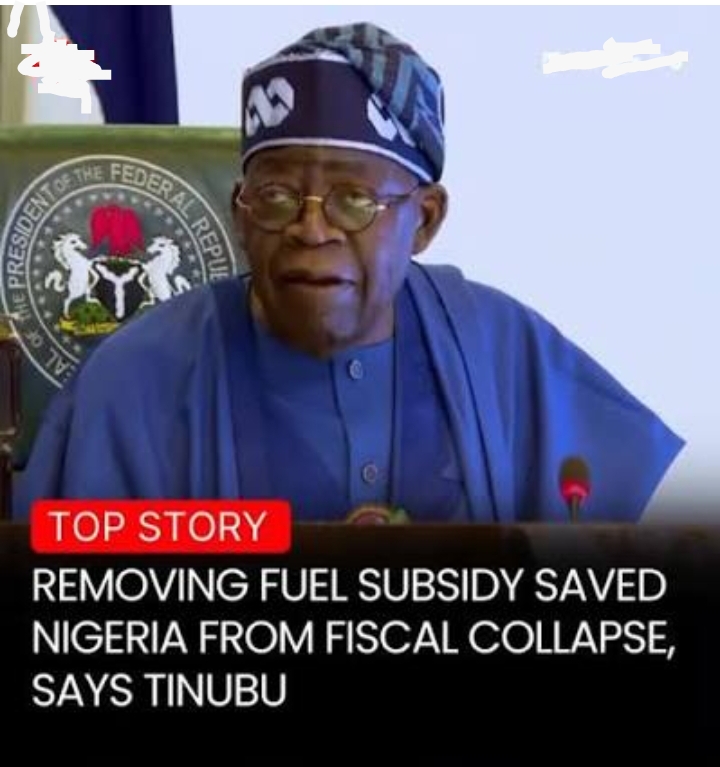
Blessing’s story is not unique. It is the story repeated in bus parks, in classrooms, in hospital waiting rooms across Nigeria since May 29, 2023, when President Bola Tinubu announced that the petrol subsidy was gone.
“The decision will impose extra burden on the masses of our people. I feel your pain,” he said in a Democracy Day broadcast, promising that government would repay Nigerians through “massive investment in transportation infrastructure, education, regular power supply, healthcare and other public utilities that will improve the quality of lives.”
The logic was simple on paper. For decades Nigeria spent billions keeping petrol cheap. Last year before removal, government spent $10 billion on subsidy. That money, officials argued, could build rather than burn. Rating agencies called the move positive for the economy. Academic studies later found that subsidy removal “significantly improves fiscal savings and partially enhances fiscal reallocation to capital and social sector spending”.
But paper and pavement are two different countries. Within weeks, petrol prices nearly tripled. Transport went up. Food followed. Small businesses that run on generators, like Blessing’s freezer and the welder’s shop down her street, saw costs balloon. Researchers described it plainly: the reform unleashed inflationary pressures that “profoundly altered living standards”.

Our writer who beamed his investigations in Ojuelegba, Lagos, found a Musa who drives a yellow bus. He used to make 8 trips a day. Now he makes 5.
“Passengers will enter, hear the price, and come down,” he says.
“Some are trekking from Yaba to Surulere. I don’t blame them. My own children are trekking to school too.”
The numbers back Musa’s observation. One study tracking the period after removal found that “an additional 4 million Nigerians have been found to be impoverished. In less than two years, poverty levels in the country increased from 129 million to about 133 million Nigerians”. Another paper noted poverty rising sharply after the policy, with only cash transfers pulling it down slightly later.
Government did announce palliatives. Buses, grants, cash transfers. In theory, they were to cushion the shock. In practice, people like Blessing say they never saw them, or they came late and small. Researchers point to the same gap, noting the reform was implemented “abrupt without prior mitigation strategies in anticipation of the effects on the masses”.
As if that was not enough, Amina, a civil servant in Abuja, keeps a notebook of expenses. May 2023: food 35,000 naira. May 2025: food 98,000 naira. Salary has not moved.
“We were told to sacrifice for the future,” she says.
“But the future is not coming. My son’s school fees increased. My rent increased. Even pure water increased.”
She is not against reform. “If they had fixed power first, if they had made sure refineries work, maybe the pain would make sense,” she adds.

Nigeria remains import dependent, and that dependence amplified the shocks of removal. In the villages, it is worse. In Benue, a farmer named Terver now carries his yams on his head for 3 kilometers because motorcycle fare doubled.
“By the time I reach market, the profit is gone,” he says. In Kano, tailors have cut working hours because fuel for generators is too expensive. In Rivers, students trek to school along East-West Road, sweating through uniforms.
The government’s argument has not changed. Tinubu in 2023 said the subsidy removal was to “save our country from going under”. The idea is that stopping the drain will free money for things that matter. Studies agree there is potential. One paper concludes that “fuel subsidy removal can promote sustainable growth if accompanied by effective fiscal reallocation, macroeconomic stability, and social protection policies”. Another, looking at data from 2010 to 2022, found that subsidy removal could contribute to sustainable growth in the long run by reducing spending on fuel imports and improving foreign reserves and infrastructure.
“Long run” is the phrase people hear most. Economists will tell you infrastructure takes years. Power plants take years. Roads take years. That may be true. But years are lived one day at a time, and right now the days are hard.
At Mile 1 Market, Blessing closes at 7pm. She counts 6,400 naira. She removes transport 1,200, market levy 500, fuel for freezer 2,000. She is left with 2,700. Her house rent is 250,000 a year, due in December. Her last child is in JSS2.
“I pray the government is right,” she says quietly.
“I pray that one day light will be steady and road will be good and my children will not suffer like this. But I am tired of praying with an empty stomach.”

The frustration is not just about money. It is about trust. People watched subsidy money disappear to corruption for years. Now that it is gone, they were promised a swap: pain now, progress later. Three years in, the pain is visible. The progress is mostly in budget documents.
Researchers keep warning about this gap. They recommend “targeted interventions and phased reforms to harness long-term benefits”. They stress that without social protection, the reform pushes people deeper into hardship first.
Officials in Abuja point to ongoing projects. CNG buses. Student loan schemes. Road contracts. In Port Harcourt, people point to potholes and generator smoke. Both can be true. A country can be saving money and still have citizens who feel abandoned.
Musa parks his bus at 9pm. He made 18,000 naira today. He spent 14,000 on fuel. He takes home 4,000.
“Before subsidy removal, I would take home 10,000,” he says.
“Now I’m working more and earning less. If this is the sacrifice, how long is the sacrifice?”
That question has no date attached to it. Government has not given a timeline for when the investments will translate to cheaper transport, stable power, or better hospitals. Studies suggest benefits are moderated by inflation and exchange rate depreciation.
For the people, the wait is not abstract. It is waking before dawn. It is choosing between fuel and food. It is watching children trek to school while hearing on radio that the economy is being repositioned.
No one is asking for a return to a subsidy that bled the treasury. Many Nigerians understand that something had to give. What they are asking for is to see the other side of the bargain. To feel, in their daily lives, that the money saved is becoming light, road, medicine, and opportunity.
Onwumere is Chairman, Advocacy Network on Religious and Cultural Coexistence (ANORACC)
Disclaimer: “The views expressed on this site are those of the contributors or columnists, and do not necessarily reflect TheNigerianVoice’s position. TheNigerianVoice will not be responsible or liable for any inaccurate or incorrect statements in the contributions or columns here.”
Originally published on www.thenigerianvoice.com
