

August 28, 2026
Three Majority Leaders in 20 months: Here’s what’s happening in Ghana’s 9th Parliament
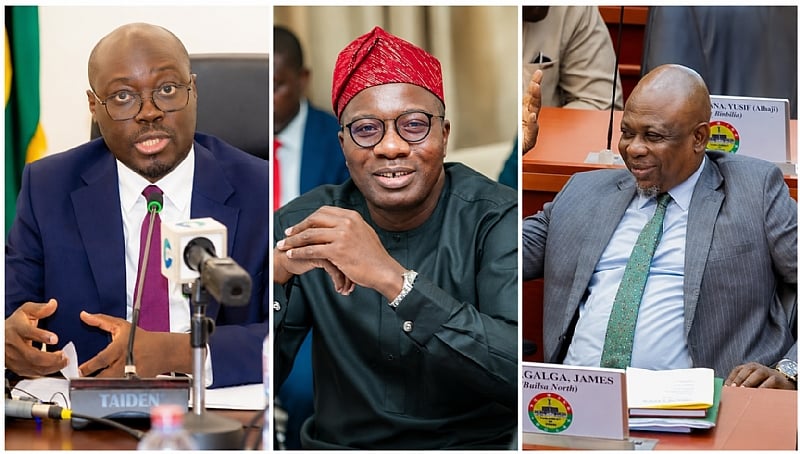


Three Majority Leaders in 20 months: Here’s what’s happening in Ghana’s 9th Parliament
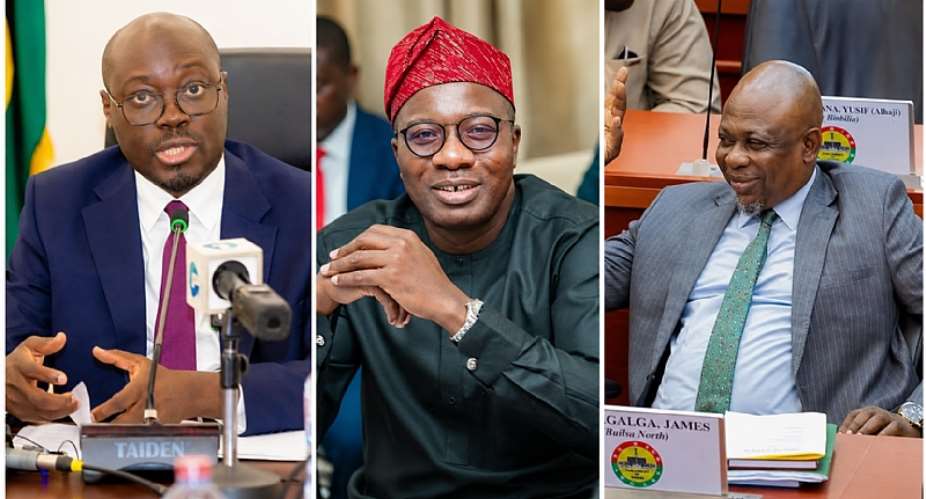
When Ghana’s 9th Parliament opened its doors in January 2025, the governing National Democratic Congress appeared to have settled on a familiar parliamentary team.
Dr Cassiel Ato Forson, the Member of Parliament for Ajumako-Enyan-Essiam, was to lead the new Majority Caucus. He had served as the Minority Leader in the 8th Parliament.
The arrangement did not last long.
Within weeks, Ato Forson had left Parliament’s front bench for the Cabinet, becoming Finance Minister. Mahama Ayariga, the veteran Bawku Central MP, took his place.
For several months, Ayariga appeared to have found his footing in one of Parliament’s most influential offices.
Then, in August 2026, history repeated itself. President John Dramani Mahama nominated Ayariga as Minister for Local Government, Chieftaincy and Religious Affairs. And once again, the governing party had to find someone to lead its MPs.
This time, the choice was James Agalga, the Member of Parliament for Builsa North. People had tipped him to replace Dr. Edward Omane Boamah, the Defence Minister who perished in the August 6, 2025, helicopter disaster. But Mahama had other plans. He has now assumed the Majority Leader position.
In less than two years, Ghana’s 9th Parliament has therefore had three different Majority Leaders: Ato Forson, Ayariga and Agalga.
It is a striking rate of change for an office at the centre of Ghana’s legislative machinery.
A parliament barely settled before the first change
The 9th Parliament was inaugurated on 7 January 2025, with the NDC holding the majority and Alban Bagbin returning as Speaker.
Ato Forson began the Parliament as Majority Leader and Leader of Government Business. On the opening day, he was the man who moved the motion for Bagbin to take the Speaker’s chair. But there was already another job waiting for him.
Just two days after the inauguration, President Mahama nominated Ato Forson as Finance Minister.
The consequence was almost immediate.
On 23 January, the NDC formally communicated a new parliamentary leadership arrangement to Speaker Bagbin, with Mahama Ayariga taking over as Majority Leader. Ato Forson’s tenure as Majority Leader had lasted only a matter of days.
For the NDC, however, the change made political sense. The party had won power and needed experienced people to occupy key positions in government. Ato Forson was moved to one of the most important economic portfolios in the administration, while Ayariga was brought into the parliamentary leadership.
It was the first indication of a pattern that would come to define the early years of the 9th Parliament: the Majority Leader’s office becoming closely connected to the wider demands of government.
Then came Ayariga
Mahama Ayariga was no newcomer to Parliament. A long-serving legislator, he arrived in the Majority Leader’s office with considerable parliamentary experience.
His responsibilities went beyond managing debates. The Majority Leader is the principal spokesperson for the governing caucus and also serves as Leader of Government Business. That means helping determine how government legislation and other business moves through the House.
For more than a year, Ayariga occupied that position. He became one of the central figures in the relationship between the Executive and Parliament, particularly as the government sought to turn its political promises into legislation.
But in August 2026, the Cabinet called again. President Mahama nominated Ayariga to become Minister for Local Government, Chieftaincy and Religious Affairs. Once again, a Majority Leader was being pulled away from Parliament by an executive appointment.
Enter James Agalga
The third chapter began with James Agalga. The Builsa North MP was named as Ayariga’s replacement after the ministerial nomination was announced. But his arrival at the top of the Majority Caucus was accompanied by an unusual procedural episode.
President Mahama initially communicated Agalga’s appointment to Parliament.
Speaker Bagbin subsequently said that this was not the correct procedure.
Under Parliament’s Standing Orders, he explained, changes in the leadership of a parliamentary caucus should be formally communicated to the Speaker by the General Secretary of the political party. The NDC later sent that formal notification, confirming Agalga’s appointment with immediate effect.
On 28 August, Agalga officially assumed the position. He pledged to work through consultation and compromise, including with the Minority, while helping the government pursue its agenda. And so, the 9th Parliament has its third Majority Leader.
Three men, one office, one political reality
The three changes tell a story that goes beyond individual careers. Ato Forson did not leave because he had lost the confidence of the NDC. He was moved to the Finance Ministry.
Ayariga did not leave after a parliamentary defeat. He was nominated to join the Cabinet. And Agalga has not arrived because the NDC lost its majority. The changes have largely been driven by the movement of senior politicians between Parliament and the Executive.
That distinction matters. Ghana’s system gives the President considerable influence over the composition of government, while the governing party’s parliamentary leadership is responsible for navigating legislation through the House. When experienced parliamentary leaders are moved into ministerial positions, the governing party must repeatedly rebuild the leadership structure on the parliamentary side.
That can provide opportunities for other MPs to rise. But it can also mean that parliamentary leadership becomes less stable.
What does the turnover mean for Parliament?
The Majority Leader’s office is not simply a political title. It sits at the intersection of government policy, parliamentary procedure and party politics.
The person occupying it must negotiate with the Speaker, manage the governing caucus, engage the Minority and help organise government business. They must also understand the personalities and pressures within a Parliament where political disagreements can quickly become procedural battles.
The 9th Parliament has already experienced its share of those tensions. The House has had disagreements over legislation, government business and the interpretation of parliamentary procedure.
In July 2026, Parliament adjourned after its second meeting of the second session. It was later recalled for an emergency sitting from 24 to 28 August to deal with urgent business.
The recall happened at almost exactly the moment when another leadership transition was taking place.That meant Agalga’s first major test was not waiting for him in some distant future. It was already on the parliamentary floor.
A record that raises a bigger question
There is an irony in the speed of the changes. The NDC entered the 9th Parliament with a large majority. Parliament’s current composition lists 185 NDC MPs, 87 NPP MPs and four independents.
On paper, that should give the governing party considerable room to manoeuvre. Yet its most senior parliamentary position has changed hands three times.
The changes are understandable when viewed individually.A Finance Minister needs to be in Cabinet. A Local Government Minister needs to be in Cabinet. A parliamentary caucus needs a leader. But viewed together, the succession raises a question about how Ghana’s political system balances parliamentary leadership with executive appointments.
Should the most experienced parliamentary figures remain in the House to provide continuity? Or is it inevitable that a governing party will move its strongest legislators into ministerial positions when the need arises?
There is no simple answer. For the NDC, the changes may ultimately prove beneficial if each new Majority Leader brings a different strength to the House. But Parliament is also an institution where experience matters. And that takes time.
The Agalga test
James Agalga now inherits an office that has seen two predecessors move into government in less than two years.
His immediate challenge is therefore larger than simply replacing Mahama Ayariga. He has to establish himself. He has to lead a large governing Caucus. He has to manage the government’s legislative programme. And he has to work with an experienced Minority Leader, Alexander Afenyo-Markin, who himself led the NPP’s parliamentary side during the previous Parliament.
Agalga has already signalled that he wants consultation and compromise.
That may prove important.
Because if the first phase of the 9th Parliament has taught Ghanaian politics anything, it is that parliamentary numbers alone do not guarantee smooth parliamentary business. Leadership matters. Experience matters. And perhaps most importantly, continuity matters. For now, James Agalga is the man at the front of the governing side. The question is no longer who will be the next Majority Leader. However we are asking can Agalga remain in the chair long enough for the 9th Parliament to finally have a settled parliamentary rhythm? As the Fantes say, “berɛ bɛkyerɛ,” to wit, time will tell.

Top Stories


Originally published on www.modernghana.com
