

August 26, 2026
The Tinpot gods at the Nigerian High Commission in Accra


Wed, 26 Aug 2026 Feature Article
The Tinpot gods at the Nigerian High Commission in Accra
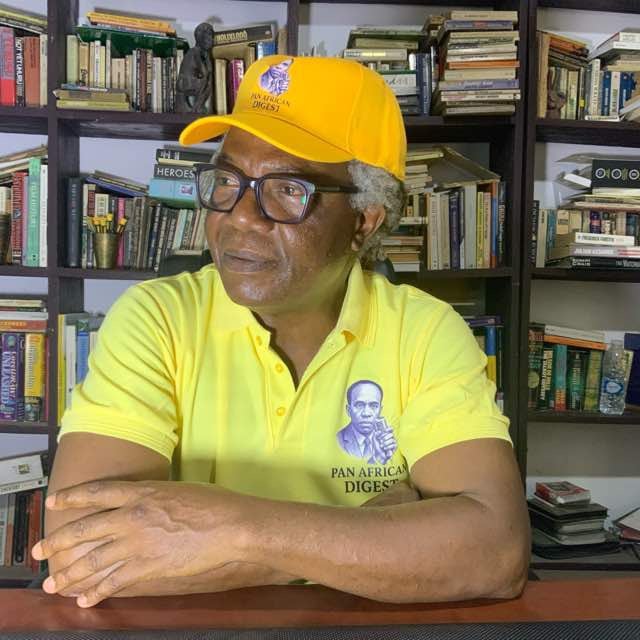
My recent experience with the Nigerian High Commission in Accra is one of the moments when an apparently insignificant encounter with a government official reveals something much larger and much more disturbing about the institution that official represents.
What began as a simple attempt to obtain information about the plight of a Nigerian citizen allegedly involved in an armed-robbery case in Labone, Accra, quickly became a lesson in the extraordinary chasm that can exist between a government institution and the very citizens it is supposed to serve.
I have lived in Ghana for many years and have spent more than four decades as a media practitioner.
Journalism, as I understand it, is not the business of flattering the powerful or asking only questions that make officials comfortable. It is about asking questions, particularly when the answers matter to the public.
It was in that capacity, and as a Nigerian concerned about the welfare of a fellow Nigerian, that I contacted the Nigerian High Commission on Friday, August 21, 2026.
I wanted to establish what had happened in the reported case and, more importantly, what the Nigerian diplomatic mission had done to ascertain the condition of the Nigerian citizen concerned and what consular assistance has been provided to him.
One would imagine that such an inquiry would be regarded as routine. After all, that is precisely the sort of situation in which a citizen should expect his country’s diplomatic mission to be interested.
A Nigerian citizen is reportedly involved in the serious crime of armed robbery in a foreign country. What has happened to him? Has the High Commission contacted him and ascertained whether he has legal representation? Has it checked on his welfare? Has it informed his family? Has it done anything within the limits of its consular responsibilities?
These are not unreasonable questions. They are precisely the questions that any responsible citizen, journalist, or concerned member of the Nigerian community might ask.
Instead, I encountered the familiar bureaucratic fog that has become almost a trademark of public administration in Nigeria.
A member of staff, identified to me as Ms Vida, initially informed me that no staff member was available. I was subsequently invited to come physically to the High Commission.
One could almost hear the ancient bureaucratic machinery grinding into motion: the citizen asks a question, the official erects a barrier, and the citizen is expected to make a pilgrimage to the institution before he is deemed worthy of an answer.
But why?
Why should a Nigerian citizen have to undertake a physical journey to the Nigerian High Commission merely to obtain information that could perfectly well be provided by telephone, email, or any of the numerous electronic communication channels available in the twenty-first century?
Has the Nigerian diplomatic service somehow remained trapped in the age of quill pens and diplomatic couriers? Has anybody at the High Commission discovered that the internet exists? Does the institution have a website merely for decorative purposes? Is the telephone now considered an instrument of espionage?
The absurdity would be comic if the underlying issue were not so serious.
The Nigerian High Commission in Accra is not a private club. It is not the personal estate of the High Commissioner or the officials employed there.
It is an institution of the Federal Republic of Nigeria, funded with public resources, established to represent Nigerian interests and, among other responsibilities, to provide consular assistance to Nigerian citizens in Ghana.
The officials who occupy those offices are public servants. They are not feudal lords dispensing favors to supplicants who have come to kiss the hem of their robes. They are employees of the Nigerian state whose salaries, privileges, and institutional environment are sustained by public resources.
They are therefore not doing Nigerians a favor by answering questions.
They are doing their jobs.
Unfortunately, this elementary distinction seems to have disappeared from the consciousness of far too many African public officials.
The moment some people acquire a government position, they begin to behave as though they have been anointed into a superior social order. A small office becomes a throne. A government vehicle becomes a symbol of aristocratic privilege. A diplomatic appointment becomes a license to cultivate an atmosphere of intimidation around ordinary citizens.
The public servant gradually forgets the word “servant” and becomes obsessed with the word “public.”
This is the mentality that Nigerians and Africans must challenge wherever they encounter it.
The tragedy is that Nigerians living abroad are often particularly vulnerable. A citizen traveling or residing in another country can suddenly find himself arrested, detained, hospitalized, involved in an immigration dispute, caught up in a commercial dispute, or accused of a criminal offense.
At such moments, the embassy or high commission should represent a point of reassurance. The citizen should know that his government has not forgotten him simply because he crossed an international boundary.
Of course, a diplomatic mission cannot and should not interfere with the judicial process of a host country. If a Nigerian citizen is accused of a crime in Ghana, the Ghanaian authorities and courts must be allowed to perform their constitutional and legal functions.
But that does not absolve the Nigerian High Commission of its consular responsibilities. There is a world of difference between interfering in another country’s judicial process and ensuring that one’s citizen is not abandoned, that his welfare is ascertained, that appropriate consular assistance is offered and that legitimate inquiries concerning his condition are answered.
That is why my experience cannot simply be dismissed as a quarrel between one journalist and one High Commission employee.
The larger question is institutional. It concerns the relationship between Nigerian citizens and the institutions supposedly established to represent them.
How accessible is the Nigerian High Commission to Nigerians in Ghana, and what happens when a Nigerian citizen requires urgent consular assistance?
Who answers questions about Nigerians who are detained or involved in legal proceedings? What mechanisms exist for complaints against public officials? How quickly are such complaints investigated? What happens when an official behaves discourteously towards a citizen?
And perhaps most importantly, who holds diplomatic officials accountable when they forget that their offices exist to serve the Nigerian public?
These questions deserve serious answers.
The Nigerian community in Ghana is not a collection of temporary visitors who appear at the High Commission occasionally to collect passports. Nigerians have lived, worked, traded, studied, invested, married and raised families in Ghana for generations.
They form an important part of the economic and social fabric of this country. Many of them will, at some point, require the services of the Nigerian diplomatic mission.
They have every right to expect that institution to be accessible, responsive and respectful.
What they should not be expected to do is genuflect.
There is something deeply unhealthy about a political culture in which citizens become afraid to question public officials. Once citizens begin to believe that asking questions is an act of insolence, public accountability has already begun to die.
The official becomes accustomed to obedience, the citizen becomes accustomed to silence, and the institution gradually ceases to regard itself as accountable to the people.
That is how bureaucratic impunity is born.
It is also how institutions become detached from the people they were created to serve.
I have formally raised these concerns with the High Commissioner and requested clarification concerning the Nigerian citizen involved in the Labone matter, the assistance provided by the High Commission, if any, and the manner in which my inquiry was handled.
I have also indicated that should the matter not receive a satisfactory response, I shall escalate it to the Minister of Foreign Affairs in Abuja.
This should not be interpreted as a personal vendetta. It is precisely the opposite.
It is a demand that a public institution behave like a public institution.
If the High Commission believes that my account is inaccurate, it should say so. If it has already taken substantial steps concerning the Nigerian citizen involved, it should tell the public what it can properly disclose. If there are legal or diplomatic limitations preventing the release of particular information, it should explain those limitations.
That is how accountable institutions operate. They do not hide behind silence and bureaucratic evasiveness.
And if the problem was simply an unfortunate lapse in judgment by one member of staff, then the High Commission should say so, correct it, and move on.
There is no shame in correcting an error. The shame lies in allowing arrogance and incompetence to become institutional culture.
This is ultimately a question of dignity. Nigerians abroad should not have to feel like second-class citizens when dealing with their own government. They should not have to approach diplomatic officials as though they were approaching medieval monarchs. Public servants should remember that the offices they occupy are temporary, while the institutions they represent belong to the Nigerian people.
A High Commissioner will eventually leave office. A diplomat will eventually be transferred. A civil servant will eventually retire. The Nigerian state will remain. The Nigerian people will remain. The institution must therefore be bigger than the personalities temporarily occupying its offices.
What is required in Africa is not a culture of fear but a culture of service. Africans don’t need arrogant public servants but professional ones. We don’t need bureaucratic stonewalling but rather access to publicly funded services. We need transparency, and not the cultivation of official mystique.
Nigerians abroad should be able to approach their diplomatic missions with the confidence that they will be heard and treated with dignity.
The Nigerian High Commission in Accra has an opportunity to demonstrate precisely that.
It can dismiss this matter as the complaint of one troublesome journalist, or it can recognize that the questions raised are much larger than the individual who raised them.
They concern every Nigerian in Ghana who may one day find himself in need of consular assistance.
I am not asking for special treatment; Au contraire, I am asking for ordinary treatment. I am not demanding that the High Commission interfere with Ghana’s laws or courts; I ask that it discharge its responsibilities towards Nigerian citizens.
I am not demanding privileges unavailable to other citizens. I am insisting on the elementary principle that public institutions must answer reasonable questions from the public they serve.
The Nigerian High Commission is not a fortress against Nigerians. It should be their first port of call when they need the assistance of their government in Ghana.
If Nigerians have instead come to regard it as an intimidating bureaucratic citadel whose doors open only for those who know the right person, then something has gone badly wrong.
And when something goes wrong in a public institution, citizens have not only the right but the duty to ask questions.
I intend to keep asking them.
©️ Ọ̀dọ̀fin Fẹ́mi Akọ́mọláfẹ́ (1st Dan, Ọ̀dọ̀fin I of Kasoa)
Blog: https://femiakogun.substack.com
YouTube: https://www.youtube.com/@FemiAkomolafe
X: https://twitter.com/FemiMayegun
Tiktop: www.tiktok.com/@panafricandigest

Femi Akomolafe, © 2026
The author is a farmer, writer, and published author.Column: Femi Akomolafe
Disclaimer: “The views expressed in this article are the author’s own and do not necessarily reflect ModernGhana official position. ModernGhana will not be responsible or liable for any inaccurate or incorrect statements in the contributions or columns here.”
Follow our WhatsApp channel for meaningful stories picked for your day.

Top Stories


Originally published on www.modernghana.com
