

August 7, 2026
The Resiliency Paradox: Why Anthony Karbo’s Warning Matters in the Face of NPP’s Economic Albatross


The Resiliency Paradox: Why Anthony Karbo’s Warning Matters in the Face of NPP’s Economic Albatross
Dissecting the Bawumia Albatross, the PDS/Pwalugu Shadow, and the Structural Realities of Ghana’s Fiercest Electoral Battle
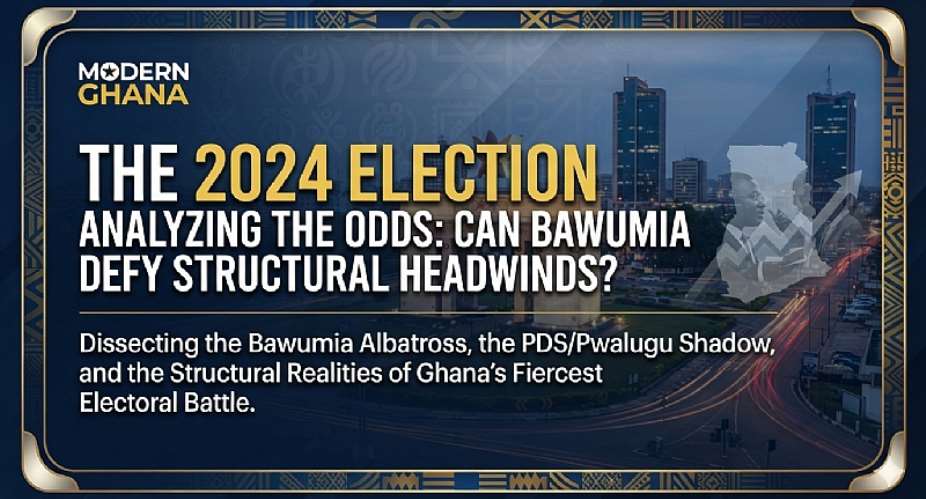
The upcoming 2026 presidential election is not a foregone conclusion; despite a heavily fractured economic legacy, historical precedents show the New Patriotic Party (NPP) retains a deep institutional resilience that the opposition ignores at its own peril. Recent remarks by NPP stalwart Anthony Karbo warning the National Democratic Congress (NDC) “not to underestimate the NPP’s comeback power” have triggered intense nationwide debate. While NDC communicators swiftly dismissed the assertion as a political joke—pointing to a legacy burdened by skyrocketing inflation, currency volatility, and an IMF bailout—political science tells a more complex story. In Ghanaian politics, public anger over economic mismanagement does not automatically translate into permanent political oblivion. To truly educate the electorate, an analytical look into the NPP’s presidential ticket reveals a fascinating paradox: a candidate laden with massive structural baggage, yet insulated by a formidable, highly organized party machinery that knows exactly how to win elections.
The Executive Baggage: Scrutinizing the Core Scandals
To write an objective review of Vice President Dr. Mahamudu Bawumia’s candidacy, Ghanaians must look past the campaign slogans and critically analyze the specific institutional failures tied to his tenure:
- The PDS Concession Debacle: Critics and civil society groups continue to hold the economic management team accountable for the collapsed 2019 Electricity Company of Ghana (ECG) deal. The controversial downgrade from a Bank Guarantee to an unverified Insurance Guarantee led to the forfeiture of $190 million in vital U.S. Millennium Challenge Corporation (MCC) funding.
- The Pwalugu Dam Structural Mirage: Promised in 2020 as a historic $993 million multi-purpose game-changer for northern development, the project remains completely stalled. Despite millions of dollars in initial expenditure, the lack of physical progress has left the candidate open to severe opposition attacks regarding fiscal transparency.
- The Economic Management Dilemma: Having spent years branding himself as Ghana’s chief economic strategist, Dr. Bawumia faces the difficult task of decoupling his personal presidential ambitions from the harsh macroeconomic realities of the current administration.
Understanding the NPP’s “Comeback Power”
Dismissing Karbo’s assertions as mere political posturing overlooks the structural realities of Ghana’s fourth republic:
- Unbending Grassroots Structures: The NPP commands a fiercely loyal, well-funded, and deeply entrenched voter base in stronghold regions like Ashanti and Eastern, which consistently delivers massive numbers regardless of national economic anxiety.
- The Digitalization Counter-Narrative: The NPP campaign is systematically shifting focus away from macroeconomic indices and toward institutional modernization. Milestones like Mobile Money Interoperability, the Ghana Card, and digital address systems are actively marketed to position the candidate as a forward-thinking technocrat who tackles systemic corruption through technology.
- The Two-Term Electoral Cycle: Historically, Ghanaian voters alternate power between the two major parties. However, victory has never been achieved by complacency; an overconfident opposition that relies solely on voter anger frequently falters against a highly mobilized, defensive incumbent machinery.
Recommendations for an Informed Electorate
- Demand Specificity, Not Rhetoric: Citizens must compel both Dr. Bawumia and the NDC leadership to present concrete, mathematically sound blueprints for debt restructuring and sustainable inflation control, rather than settling for vague political promises.
- Institutional Accountability Over Partisanship: Voters should closely monitor the independent findings of civil society organizations (CSOs) and the Office of the Special Prosecutor (OSP) regarding legacy scandals like PDS, ensuring that votes are cast based on institutional integrity rather than party loyalty.
- Reject Political Complacency: The NDC must heed Karbo’s warnings by building an active, policy-driven alternative platform. Relying strictly on the “it is our turn” mantra or assuming the NPP will slide into “perpetual oblivion” ignores the volatile nature of floating voters in contemporary Ghana.
Anthony Karbo’s warning should serve as a wake-up call for the Ghanaian electorate and political strategists alike: in democratic politics, no party is ever truly dead. While the NPP’s economic record presents a massive albatross for Dr. Bawumia, the party’s sophisticated campaign machinery and deeply entrenched regional loyalties make them a formidable contender. For the NDC, assuming that governance failures will automatically translate into an effortless victory is a dangerous gamble. For the NPP, believing that digital reforms can entirely erase the memory of financial hardships is equally detached from reality. Ultimately, the 2026 election will not be decided by past mistakes or defensive arrogance, but by whichever party proves it has a realistic, superior blueprint to restore the economic dignity of the ordinary Ghanaian citizen.
✍️ For and on behalf of all Senior Citizens of the Republic of Ghana,
Retired Senior Citizen
Teshie-Nungua, Accra
[email protected]

Atitso Akpalu, © 2026
A Voice for Accountability and Reform in Governance. More Atitso Akpalu is a prominent Ghanaian columnist known for his incisive analysis of political and economic issues. With a focus on transparency, accountability, and reform, Akpalu has been a vocal critic of mismanagement and corruption in Ghana’s governance. His writings often highlight the need for decentralization, local governance empowerment, and robust anti-corruption measures. Akpalu’s work aims to foster a more equitable and just society, advocating for policies that benefit all Ghanaians.
He is a passionate advocate for transparency and accountability. His columns focus on critical analysis of political and economic issues, with a particular interest in the energy sector, financial services, and environmental sustainability. He believes in the power of informed citizenry to drive positive change and am committed to highlighting the challenges and opportunities facing Ghana today.Column: Atitso Akpalu
Disclaimer: “The views expressed in this article are the author’s own and do not necessarily reflect ModernGhana official position. ModernGhana will not be responsible or liable for any inaccurate or incorrect statements in the contributions or columns here.”
Follow our WhatsApp channel for meaningful stories picked for your day.

Top Stories


Originally published on www.modernghana.com
