

July 3, 2026
The Islamic State’s African Reckoning: From Scattered Insurgencies to a Continental Network


Sat, 04 Jul 2026 Feature Article
The Islamic State’s African Reckoning: From Scattered Insurgencies to a Continental Network
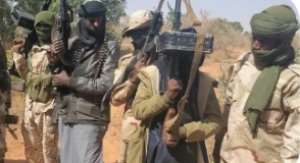
For much of the past decade, the Islamic State’s African affiliates operated as isolated fires the Sahel burning here, the Lake Chad Basin smoldering there, each insurgency consolidating its own turf with little coordination between them. That picture is changing fast, and the shift should worry every government from Bamako to Nairobi.
According to the Armed Conflict Location & Event Data Project (ACLED), more than 80 percent of all Islamic State activity worldwide in 2025 occurred in Africa double the continent’s share in 2024. But the more alarming trend isn’t the volume of attacks; it’s the pattern behind them. Analysts now describe a paradigm shift: IS no longer content to hold local strongholds. It is building an integrated regional network, and the clearest evidence of that ambition lies in the growing convergence between its two most powerful African provinces the Sahelian branch operating across the Mali-Burkina Faso-Niger tri-border zone, and the Islamic State in West Africa Province (ISWAP), entrenched in the Lake Chad Basin.
Two Provinces, One Trajectory
Both branches built their strength the same way: through overwhelmingly local recruitment and steady territorial consolidation, largely insulated from each other’s operations. In the Sahel, the withdrawal of French forces created a security vacuum that the group formally established as a separate province in 2022 exploited to expand across the Ménaka and Gao regions of Mali and the Tillabéri, Tahoua and Dosso regions of Niger. The United Nations has described the central Sahel as having reached “a dangerous tipping point,” calling it the new epicenter of global jihadism.
ISWAP’s trajectory in the Lake Chad Basin has been, if anything more institutionalized. The group now functions as a de facto proto-state, running dawawin that extract an estimated $191 million annually in levies from fishermen and herders around Lake Chad reportedly more than the tax revenue collected by Nigeria’s own Borno State government. Its footprint spans the Maiduguri-Monguno-Baga corridor, the islands of Lake Chad itself, Niger’s Diffa region, and northern Cameroon. Between 2019 and 2021, ISWAP sharply upgraded its military capacity, staging complex assaults on Nigerian military bases and, in the process, eclipsing Boko Haram as the dominant jihadist force in the basin.
Niamey: The Point of No Return
The clearest signal that these two theatres are merging came on the night of January 28–29, 2026, when Islamic State fighters struck Base 101 at Niamey International Airport. The operation bore none of the hallmarks of earlier Sahelian attacks. It had been under surveillance for weeks, possibly months. Fighters deployed roughly twenty motorcycles and at least one heavy-machine-gun-mounted vehicle, supported by mortar fire and RPG-7s, with small thermal-camera-equipped drones monitoring the battle. This was not a suicide raid the attackers had an evacuation plan and withdrew after nearly two hours of sustained fighting.
Wassim Nasr, a leading French analyst on jihadist movements in West Africa, has argued that the operation reflects a deliberate consolidation strategy freed from French pressure since 2022 and American surveillance since the 2024 closure of the Agadez drone base, the Islamic State is now actively merging the capabilities of its Sahelian and West African wings.
The forensic details support that reading. Investigators point to a level of planning, coordination and multi-domain tactics previously unseen in ISIS-Sahel operations consistent with a transfer of expertise from ISWAP. Amaq’s own propaganda video reinforced the theory: fighters speaking Arabic, Hausa, and Kanuri with accents traced to Borno State, ISWAP’s historic heartland, alongside acknowledged foreign fighters integrated into the ranks.
What’s Driving the Convergence
Several structural factors explain the shift. The French military withdrawal from Burkina Faso, Mali and Niger removed sustained counterinsurgency pressure. Washington’s 2024 evacuation of the Agadez drone base stripped Western partners of their principal regional surveillance asset. Into that vacuum stepped the Wagner Group, whose counterinsurgency operations alongside Malian forces frequently condemned for brutality against civilians have degraded some jihadist networks while simultaneously generating fresh grievances and recruitment pools.
Communications tradecraft has evolved too. Rather than relying on interceptable cellular networks, IS-affiliated groups increasingly use trafficked Starlink terminals for satellite connectivity. A source close to the Multinational Joint Task Force the Chad-based coalition established in 2014 to combat ISWAP reported the seizure of numerous Starlink units during 2024–2025 operations, confirming the technology’s spread within the organization’s ranks.
A Wider Continental Pattern
The Sahel-Lake Chad convergence is not occurring in isolation. In eastern Democratic Republic of Congo, the Islamic State’s Central African Province (ISCAP) built around the former Allied Democratic Forces, which pledged allegiance to IS in 2019 became the DRC’s deadliest armed group in 2024. Human Rights Watch has documented over 4,000 civilian deaths attributed to the group between 2014 and 2020, with fresh atrocities in April and June 2026 in Ituri and North Kivu.
In Somalia, Islamic State Somalia (ISS) remains numerically small but strategically vital functioning, according to George Washington University’s Program on Extremism, as a financial engine that has helped bankroll ISCAP’s resurgence in the Congo through extortion, taxation, and gold-trafficking revenue extending well beyond Somali borders.
The Bottom Line
The picture emerging from the Sahel to Lake Chad, from the Congo basin to the Horn of Africa, is no longer one of scattered, self-contained insurgencies. It is the outline of a genuine regional network mobile, resourced, and increasingly difficult for fragmented national and multinational responses to contain. For West African governments already strained by economic and political crises, the Niamey airport attack should be read not as an isolated tragedy but as a warning shot.
Mustapha Bature Sallama.
Medical/ Science Communicator,
Private Investigator, Criminal investigation and Intelligence Analysis.
International Conflict Management and Peace Building.USIP
[email protected]
+233-555-275-880
Sources : ACLED (Armed Conflict Location & Event Data); Le Grand Continent (June 2026)
The Soufan Center, “The Islamic State’s Growing Footprint in the Sahel” (June 2026)
Meta-Défense; Human Rights Watch (August 2025); Al Jazeera (April 2026); U.S. Office of the Director of National Intelligence/NCTC;
RFI; Global Initiative Against Transnational Organized Crime, Risk Bulletins
Eurafrica.info; ADF Magazine; George Washington University Program on Extremism
Russian Ministry of Foreign Affairs press statement (February 2026).

Mustapha Bature Sallama, © 2026
This Author has published 1436 articles on modernghana.com. More COE Hijama Healing Cupping therapy ,Mini MBA in Complimentary and Alternative Medicine .Naturopathy and Reflexologist. Private Investigation and Intelligence Analysis,International Conflict Management and Peace Building at USIP. Profession in Journalism at Aljazeera Media Institute, Social Media Journalism,Mobile Journalism, Investigative Journalism, Ethics of Journalism, Photojournalist, Medical and Science Columnist on Daily Graphic. Column: Mustapha Bature Sallama
Disclaimer: “The views expressed in this article are the author’s own and do not necessarily reflect ModernGhana official position. ModernGhana will not be responsible or liable for any inaccurate or incorrect statements in the contributions or columns here.”
Follow our WhatsApp channel for meaningful stories picked for your day.
Top Stories


8 hours ago


<!–
–>
Originally published on www.modernghana.com
