

August 11, 2026
Sheikh Jingir, Infidels and the Rest of Us
4 hours ago | Commentaries
Sheikh Jingir, “Infidels” and the Rest of Us

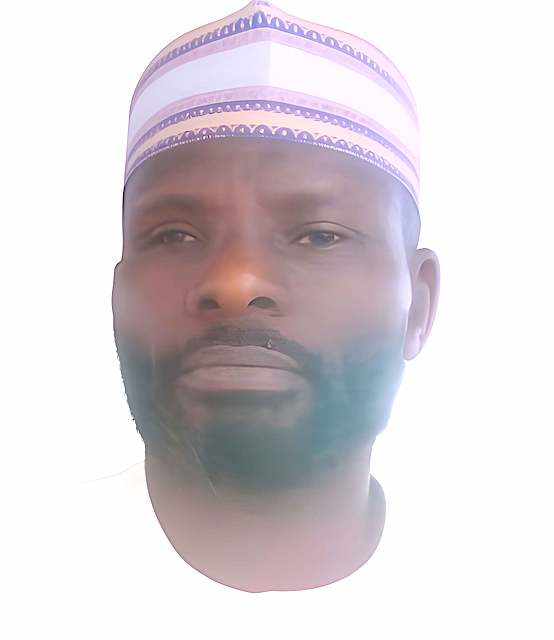
Abdullahi D Mohammed
Infidels, literarily means “without faith”, or more succinctly people who does not share same faith, especially within the context of the user or speaker of the word. The word, is by all means controversial, derogatory and even insulting, especially when and if it targeted a particular group with different faith.
Though historically, Christians used it for non‑Christians (especially Muslims), and Muslims used it for non‑Muslims as well.
In Arabic, the foundational basis of Islam the term kāfir often translated as “infidel” or “unbeliever.”
While, Ãrne, in Hausa refers to same. These terms are however hostile, exclusionary, dehumanizing and carries a humiliating and terrifying badge, especially in a multi ethnic and diverse faith-based society.
The marked and hostile nature of the term has been at the fore of hostility amongst Christians and Muslims, especially in Hausalized northern Nigeria, where contestations for recognition, population superiority and political relevance are high.
Unsurprisingly, when controversial Jos-based Islamic scholar Sheikh Yahaya Jingir, made that infamous remarks in Kano, expectedly, it generated backlash and condemnation even amongst some fiery and moderates within the Islamic fold. His remarks were reckless, laced with intimidation, for political spoils. Hence he was drumming support for a particular candidate in the upcoming general elections.
Lets face it. Who can be considered or called an infidel? The word infidel, more closely is an aberration and more conflicting. If it is an “unbeliever” in your faith, who believes in a different faith, that doesn’t make him faithless. Because, he only held a contrary view. So, again, it makes both parties faithless, at least within their respective opposing belief system.
Believe in one superior being, Omnipotent, Allah, God, the Creator of the heavens and earth, remains the cardinal principles which shape religious beliefs in Nigeria, though sharp divisions exists in belief systems especially on prophethoods, the ultimate goal is— existence of believe.
Scholars like Sheikh Jingir, represents a conflicting, utterly confusing posture. His teachings are oftentimes controversial. Instead of peacebuilding, he chooses divisions. He opts for inciting and pitting Muslims against Christians in a more audacious manner. He uses the “Mimbari” pulpit, to campaign openly for his preferred candidates regardless of their suitability or competence.
In the buildup to the 2023, elections, Sheikh Jingir vociferously urge and sometimes intimidate his audience, through fear and unrealistic claims that same faith ticket, Muslim-Muslim, would translate to the fairy milk and honey.
But, what we’ve seen, is only his own kingdom being transformed. He was rewarded with choice properties in Abuja, according his own testament.
Now, with 2027 around the corner, the Sheikh is back again. Same playbook. Same script, same scenario. ,”Ci da addini”, that’s his trademark. If not, the barrage of consequential and existential challenges, especially in his home zone— northern Nigeria, is enough to humble him. No day passes without families displaced as a result of insecurity. Daily kidnapped for ransom has been normalized across the region. Has the Sheik considered speaking to his paymasters in Abuja, on the state of economy and insecurity? Had he considerred the terrifying collapse of purchasing power of the common man?
Scholars and clerics are known for fearlessness. They speak truth to powers. They stared leaders in the eye and tell uncomfortable and honest conversations. But certainly not the Sheikh. Ulamas and the intelligentsia are supposed to be the bridge which connects their congregation and followers with leaders through truth, sincerity, honesty and compassion.
We must ask: what kind of leadership do religious leaders owe their followers? The moral authority given to clerics is enormous; congregations trust them to interpret scripture, to counsel, and to guide consciences. That trust is a public good. When clerics use it to inflame sectarian differences or to trade religious sentiment for political favors, the social cost is immense. Calling entire communities “infidels” in order to win votes or curry favor with powerbrokers corrodes social cohesion and frays the delicate fabric of coexistence in Nigeria.
Worse still, those who cheer such pronouncements — political actors supporters, and patrons — must own some of the blame. By amplifying sectarian rhetoric, they create a dangerous precedent: religion becomes a currency for political advancement, and exclusion becomes policy. Those who celebrate this behaviour must ask themselves whether short‑term gains are worth the long‑term damage. When religious identity is weaponized, it feeds grievances, normalizes discrimination, and can spark cycles of retaliation that no law or security deployment can easily reverse.
We also need to recognise the hypocrisy in much of this theatre. While sermons for ethnic pride and religious superiority
and purity are loudly proclaimed, basic issues that affect ordinary people remain neglected. Insecurity, unemployment, collapsing infrastructure, rising food prices and failing public services demand urgent attention. If clerics truly cared for their communities, their pulpits would be platforms for demanding accountability on these issues, for mobilising interfaith cooperation on humanitarian relief, and for urging leaders to deliver justice and dignity to all citizens — not for stoking fears about outnumbering “infidels” and glorifying same-faith ticket at public events
Religious language matters. Words like “infidel” and terms that dehumanize those of other faiths are not just rhetorical excesses; they have real consequences. They reduce fellow citizens to caricatures, strip them of rights in public imagination, and make compromise and plural citizenship harder to imagine. In a country as diverse as Nigeria, civic harmony depends on shared respect across religious lines — a recognition that different faiths can coexist without threatening each other’s core beliefs.
So what should be done? Religious leaders should reclaim their moral authority by promoting messages of inclusion, compassion and justice. They must use the pulpit to denounce violence and exclusion, and to advocate for policies that protect the vulnerable regardless of faith.
Similarly, political actors must reject sectarian appeals. Parties and candidates should be judged on competence, platforms and integrity — not on whether their religion matches that of a given cleric. Congregations and citizens must hold their leaders accountable. Support that rewards division should be withdrawn; those who profit from sectarianism must not be allowed to lay claim to moral leadership. We must learn to tolerate one another and learn to live togethee. This need for building Interfaith coalitions — led by both moderate clerics and civic actors — should be expanded to promote dialogue, coordinate humanitarian responses to insecurity, and educate the public about the dangers of religiously framed politics.
Finally, let us be clear about the ethical mandate that underpins Islam itself: justice, mercy and fairness. These are not optional extras; they are central to Islamic teaching. If clerics invoke religion to exclude, intimidate or elevate a few at the expense of the many, they betray the very principles they claim to serve. True religious leadership advances equity, defends the oppressed and insists on fairness for everyone — Muslims and non‑Muslims alike.
We must call for tolerance and respect for all religions. Religious leaders should promote inclusivity in political representation, insisting that equity, fairness and justice guide governance, as espoused in Islam and mirrored in other faiths. No one should belittle someone else’s faith; religion is a touchy, knotty issue in Nigeria and must be handled with care. Those cheering Sheikh Jingir on should know they are creating a dangerous precedent that threatens our shared future.
In Nigeria’s fragile plurality, the safest path is not to amplify divisions but to build bridges. Let clerics be peacemakers and truth‑speakers; let politicians seek competence over confessional advantage; and let citizens demand a public life where faith is respected but never weaponised. Only then can we hope for lasting peace, justice and dignity for all.
Abdullahi D Mohammed, policy analyst, is a Director at Initiative for concerned Citizens Against Drug Abuse and Community Awareness. He writes from Kano [email protected]
Originally published on www.thenigerianvoice.com
