

August 1, 2026
SAT: Oil pollution in Nigeria: NGOs accuse Shell of bad pipeline maintenance


SAT: Oil pollution in Nigeria: NGOs accuse Shell of bad pipeline maintenance
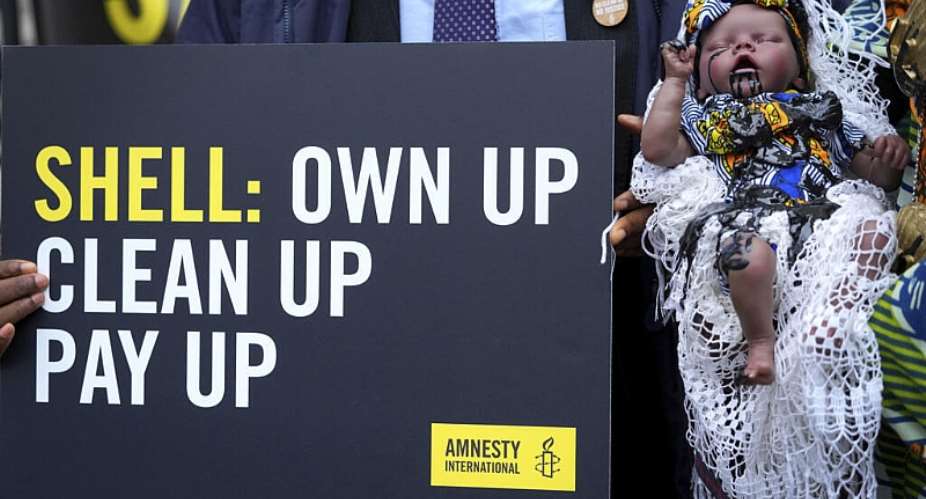
Activists protesting the impact of environmental devastation caused by Shell in Nigeria, outside The Royal Courts of Justice, ahead of the Ogale and Bille communities versus Shell court case in London, on 13 February, 2025. – AP – Kirsty Wigglesworth
Shell must answer for decades of pollution in the Niger Delta after internal company documents revealed broken rules, failing infrastructure and unresolved clean-up costs that risk leaving affected communities to pay the price, a coalition of human rights and environmental organisations, including Amnesty International, said this week in a report.
The report, titled Nigeria: Lifting the Lid, analyses internal Shell emails, audits, presentations and confidential reviews disclosed in UK legal proceedings which reveal a wider human rights scandal than previously reported.
Mark Dummet, a researcher at Amnesty International, told RFI environment reporter Jeanne Richard that “the internal audit lists problem after problem regarding the company’s maintenance of oil pipelines, showing it was simply not doing enough to prevent oil spills”.
Another document reveals that Shell’s Nigerian subsidiary obtained authorisation from the parent company to operate using lower standards than other Shell subsidiaries worldwide.
“Environmental racism clearly drove some of their decisions,” Dummet underlined.
Oil giants accused of dodging Niger Delta clean-up as UN panel intervenes
‘Chronic neglect’ of risks
Shell said its operations were meeting global standards, but the documents point to concerns raised by the Nigerian army over alleged complicity in oil theft, suspected staff and contractor collusion.
Other concerns included exemptions from safety standards, chronic neglect of known pipeline integrity risks, missing well data, weak leak detection and flawed spill monitoring. Employees of the Afam VI power plant walk past a gas pipeline at the plant in Port Harcourt.
Shell knew the risks from ageing and leaking infrastructure, including an old pipeline internally described as “a basket case”, yet kept oil flowing.
It later decided to divest its onshore business rather than face the enormous cost of clean-up and decommissioning, including an internal US$10.9 billion (€8.6 billion) decommissioning estimate.
A separate internal presentation stated that 375km² of mangrove forest had been harmed by pollution in Nigeria.
Ecowas greenlights $25bn Nigeria-Morocco mega gas pipeline
Clean-up avoidance
The multinational defended itself by instead blaming oil thieves for the pollution.
Dummet replied: “Instead of repairing all the points where oil thieves had rigged up valves on the pipelines, they decided to let the oil flow, knowing there would be leaks. All for financial reasons.”
Among the internal documents analysed by the NGOs, an audit also estimates that decommissioning all of Shell’s existing facilities in the Niger delta “could take decades and cost €9.5 billion,” excluding clean-up costs.
Amnesty International wrote to Shell on 3 July to share its findings related to the disclosed documents.
In response, Shell wrote that “the characterisation and portrayal of Shell” in the letter “is not one we recognise”, saying the company is committed “to honesty, integrity and respect for people, and to conducting business in an ethical and transparent manner”.
Yet, for affected communities, the findings confirm what many have said for decades, that oil pollution has damaged water, farmland, fisheries, health and livelihoods, with companies continuing to profit and deny responsibility.
Listen to our podcast: Climate justice in Africa: floods, fossil fuels and the fightback
Emem Okon, the executive director of Kebetkache Women Development & Resource Centre – a frontline leader on gender, oil pollution and community rights in the Niger Delta, told Amnesty that “Shell must stop deflecting blame”.
She had told RFI’s Spotlight on Africa podcast last month that the communities are still fighting for accountability.
“Shell cannot be allowed to take the oil, take the profits and leave the pollution behind,” said Olanrewaju Suraju, Chairman of the HEDA Resource Centre, a Nigerian governance and environmental justice NGO. “Communities in the Niger Delta deserve truth, justice, clean-up and full remedy.”

RFI
All the news from France, Europe, Africa and the rest of the world.Page: rfi

Top Stories


Originally published on www.modernghana.com
