

August 5, 2026
Rents, Trust, and Survival: Accra Street Journals’ Story of Accra’s Small Business Economy


Wed, 05 Aug 2026 Business Features
Rents, Trust, and Survival: Accra Street Journals’ Story of Accra’s Small Business Economy
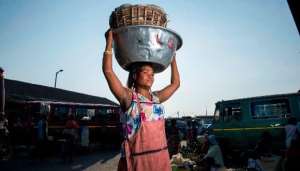 Accra Street Journals’ Story of Accra’s Small Business Economy
Let me continue the story of Accra’s business landscape, because the lessons keep coming.
Accra’s real estate boom has been a double-edged sword for small shops. On one hand, new residential and commercial developments have brought more customers into previously underserved areas. On the other hand, rising property values have pushed rents beyond the reach of many small retailers. A 2025 report by the Ghana Real Estate Developers Association noted that commercial rents in Accra increased by an average of 18 percent over the previous year, with prime locations like Airport City and Cantonments seeing increases of over 25 percent. For small shops, the math is brutal. A corner store that once paid 1,000 cedis a month in rent might now be asked for 1,500 cedis or more. With thin margins, that increase can be the difference between profit and loss. Some have responded by moving to cheaper neighborhoods, while others have downsized or shifted to home-based operations. The ones that survive are those that have built such strong customer loyalty that their regulars follow them, or those that have diversified their product offerings to increase revenue per square foot.
Maintaining profit margins in Accra requires a combination of discipline and creativity. The businesses that succeed are those that constantly monitor their costs, renegotiate supplier contracts, and find ways to reduce waste. A small restaurant owner might switch to bulk purchasing to lower ingredient costs, or adjust portion sizes to maintain margins without raising prices. A retailer might negotiate better payment terms with suppliers, allowing them to hold less inventory and free up cash. The most successful SMEs in Accra also use technology to track their finances, with accounting software and mobile money records replacing the old notebook-and-pen methods. But perhaps the most important margin strategy is pricing. Many Accra businesses underprice their products because they are afraid of losing customers. The smarter ones understand that customers will pay for quality, convenience, and trust. They price confidently, and they explain the value behind their prices.
The rise of business networking events in Accra reflects a growing recognition that collaboration is more powerful than competition. From the Ghana SME Summit to the Accra Business Breakfast Club, entrepreneurs are gathering to share ideas, find partners, and learn from each other. A 2026 survey by the Ghana Enterprises Agency found that 68 percent of Accra SMEs that regularly attend networking events reported faster growth than those that do not. The reason is simple. In a crowded market, who you know matters as much as what you know. A connection made at a networking event might lead to a new supplier, a new customer, or a new mentor. For many entrepreneurs, these events are also a source of motivation and reassurance. It helps to know that other business owners face the same challenges, and that solutions exist.
Word-of-mouth marketing remains one of the most powerful tools in Accra’s business landscape. In a city where trust is hard-won and easily lost, a personal recommendation from a friend or family member carries more weight than any advertisement. A 2025 study found that 82 percent of Accra consumers said they were more likely to try a new business if it was recommended by someone they trust. The implication for small businesses is clear. Every satisfied customer is a potential marketer. And every dissatisfied customer is a potential warning. The businesses that thrive are those that consistently deliver such good service that their customers cannot stop talking about them. They also actively encourage word-of-mouth, through referral discounts, loyalty programs, and simply by asking satisfied customers to tell their friends.
Climate conditions affect market activities in Accra in ways that many business owners underestimate. The rainy season, from April to October, often disrupts supply chains, making it harder for traders to bring goods from the north or from the ports. Flooding in low-lying areas like Alajo and Agbogbloshie can close markets for days. The harmattan season, from November to February, brings dust and dry air that can damage certain products, particularly food items and electronics. A 2026 report by the Ghana Meteorological Agency noted that Accra is experiencing more extreme weather events, with heavier rains and longer dry spells than in previous decades. Businesses that anticipate these patterns, by building flood barriers, diversifying suppliers, or adjusting inventory, are better positioned to weather the storms. The climate is not going to change anytime soon. But how businesses respond to it can.
Some industries in Accra grow faster than others for reasons that are not always obvious. Information technology and fintech have seen explosive growth, driven by high smartphone penetration, a young population, and supportive government policies. The health sector has also expanded rapidly, as a growing middle class seeks better healthcare. Real estate and construction have boomed, fueled by urbanization and remittances from abroad. On the other hand, manufacturing has struggled, hampered by high energy costs, weak infrastructure, and competition from cheaper imports. Retail has been a mixed story, with modern supermarkets and malls growing, while traditional markets face pressure from both online shopping and informal street vendors. The sectors that grow are those that align with Ghana’s demographic and economic trends. Entrepreneurs who understand these trends can position themselves to capture the growth.
Street vendors compete with formal retailers in ways that are both familiar and surprising. A street vendor selling phone chargers on a busy intersection can undercut the mall-based electronics store because they have no rent, no utilities, and no employee salaries. They can also adapt faster, changing their product mix based on what is selling that day. But formal retailers have advantages too. They can offer warranties, accept card payments, and provide a more comfortable shopping experience. The competition is not always zero-sum. Many consumers use both, buying basics from street vendors and higher-value items from formal retailers. For the street vendor, the key is speed and convenience. For the formal retailer, the key is trust and service. Both are essential to Accra’s retail ecosystem.
Smart pricing strategies matter in Accra because consumers are price-sensitive but not price-blind. A 2025 study by the Ghana Statistical Service found that while price is the most important factor for 60 percent of consumers, nearly 40 percent said they would pay more for better quality or convenience. This means that Accra businesses cannot simply compete on price alone. They must also offer value. The most successful pricing strategies are those that communicate that value clearly. A restaurateur might explain that their ingredients are locally sourced and fresher than the competition. A tailor might highlight their attention to detail and use of high-quality fabric. A retailer might offer flexible payment options, like mobile money installments, that make their products more accessible. The price is not just a number. It is a signal.
How Accra businesses survive economic shocks is a story of adaptability and resilience. The COVID-19 pandemic, the 2022 debt crisis, and the 2023 currency devaluation all tested the limits of small enterprises. Many did not survive. But those that did had certain things in common. They had diversified income streams, with some combination of online and offline sales, wholesale and retail, or goods and services. They had built strong relationships with suppliers, allowing them to negotiate better terms during hard times. They had kept a reserve of cash, knowing that banks would be unwilling to lend during a crisis. And they had stayed close to their customers, communicating regularly and adjusting their offerings to meet changing needs. The lesson is that economic shocks are not a matter of if, but when. The businesses that prepare are the ones that endure.
Consumer trust matters more than ever in Accra, and the reasons are not hard to find. The financial sector clean-up of 2017 to 2019 left thousands of depositors unable to access their savings. The pandemic exposed the vulnerability of supply chains. The debt crisis eroded confidence in government and institutions. In this environment, consumers are more careful. They research before they buy. They read reviews. They ask for recommendations. They are less likely to take a chance on an unknown brand. For small businesses, this means that building trust is not optional. It is survival. Trust is built through consistency, honesty, and responsiveness. A business that delivers what it promises, that admits its mistakes and corrects them, that treats its customers with respect, will earn the kind of loyalty that no advertising can buy. And in Accra’s crowded, competitive, and unpredictable market, loyalty is the most valuable currency of all.
The story of Accra’s businesses is a story of resilience. It is a story of entrepreneurs who refuse to give up, who adapt to changing circumstances, who find ways to thrive despite the odds. They are the backbone of the city’s economy, the source of its energy and its hope. And their lessons are there for anyone willing to learn. Reinvest in your business. Invest in customer experience. Learn digital skills. Adapt to change. Build trust. And never stop learning. Because in Accra, the only constant is change. And the only way to survive is to change with it.
Source Used: Accra Street Journal – Business

Samuel Kwame Boadu, © 2026
Entrepreneur | Digital Marketer & Strategist | Contributor on Business, Health, Sports & Innovation in Ghana. More Samuel Kwame Boadu is a Ghanaian entrepreneur, media publisher, and digital marketing strategist. He is the founder and CEO of SamBoad Business Group Ltd, which includes subsidiaries in media, digital marketing, logistics, and courier services such as SamBoad Publishing, SamBoad Media Consult, and SamBoad Express.
As Editor-in-Chief of Accra Street Journal (ASJ) and The High Street Business (THSB), Samuel leads publications focused on entrepreneurship, business insights, and economic development. He has trained over 1,700 professionals, consulted for numerous companies, and implemented programs that create jobs and empower young Ghanaians.
His work has earned him nominations for the 40 Under 40 Awards (Entrepreneurship & Business), GhanaWeb Excellence Awards (Media & Communication), and Young Achievers Summit Awards. He has also been featured internationally as a disruptive young entrepreneur by Yahoo Lifestyle, Thrive Global, Influencive, and Disruptive Magazine, further highlighting his influence in Ghana’s media and business sectors.
As a writer on Modern Ghana, Samuel brings a consultant’s voice to journalism. His articles are not only informative but also solution-driven, tackling issues such as Ghana’s insurance penetration gap, healthcare access, business growth strategies, sports insights and the digital economy. He has a knack for breaking down complex subjects into clear, relatable insights—earning him recognition as both a storyteller, digital marketing expert and thought leader..
For Samuel, writing is more than reporting facts—it’s about shaping conversations and driving change. He believes journalism should inform, challenge, and inspire readers to take action, whether in business, career, or personal life.
📌 Follow Samuel Kwame Boadu on ModernGhana for authoritative editorials, deep dives, and thought-provoking commentary on Ghanaian and African business, digital marketing, health, and innovation landscapes. Follow Samuel Kwame Boadu too on all socials with name Samuel Kwame Boadu or @iamsamboadColumn: Samuel Kwame Boadu
Disclaimer: “The views expressed in this article are the author’s own and do not necessarily reflect ModernGhana official position. ModernGhana will not be responsible or liable for any inaccurate or incorrect statements in the contributions or columns here.”
Follow our WhatsApp channel for meaningful stories picked for your day.

Top Stories


Originally published on www.modernghana.com
