

August 17, 2026
Professor Joshua Ogunwole: When The Law, The Voters, And The Numbers Matter More Than Political Power
4 hours ago | Opinion
Professor Joshua Ogunwole: When The Law, The Voters, And The Numbers Matter More Than Political Power

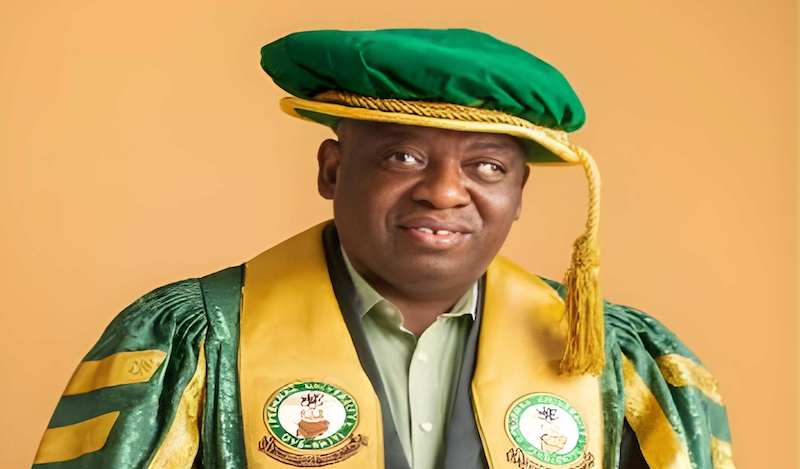
Professor Joshua Ogunwole
There are moments in the life of a nation when something that should be ordinary suddenly becomes worthy of national reflection.
Professor Joshua Ogunwole gives us such a moment.
I write about him not because I know that anyone offered him money.
I do not.
I write about him not because I know that anyone threatened him.
I do not.
I write about him not because I know that any political elite attempted to intimidate, influence, or compromise him.
I have no evidence to make such claims, and I will not manufacture them.
That is important.
But here is the reality.
Professor Joshua Ogunwole carried out an important electoral responsibility within a Nigerian political environment that has a long and painful history.
He knew that history.
We know that history.
And when his moment of professional responsibility arrived, he did what needed to be done.
For that, he deserves praise.
The Painful Nigerian Reality
Nigeria has lived through too many elections in which the conversation afterward was not simply about who won or lost.
We have heard about ballot-box snatching.
Vote buying.
Political intimidation.
Violence.
Thuggery.
Powerful political interests.
Disputed figures.
Institutional interference.
Electoral manipulation.
And the painful suspicion among ordinary citizens that somewhere between casting a vote and declaring a result, something could happen to the people’s choice.
This is not an accusation against every politician.
It is not an accusation against every election official.
It is not an accusation against every police officer.
And it certainly should not be converted into an allegation that something improper happened around Professor Ogunwole.
It is simply part of Nigeria’s electoral history.
That history creates a psychological burden.
It has taught some Nigerians to expect darkness even before darkness appears.
It has created cynicism.
It has weakened institutional trust.
It has caused ordinary citizens sometimes to wonder whether the person with the greatest political influence will ultimately become more important than the person holding the ballot.
That is the painful reality against which Professor Ogunwole’s conduct deserves to be considered.
No One Had to Approach Him for His Conduct to Matter
This distinction is extremely important.
We do not need a story about somebody approaching Professor Ogunwole.
We do not need a secret meeting.
We do not need an envelope.
We do not need a threatening telephone call.
We do not need a political godfather appearing somewhere behind the curtain.
None of those things needs to have happened.
Professional integrity does not become meaningful only after somebody attempts to corrupt it.
Integrity also means entering an important responsibility knowing what it requires and simply doing it.
Professor Ogunwole was entrusted with responsibility.
He carried it out.
Sometimes the absence of drama is itself the beautiful part of the story.
He Could Have Followed the Old Ways
This is where I believe Nigerians should be willing to praise him.
He could have followed the old ways of dark Nigerian politics—not because anyone necessarily asked him to, but because every human being entrusted with power has choices.
He could have been careless.
He could have allowed personal preference to interfere.
He could have allowed political considerations to become more important than professional responsibility.
He could have become another controversial name in Nigeria’s long electoral history.
He did not.
That matters.
Money exists in Nigerian politics.
Power exists.
Elite influence exists.
Political intimidation has existed.
Patronage exists.
Partisan loyalty exists.
Fear exists.
Human weakness exists.
These are realities of political behavior, not allegations against Professor Ogunwole or against any particular individual involved in the Osun election.
A professional standing within such an environment still has agency.
And at some point, that professional must decide:
What is my responsibility?
What does the law require?
What did the voters decide?
What do the numbers say?
What will my name mean when this moment is over?
Your Name Must Survive the Election
That last question may be more powerful than we realize.
Political power is temporary.
Presidents eventually leave office.
Governors eventually leave office.
Senators eventually leave office.
Political alliances change.
Today’s political friend may become tomorrow’s opponent.
Today’s opposition politician may become tomorrow’s president.
Parties rise.
Parties weaken.
Governments change.
But a person carries his name home.
Professor Joshua Ogunwole had a name before this electoral responsibility.
He would have that name afterward.
That is one of the great psychological protections of professional identity.
A professor must remember that he remains a professor after politicians have left the room.
A police officer remains a police officer after the election.
A judge remains a judge after the politically powerful people appearing before the court have moved on.
An election worker remains a citizen after the ballot boxes have disappeared.
Temporary political advantage should never become more valuable than permanent personal integrity.
His Name Now Joins That of Professor Nnenna Oti
This is why I believe Professor Joshua Ogunwole’s name can now be placed graciously alongside that of Professor Nnenna Oti.
Their circumstances were not identical.
We should never pretend that they were.
Professor Nnenna Oti became nationally known through her publicly described experience surrounding the 2023 Abia State governorship election and her account of resisting attempts to influence the process.
I will not transfer Professor Oti’s experience onto Professor Ogunwole.
We cannot say that because one professor reported pressure, another professor must also have experienced pressure.
That would be irresponsible.
Their connection lies somewhere deeper.
It lies in the principle that, when the decisive moment comes, the law and the voters are what matter.
Not political elites.
Not money.
Not party power.
Not personal relationships.
Not the wishes of powerful individuals.
The law matters.
The voter matters.
The legitimate count matters.
And the number must remain the number.
That is the gracious line in which I place Professor Joshua Ogunwole.
The Professor Who Chose the Other Road
Nigeria also knows that academic status by itself does not guarantee electoral integrity.
That is why the contrasting history involving Professor Peter Ogban remains important.
Professor Ogban is educated.
He is an academic.
He possessed professional standing.
Yet his conviction in connection with manipulation of election results demonstrated something that Nigerians should never forget:
A title cannot protect a person’s integrity when behavior contradicts it.
Professor.
Doctor.
Justice.
Commissioner.
Officer.
Chairman.
Governor.
President.
These are titles.
Integrity is behavior.
That is why the contrast matters.
One professor can become associated with electoral wrongdoing.
Another can become associated with publicly resisting pressure.
Another can simply fulfill his responsibility properly without our needing to invent a dramatic story around him.
The lesson is not that professors are special.
The lesson is that human beings make choices.
The Number Must Remain the Number
This principle sounds almost too simple to deserve an article.
But perhaps Nigeria needs simple truths.
If the lawful count is 500, then it is 500.
Not 550 because somebody powerful wants 550.
Not 450 because somebody is afraid.
Not 600 because somebody has money.
Not 300 because an elite political interest demands a different outcome.
Five hundred.
The number must remain the number.
The mathematics of democracy should not recognize political status.
A ballot does not know whether the person benefiting from it is rich.
It does not know whether a governor is powerful.
It does not know whether a president is watching.
It does not know whether a celebrity has millions of followers.
The number simply records what voters did.
The professional responsibility is to protect that reality.
This Is Why Professor Ogunwole Deserves Praise
Nigeria sometimes makes a mistake in how it talks about public integrity.
We talk endlessly about the corrupt person.
The official arrested.
The politician accused.
The officer dismissed.
The professor convicted.
The institution that failed.
Of course we must expose wrongdoing.
But psychology also teaches us the importance of reinforcement.
Societies communicate their values partly through what they recognize.
If somebody does the right thing, say so.
If a police officer remains neutral, recognize it.
If a young election worker protects the count, recognize it.
If a journalist refuses to publish an exciting but unverified allegation, recognize it.
If a judge follows the law despite political noise, recognize it.
And when a professor fulfills an important electoral responsibility properly, recognize it.
So I say it plainly:
Well done, Professor Joshua Ogunwole.
But Do Not Turn Him Into a Saint
Praise should not become mythology.
Professor Ogunwole is human.
Professor Oti is human.
Every public official is human.
That is precisely why their choices matter.
I do not need Professor Ogunwole to be perfect to recognize the importance of what he did.
I do not need to know his political preferences.
I do not need to know whom he privately wanted to win.
A professional can possess personal opinions.
The democratic question is whether those opinions interfere with public responsibility.
Professional integrity does not require the absence of personal preference.
It requires the discipline not to allow preference to corrupt duty.
Nigeria Should Not Need Heroes for Ordinary Duties
And here is where this article becomes painful.
Why should Nigerians have to celebrate someone for doing what should be normal?
Why should accurately performing an electoral responsibility seem courageous?
Why should we become excited when an official simply follows procedure?
Why should an honest professor appear extraordinary?
Why should a neutral police officer surprise us?
Why should we celebrate when numbers remain unchanged?
That tells us something about the psychological wounds produced by years of institutional distrust.
The long-term goal should therefore not be to produce more electoral heroes.
It should be to make heroism unnecessary.
Imagine That Nigeria
Imagine a future Nigerian election in which nobody worries about the returning officer.
The professor arrives.
The votes are counted.
The figures are collated.
The lawful result is declared.
The professor returns to the university.
Nothing dramatic happens.
No rumors.
No allegations of envelopes.
No stories about telephone calls.
No speculation about powerful politicians.
No national anxiety about whether the professor will “stand firm.”
Nobody becomes famous.
That would be progress.
Imagine police officers whose neutrality is so normal that nobody praises them for it.
Imagine judges whose independence is assumed.
Imagine election workers who do not require courage simply to record the correct number.
Imagine political leaders who understand that losing an election does not mean the end of their lives.
Imagine voters who know that the ballot they cast will remain recognizable at the end of the process.
That is the Nigeria we should want.
From Exceptional Integrity to Normal Integrity
Professor Ogunwole therefore represents something optimistic.
Not because one professor can transform Nigerian democracy.
He cannot.
Professor Nnenna Oti cannot.
No individual can.
Institutions must eventually become stronger than individuals.
Nigeria must move from depending upon exceptional integrity to expecting normal integrity.
The system should make doing the right thing easier.
It should make manipulation harder.
It should protect officials who follow the law.
It should punish established misconduct consistently.
It should make political interference institutionally costly.
And it should teach young professionals that public responsibility is stewardship, not opportunity.
Let There Be More Ogunwoles and Otis
Until that institutional future arrives, examples matter.
Let there be more Professor Joshua Ogunwoles.
Let there be more Professor Nnenna Otis.
Not because Nigeria needs personalities to worship.
Not because every election official should become a celebrity.
But because young Nigerians need to see another possibility.
They need to know that education can coexist with integrity.
That professionalism can survive politics.
That a person’s name can remain more valuable than temporary political advantage.
That public responsibility can be completed without becoming another chapter in the darker history of Nigerian elections.
And perhaps eventually we will no longer need to say:
Look at this professor. He did what was right.
Because thousands will be doing the same thing.
The Law and the Voters Are It
At the end of all the political noise, democracy becomes remarkably simple.
Politicians will campaign.
Governors will arrive.
Parties will organize.
Celebrities may speak.
Supporters will argue.
Money may surround politics.
Powerful people will remain powerful.
But when the citizen enters that voting space, something else must become more powerful than all of them.
The law.
And the voter.
That is it.
The law establishes the process.
The voter makes the choice.
The official protects the process.
The numbers record the choice.
Everything else is noise.
That is why Professor Joshua Ogunwole deserves this moment of recognition.
Not because we know he resisted a bribe.
Not because we know he resisted intimidation.
Not because we know somebody powerful tried to influence him.
We make none of those claims.
We praise him because, against the background of a country with a painful electoral history, he was entrusted with an important responsibility and completed what needed to be done.
His name now joins, in this particular conversation about electoral professionalism, that of Professor Nnenna Oti.
And perhaps their greatest contribution is not that Nigerians should remember their names forever.
Perhaps it is that one day Nigerians will no longer need to.
Because professional integrity will have become so ordinary that the professor simply announces what the voters decided, returns home, and the country moves forward.
Until that day, we should reinforce what we want Nigeria to become.
So, once again:
Well done, Professor Joshua Ogunwole.
The law mattered.
The voters mattered.
The numbers mattered.
And that is exactly how democracy is supposed to work.

About the Author
Professor John Egbeazien Oshodi, PhD, is an American forensic and clinical psychologist, policing and corrections expert, criminal justice educator, researcher, author, and public scholar. His expertise spans forensic, legal, clinical, cross-cultural, and organizational psychology, criminal behavior, public safety, leadership, public ethics, governance, and institutional accountability.
A native of Uromi, Edo State, Nigeria, and son of a 37-year veteran of the Nigeria Police Force, Professor Oshodi has devoted his career to the intersection of psychology, justice, education, public policy, and institutional development. In 2011, he helped introduce advanced forensic psychology into Nigerian higher education through the National Universities Commission and Nasarawa State University, Keffi, where he served as Associate Professor of Psychology.
He teaches at Nova Southeastern University and Walden University and serves as Visiting Virtual Professor of Forensic and Clinical Psychology at Nasarawa State University, Keffi, Nigeria. He is also President and Chief Psychologist of the Oshodi Foundation, Center for Psychological and Forensic Services, United States.
Professor Oshodi is a Black Republican in the United States but belongs to no political party in Nigeria. His scholarship and public commentary are independent and guided by justice, constitutional democracy, good governance, institutional accountability, ethical leadership, and Africa’s sustainable development.
He is the founder of Psychoafricalysis (Psychoafricalytic Psychology), a culturally grounded framework integrating African sociocultural realities, historical consciousness, indigenous knowledge, and future-oriented identity into psychological science and practice.
Professor Oshodi has authored more than 2,000 articles, multiple books, and numerous peer-reviewed publications on forensic and correctional psychology, policing, criminal justice, mental health, higher education, democracy, governance, and African development. His work with Africans, the African diaspora, and culturally diverse populations in the United States and internationally continues to inform his advocacy for culturally responsive psychology, ethical leadership, stronger institutions, and evidence-based public policy.
Disclaimer: “The views expressed on this site are those of the contributors or columnists, and do not necessarily reflect TheNigerianVoice’s position. TheNigerianVoice will not be responsible or liable for any inaccurate or incorrect statements in the contributions or columns here.”
Originally published on www.thenigerianvoice.com
