

July 31, 2026
Parliament approves 20-year agreement to reintroduce electronic road and bridge tolls
Advertisement
Parliament approves 20-year agreement to reintroduce electronic road and bridge tolls
)
)
Parliament approves 20-year agreement to reintroduce electronic road and bridge tolls
Parliament has approved a 20-year concession agreement to reintroduce electronic road and bridge tolls in Ghana, with the government set to receive 70% of all toll revenue.
Advertisement
Parliament has approved a 20-year public-private partnership (PPP) agreement to reintroduce electronic toll collection on roads and bridges across Ghana, paving the way for a modern nationwide tolling system aimed at boosting road maintenance funding and improving revenue collection.
Advertisement
The concession agreement establishes the legal and commercial framework for financing, designing, constructing, operating, maintaining and eventually transferring a nationwide electronic toll collection system to the Government of Ghana.
The agreement is between the Ministry of Roads and Highways, acting on behalf of the Government of Ghana, and a Special Purpose Vehicle (SPV) to be incorporated by Rock Africa Limited, which will mobilise private investment to develop and operate the electronic tolling infrastructure.
Electronic Tolling to Cover 66 Locations Nationwide
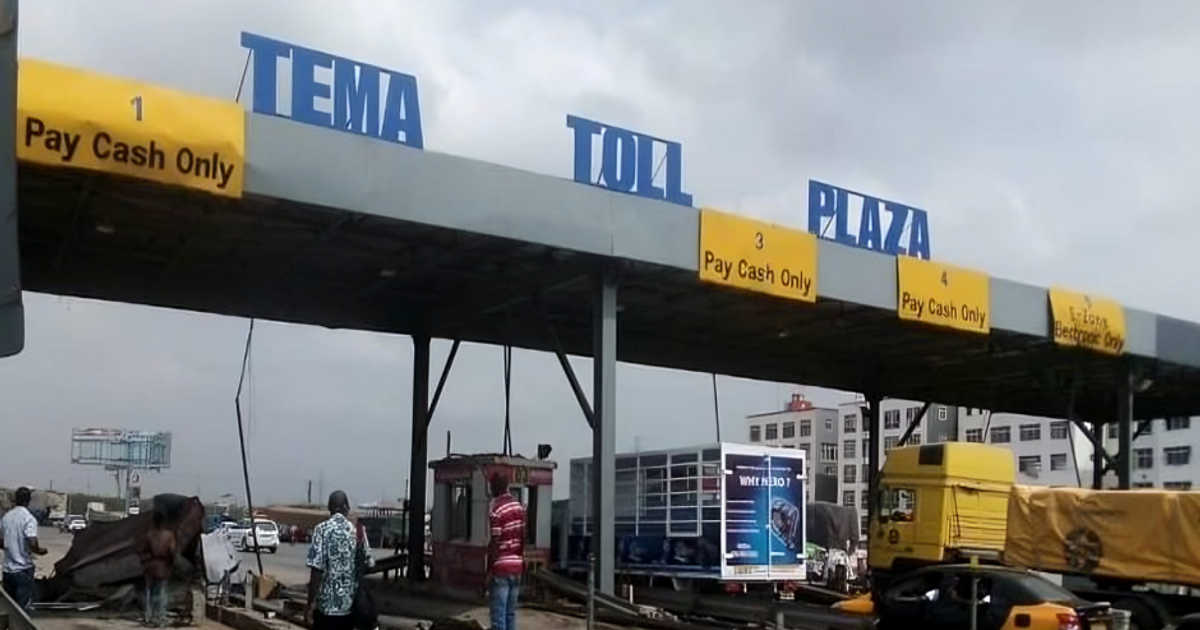
Under the agreement, electronic toll collection will be introduced at 66 tolling locations across 13 operational corridors, comprising 38 existing toll booths and 28 newly identified strategic toll points.
Advertisement
The government says the initiative will modernise toll collection through internationally recognised electronic technology, improve operational efficiency, reduce revenue leakages and strengthen transparency in toll administration.
The reintroduction of road tolls is also expected to restore a sustainable source of funding for road maintenance and infrastructure development.
Government to Receive 70% of Toll Revenue
The concession agreement provides for a 70:30 revenue-sharing arrangement, with the Government of Ghana receiving 70% of all toll revenue, while the concessionaire will retain 30%.
The project will run for 20 years, including three years for design and construction, followed by 17 years dedicated to operation and maintenance.
Advertisement
At the end of the concession period, all project assets will be transferred to the Government of Ghana in accordance with the terms of the agreement.
Parliament Endorses Agreement After Committee Review
The agreement was presented to Parliament on Wednesday, July 29, 2026, by the Minister for Lands and Natural Resources on behalf of the Minister for Roads and Highways.
Following its referral to the Roads and Transportation Committee, the committee’s chairman, Isaac Adjei Mensah, recommended its approval after reviewing the proposal. Parliament subsequently adopted the committee’s report and approved the concession agreement.
Lawmakers Say Electronic Tolls Will Boost Road Maintenance
Advertisement
Seconding the motion, Ranking Member of the Roads and Transportation Committee, Kennedy Osei Nyarko, said the committee concluded that reintroducing road and bridge tolls would significantly increase funding for the Road Fund, which finances maintenance of Ghana’s road network.
He noted that although road toll collection was suspended in 2022, the previous administration had already secured Cabinet approval for a roadmap to reintroduce tolls using an electronic system before leaving office.
According to him, the current government deserves credit for continuing with the implementation of that plan.
Dominic Nitiwul Supports Electronic Toll Collection
Member of Parliament for Bimbilla, Dominic Nitiwul, also backed the agreement, explaining that the previous government suspended road tolls to avoid placing an additional financial burden on Ghanaians after introducing the Electronic Transfer Levy (E-Levy).
He said road tolls previously generated less than GH¢100 million, while the E-Levy was projected to generate substantially higher revenue.
However, Nitiwul stressed that he supports the return of road tolls because the new system will be fully electronic, eliminating long queues, reducing delays and improving convenience for motorists.
He urged Parliament to support the agreement, describing the electronic tolling system as a practical and efficient solution for financing Ghana’s road infrastructure.
Advertisement
Latest Videos
)
Advertisement
Videos
)
)
)

Advertisement
Advertisement
More from Pulse Ghana
)
,fit(112:112))
)
)
)
)
Advertisement
Originally published on www.pulse.com.gh
