

July 6, 2026
One Week After the Floods: How a Structured Project Management Approach Can Build a Resilient Accra


Mon, 06 Jul 2026 Opinion
One Week After the Floods: How a Structured Project Management Approach Can Build a Resilient Accra
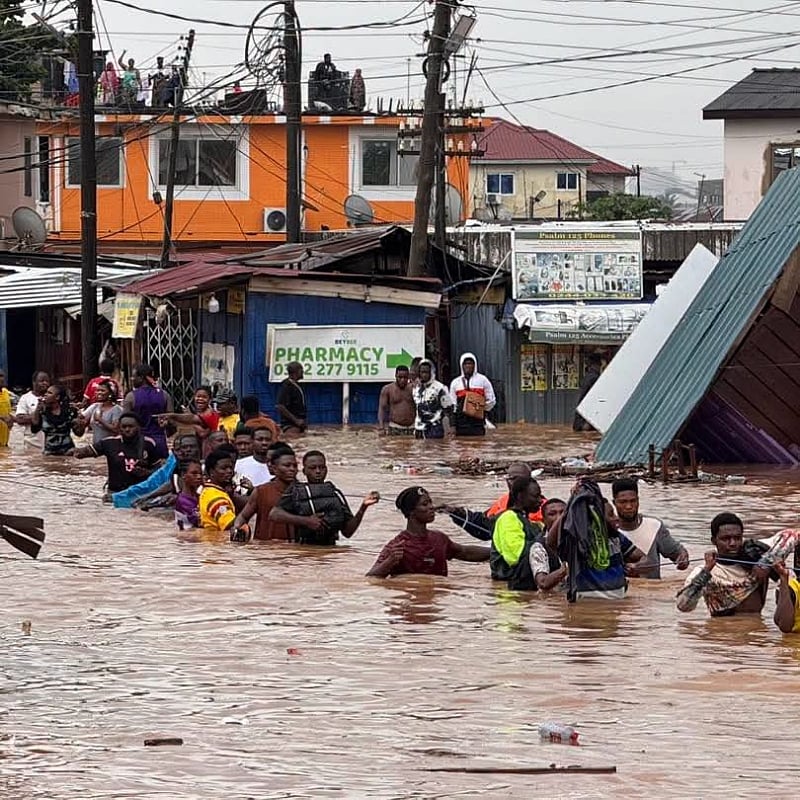
Exactly one week ago, heavy rains pounded Accra with relentless force. As a resident and project management professional, I felt the disruption firsthand. I left home that morning for my usual commute to work, expecting the journey to take less than 60 minutes. Instead, rising waters forced me to turn back. Streets that should have carried me smoothly became impassable rivers. What should have been a straightforward trip back home stretched into more than an hour of frustration, stalled vehicles, and growing anxiety. Like thousands of others, my daily routine grounds to a halt. Homes flooded, businesses closed, and lives were upended in ways that go far beyond a delayed workday.
The downpour delivered around 140 mm of rain in a single day, far exceeding typical intensities. Low-lying areas across the city, from Odawna and Adabraka to Kaneshie and parts of the Odaw River basin and even in areas like Tesano, Tse Addo, bore the brunt. Reports confirm at least a dozen lives were lost, hundreds rescued, and thousands displaced. Markets turned into muddy lakes, vehicles floated or submerged, and families scrambled to save what they could. Emergency teams from NADMO, the fire service, police, and military worked through the chaos, but the human and economic toll remains heavy.
Power supplies were cut in affected zones for safety, and health officials are now warning of rising risks from waterborne diseases.
This is not a one-off event. Accra has faced similar scenes too many times. Each major rain exposes the same vulnerabilities: choked drains clogged with waste, buildings constructed on waterways and floodplains, and rapid urban growth that has outpaced planning and infrastructure. Climate change appears to be intensifying the rains, but the severity of the flooding is largely man-made. Poor solid waste management, weak enforcement of building regulations, and insufficient drainage capacity turn what could be manageable showers into disasters. One week on, as the immediate rescue efforts wind down, the question is no longer just “what happened?” but “how do we finally break this cycle?”
The personal inconvenience I experienced, thus, turning back from my commute pales in comparison to families who lost everything or those still wading through recovery. Yet it illustrates a broader truth: flooding disrupts education, commerce, healthcare access, and mental well-being. Children miss school, workers lose wages, and small businesses face ruin. The cumulative cost runs into millions year after year, holding back the city’s potential. With Accra’s population surging, the stakes will only grow unless we act decisively and differently.
As a project management professional, I naturally look at the resolution from a project management perspective. What Accra needs is a comprehensive, city-wide flood resilience initiative managed with professional discipline and structure. This means treating the challenge as a coordinated program of interconnected efforts rather than a series of reactive fixes. Such an approach brings clear objectives, accountability, resource optimisation, and long-term vision to efforts that have too often fallen short due to poor coordination, shifting priorities, or incomplete execution.
At the heart of this is engaging everyone affected. Residents in vulnerable communities must have a real voice in planning, not just receive aid after the fact. Government agencies, local assemblies, businesses, NGOs, and international partners all have roles to play. Regular consultations, transparent communication, and joint decision-making build trust and ensure solutions fit local realities. For instance, relocating families from high-risk zones or redesigning markets requires sensitivity to people’s livelihoods and cultural ties. Without broad ownership, even the best-engineered drains will fail when maintenance lapses or waste returns.
Risk management forms another critical pillar. This involves systematically identifying what could go wrong: intense future storms, funding shortfalls, contractor delays, or new encroachments and planning responses in advance. Some risks can be avoided by strictly enforcing no-build zones along waterways. Others can be reduced through expanded drainage networks, retention ponds that hold excess water, and regular desilting schedules.
Early warning systems using weather data and community alerts can give people precious hours to prepare. Insurance schemes and contingency funds help transfer financial burdens. The goal is not to eliminate every threat but to minimise impacts so that when heavy rain arrives, the city is far better prepared.
Detailed planning turns good intentions into results. A clear roadmap would break the overall effort into manageable components: upgrading key drainage corridors, improving solid waste collection and recycling in flood-prone areas, enforcing urban planning rules, and building community awareness programs. Timelines, budgets, and resource needs must be realistic and tracked closely. Hybrid methods work well here, traditional step-by-step execution for large infrastructure works, combined with flexible approaches for behaviour change campaigns or pilot projects in specific neighborhoods. Quality matters: drains must be built to handle projected climate conditions, not just current averages.
Execution requires strong leadership and coordination. A dedicated program team, with clear authority and cross-agency support, can prevent the silos that often stall progress. Procurement processes should favour reliable contractors with proven track records, while public-private partnerships can bring innovation and extra funding. Communication during rollout keeps residents informed and engaged, reducing resistance and building momentum.
Monitoring and adaptation ensure the program stays on course. Regular progress reviews, key performance indicators (such as fewer flooded roads, faster recovery times, or reduced economic losses), and independent audits provide transparency. When challenges arise in budget constraints or unexpected heavy rains mid-project, the team can adjust quickly rather than abandoning efforts. Lessons from each phase feed into the next, creating a culture of continuous improvement.
Fortunately, building blocks already exist. The Greater Accra Resilient and Integrated Development (GARID) project, supported by the World Bank, focuses precisely on the Odaw basin with drainage improvements, waste management, and community infrastructure. Accelerating and expanding such initiatives within a disciplined overall program could deliver visible results within months while laying foundations for years to come. Past investments in desilting and drain construction show what is possible when sustained attention is applied.
The next practical steps in the weeks ahead are clear. Complete detailed damage and risk assessments. Fast-track priority drainage repairs and desilting. Launch a city-wide clean-up and awareness campaign to tackle waste at source. Strengthen enforcement against illegal structures while offering viable alternatives for affected residents. Secure additional financing through a mix of government resources, development partners, and innovative mechanisms like green bonds. Most importantly, appoint experienced program managers to oversee the entire effort with professionalism and accountability.
One week after the floods, the water has receded in many places, but the memories have not. My own disrupted commute was a minor inconvenience, yet it symbolised how flooding touches every part of life in Accra. We owe it to those who lost loved ones, homes, or livelihoods to move beyond sympathy to systemic change. A well-managed, integrated resilience program offers the path forward through coordinated efforts, which is evidence-based, and all inclusive, will lead to results. By embracing structured planning, active risk reduction, broad collaboration, and relentless follow-through, Accra can become more resilient. The rains will come again, but with determination and discipline, their impact need not be devastating. The time to act is now, while the lessons of last week are still fresh. Our city’s future depends on it.
“A passionate project management professional based in Accra”
Disclaimer: “The views expressed in this article are the author’s own and do not necessarily reflect ModernGhana official position. ModernGhana will not be responsible or liable for any inaccurate or incorrect statements in the contributions or columns here.”
Follow our WhatsApp channel for meaningful stories picked for your day.
Top Stories




<!–
–>
Originally published on www.modernghana.com
