September 6, 2026
Nigerians Experienced Better Governance Under Military Rule – Donald Duke
4 hours ago | General News
Nigerians Experienced Better Governance Under Military Rule – Donald Duke

Donald Duke

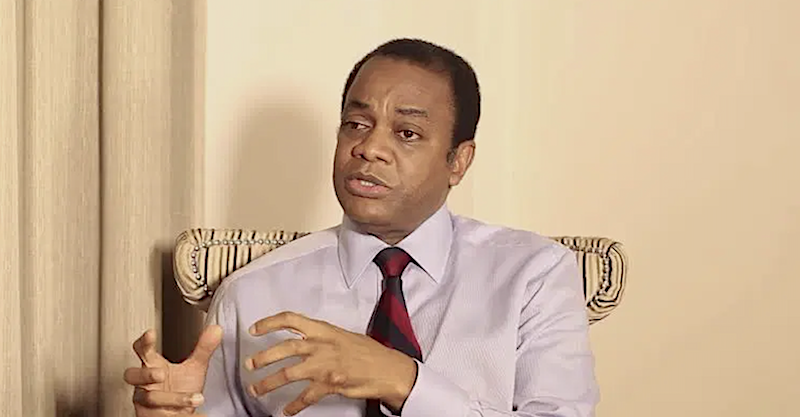
Former Cross River State governor and presidential candidate of the Peoples Redemption Party (PRP), Donald Duke, has said Nigerians were better off under military rule, arguing that 27 years of civilian administration have failed to deliver meaningful improvements in citizens’ lives.

Speaking during an interview in Abuja on Saturday, Duke said the high cost of governance under the current democratic system is not justified by the dividends delivered to Nigerians. “The people today, Sunny, I would tell you that they were better off under the military,” he said. “At least governance was not that expensive.”
The former governor said Nigeria’s democracy should be assessed by its impact on the welfare of citizens rather than by the mere existence of democratic institutions, noting that many of the challenges that existed before the return to civilian rule in 1999 remain unresolved and some have worsened.
“I’m speaking broadly now. If we focus on the well-being of the people, what we term democracy dividends, how much has been delivered?” he asked.
“We’re still having the same problems we had 27 years ago. It’s getting worse. The number of children out of school has not improved; it’s deteriorating. The healthcare system is not improving; it’s deteriorating.

“Infrastructure deficiency over the last 27 years—are we better off? The question is: are we better off today than we were in 1999? Hardly so. Hardly so.”
Duke listed electricity, unemployment and infrastructure among the longstanding challenges that successive administrations had failed to adequately address.
“The problems that existed before 1999—electrification, unemployment—those things are still there. And I don’t see a structured approach towards dealing with these issues,” he said.
“This is my frustration, because there’s no problem we cannot resolve. We’re not a unique country.
“There are peer reviews you can do. How did you solve this? How did you do that? Are we thinking through our problems?”
The former governor also criticised the state of opposition politics, saying the weakness of opposition parties had contributed to the decline in accountability within the political system.
“The opposition is terribly weakened and self-centred. Democracy is also in danger,” Duke said.
He alleged that electoral outcomes in some cases did not reflect the wishes of voters, resulting in growing public disenchantment and declining participation in elections.
“The results you get from the polls often don’t reflect the views of the people. So there’s a disenchantment with the system, both by the contestants and the public. Most people don’t vote because they believe their votes don’t count,” he said.
Duke argued that when citizens lose confidence in the electoral process, elected officials become less accountable to the people.
“Because your vote doesn’t matter, there’s a tendency to take people for a ride and disregard what is required by the people,” he said.
He went further to question whether Nigeria was practising democracy in the real sense, accusing the legislature and judiciary of failing to effectively check the powers of the executive.
“We don’t have a democracy. We are pretending democracy,” Duke said. “We’re not a democracy. You and I know that.
“And the checks and balances from the National Assembly—you know there’s no check; there’s no balance.”
He cited the 2024 decision by the National Assembly to restore Nigeria’s former national anthem, “Nigeria, We Hail Thee,” as an example of what he described as inadequate legislative scrutiny.
“We changed the national anthem in a week. Nobody was asking questions,” he said.
“They shouted, ‘On your mandate, we shall stand,’ abdicating their responsibilities. We had a Chief Justice of this country singing, ‘On your mandate, we shall stand.’ There’s no judiciary. We all know it. But are we prepared to deal with it?”
Duke attributed Nigeria’s political shortcomings largely to the failure of the elite to take responsibility for providing leadership.
“It’s a failure of the elite more than anything else,” he said. “We’re elites; we’re enlightened people. But we abdicated our leadership to those whom we should be leading.
“Politics is no longer a vocation. It’s an occupation for those people. And you can’t get them out.”
The former governor also warned that the widening gap between the rich and the poor could create serious social consequences if urgent steps were not taken to address economic inequality.
“There was a time when I used to be in the National Economic Intelligence Committee and Professor Aluko used to say, proverbially, that a time is coming in this country when the rich won’t sleep because the poor have not eaten,” he said.
“I think the time is coming.”
Duke said the situation was particularly disappointing because Nigeria had the human and natural resources required to overcome its challenges.
“Nigeria is exceedingly blessed,” he said. “It’s sad. It’s painful that we are where we are.”
Originally published on www.thenigerianvoice.com