September 6, 2026
Beyond The Camps: The Forgotten Lives Of Internally Displaced People In North-Central Nigeria
4 hours ago | Opinion
Beyond The Camps: The Forgotten Lives Of Internally Displaced People In North-Central Nigeria


In North-Central Nigeria, displacement has become more than a humanitarian emergency. It has become a painful reality for thousands of families whose lives have been uprooted by insecurity, communal violence, farmer-herder conflicts, banditry and other forms of violence.
From Benue to Plateau, Niger, Nasarawa and Kogi, communities that once depended on farming, trading and other local economic activities are struggling with the consequences of displacement.

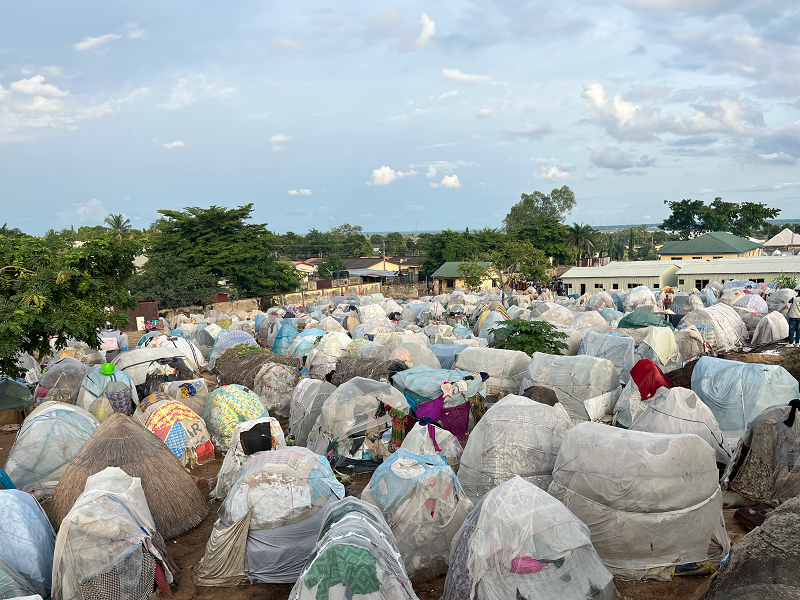
The crisis is particularly disturbing because many displaced Nigerians are not living in formal camps They are scattered among host communities, staying with relatives, friends, religious organisations or in makeshift settlements where their struggles can easily go unnoticed.
According to the International Organization for Migration’s (IOM) Displacement Tracking Matrix, 1,378,124 internally displaced persons were identified across North-Central and North-West Nigeria as of October 2025. Importantly, about 81 per cent were living in host communities, while only a minority were in camps or camp-like settings.
This reality forces us to ask an important question: What happens to displaced Nigerians after they disappear from the headlines?

Benue: A Food Basket Under Pressure
Benue, popularly regarded as Nigeria’s food basket, provides perhaps one of the clearest examples of the relationship between insecurity, displacement and food production.
IOM’s October 2025 assessment recorded 464,543 displaced people in Benue, making it the state with the largest IDP population among the assessed states.
Behind that figure are farmers who have lost access to their farms, families separated from their communities and children whose education has been disrupted.
The consequences extend beyond Benue.
When farmers cannot safely cultivate their land, food production is affected. When food production declines, prices can rise and food insecurity becomes a wider national concern
The displacement of farmers is therefore not merely a humanitarian issue; it is also an agricultural and economic crisis.
Plateau: Displacement and the Struggle for Peace
Plateau State has also experienced years of communal violence and insecurity, leaving communities vulnerable to displacement and loss of livelihoods.
For displaced families, peace is not simply the absence of gunfire.
Peace means being able to return to one’s farm without fear.
It means children can walk to school safely.
It means communities can rebuild houses, markets, places of worship and social relationships.
Without these conditions, the return of displaced people can remain temporary and uncertain.
Niger and Nasarawa: The Hidden Face of Displacement
In Niger and Nasarawa states, displacement is also linked to insecurity and the disruption of rural livelihoods.
Yet many displaced people may never appear in the images that dominate public discussions about IDP camps.
Some live among host families. Others rent small rooms or occupy temporary shelters. Some depend on relatives who are themselves struggling economically.
This is one of the most important realities of the crisis: displacement does not always look like a camp.
IOM’s assessments specifically track IDPs living both in camps and within host communities across Benue, Nasarawa, Niger, Kogi and Plateau.
The absence of a tent or formal camp does not mean the absence of suffering.
Kogi: When Displacement Affects the Future
Kogi State demonstrates another dimension of the crisis.
Displacement and insecurity can interrupt education, destroy livelihoods and weaken the economic foundations upon which families depend.
When a child leaves school because the family has been displaced, the consequences may not be immediately visible. But years later, that interruption can mean fewer opportunities, unemployment and deeper poverty.
The real cost of displacement is therefore measured not only in the people who have lost their homes today, but also in the opportunities that future generations may lose tomorrow.
Abuja: The Crisis Behind the Policy Tables
While the humanitarian crisis is concentrated in affected communities, Abuja remains central to its response.
Government ministries, agencies, lawmakers, humanitarian organisations and civil society groups make decisions in the nation’s capital that directly affect displaced people across the North-Central region.
This creates an important responsibility.
The experiences of an IDP family in Benue, Plateau, Niger, Nasarawa or Kogi should not become distant statistics in Abuja policy documents.
Policies must translate into safer communities, functional schools, healthcare, livelihood opportunities and conditions that allow people to rebuild their lives.
The question should not only be how much relief has been distributed.
The bigger question is: How many displaced Nigerians have been able to rebuild dignified and sustainable lives?
Beyond Food and Shelter
Emergency assistance is essential. Food, water, medicine, clothing and temporary shelter can save lives.
But humanitarian assistance cannot become a permanent way of life.
A displaced farmer needs more than food. He needs security to return to his farm.
A displaced child needs more than temporary shelter. He needs access to education.
A displaced woman needs more than relief materials. She needs safety, healthcare and an opportunity to earn a livelihood.
A young person needs more than sympathy. He or she needs education, skills and employment opportunities.
The ultimate objective should be durable solutions—safe and voluntary return where possible, local integration where appropriate, or relocation where necessary, accompanied by security, livelihoods and access to essential services.
The People Behind the Numbers
Statistics help us understand the scale of the crisis, but they cannot tell the whole story.
Behind every number is a human being.
There is a mother who remembers the home she was forced to leave.
There is a farmer who cannot reach his farmland.
There is a child whose classroom has been replaced by displacement.
There is a young person whose dreams have been interrupted.
There is an elderly man or woman hoping to see home again.
These people must not become forgotten citizens.
Nigeria’s response to internal displacement should therefore be judged not only by the number of relief materials distributed, but by whether displaced Nigerians regain security, dignity, education, livelihoods, justice and hope.
North-Central Nigeria cannot fully realise its economic and social potential while communities remain trapped in cycles of violence and displacement.
The humanitarian crisis must not become normal.
We must look beyond the camps.
We must listen beyond the headlines.
And, above all, we must remember the people.
About the Author
Comr. Agyo Mgbashongha is a student of International and Diplomatic Studies at the National Open University of Nigeria, Abuja. He is a researcher, freelance writer and unionist, and an active member of the Boys’ Brigade Nigeria, Benue State Council. His interests include governance, diplomacy, humanitarian affairs, social issues and challenges affecting vulnerable communities in Nigeria.
Disclaimer: “The views expressed on this site are those of the contributors or columnists, and do not necessarily reflect TheNigerianVoice’s position. TheNigerianVoice will not be responsible or liable for any inaccurate or incorrect statements in the contributions or columns here.”
Originally published on www.thenigerianvoice.com