

July 7, 2025
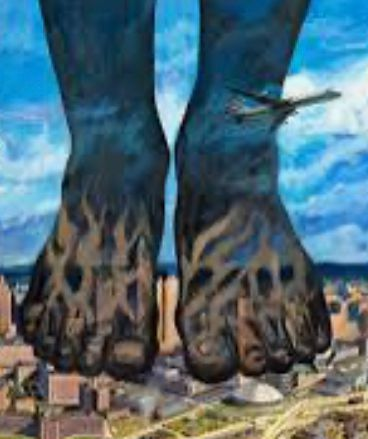
Nigeria, A Giant with Clay Feet


By Abiodun Adigun
Nigeria, often hailed as the “Giant of Africa,” is a nation of stark contrasts.
On one hand, it boasts the largest economy and population in Africa, with significant oil reserves and a rich cultural heritage.
On the other hand, it grapples with severe challenges that threaten to undermine its potential.
This dichotomy has led to the apt description of Nigeria as a “giant with clay feet” – a metaphor that highlights the country’s vulnerability despite its impressive size and influence.
One of the primary reasons for Nigeria’s clay feet is corruption.
The scourge of corruption has plagued the nation for decades, diverting resources meant for development into the pockets of a few individuals.
This has resulted in a lack of trust in institutions and a sense of disillusionment among citizens.
The consequences are far-reaching, with critical sectors like healthcare, education, and infrastructure suffering from inadequate funding.
Inflation is another factor that has contributed to Nigeria’s clay feet.
The rising cost of living has made it difficult for many Nigerians to make ends meet, with the average citizen struggling to afford necessities.
This has led to widespread poverty, with a significant portion of the population living below the poverty line.
The economic instability has also discouraged investment, hindering economic growth and development.

Insecurity is yet another challenge that has weakened Nigeria’s giant status.
The country has faced numerous security threats, including terrorism, banditry, and kidnapping.
These threats have not only claimed lives but also disrupted economic activity, particularly in the agricultural sector.
The insecurity has also led to a massive displacement of people, with many forced to flee their homes in search of safety.
Poverty, despite Nigeria’s vast wealth, is a stark reality for many citizens.
The country’s poverty rate is alarming, with millions of people struggling to access necessities like food, healthcare, and education.
This has led to a significant gap between the rich and the poor, with the wealthy elite holding a disproportionate amount of power and influence.
The current administration in Nigeria has faced criticism for its handling of governance, particularly in addressing economic challenges, security concerns, and allegations of corruption.
Despite promises to renew hopes and aspirations, the reality on the ground paints a different picture.
Economic instability, rising costs of living, and insecurity have marred the administration’s tenure, leading to widespread poverty and discontent among citizens.

The government’s response to these challenges has been criticised for being inadequate and ineffective.
Many citizens feel that their needs have been ignored, and the benefits of growth and development have not been shared equitably.
The widespread poverty and insecurity have further eroded trust in the government, with many citizens feeling that their voices have not been heard.
The failure of the current administration to address these challenges has contributed significantly to Nigeria’s clay feet.
The country’s potential is being hindered by poor governance, corruption, and insecurity, which have led to a decline in the standard of living and eroded trust in the government.
To overcome these challenges, Nigeria needs effective leadership that prioritises the needs of its citizens and addresses the country’s development challenges.
In conclusion, Nigeria’s status as a giant with clay feet is a reflection of its vast potential and numerous challenges.
While the country has made progress in some areas, it still grapples with severe issues like corruption, inflation, insecurity, and poverty.
To overcome these challenges and realise its full potential, Nigeria must address these issues head-on.
This requires a concerted effort from the government, civil society, and citizens to build institutions, promote transparency, and ensure that the benefits of growth and development are shared equitably among all Nigerians.
Only then can Nigeria truly live up to its giant status and become a beacon of hope and prosperity for the African continent.