

July 23, 2026
Mussa Dankwah’s June 2026 Global Infoanalytics Poll On Sissala East: Matters Arising, Political Trends And The Road To 2028
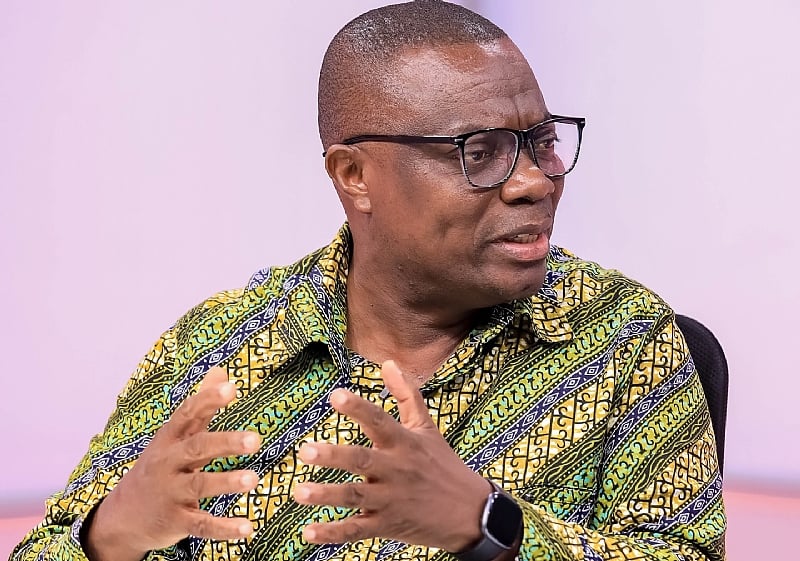


Mussa Dankwah’s June 2026 Global Infoanalytics Poll On Sissala East: Matters Arising, Political Trends And The Road To 2028
A Comparative Analysis of the June 2026 Poll and Electoral Commission Results (2004–2024)

The June 2026 Global InfoAnalytics constituency poll, conducted under the leadership of Mussa K. Dankwah, offers one of the earliest empirical snapshots of the evolving political landscape in Sissala East ahead of the 2028 general elections. While opinion polls are not election forecasts, they provide useful indicators of voter sentiment, candidate appeal and emerging electoral trends.
When analysed alongside the Electoral Commission’s official presidential and parliamentary election results from 2004 to 2024, the poll reveals a constituency in a state of political flux. The sitting NDC Member of Parliament enjoys a remarkably high approval rating, while the party’s prospective presidential candidates perform substantially below the levels attained by President John Dramani Mahama in the 2024 election. At the same time, Dr. Mahamudu Bawumia has made considerable gains in presidential support, narrowing what was previously a commanding NDC lead.
1. Background
Sissala East has often been described by some political commentators as an NDC stronghold. This characterisation is not supported by historical evidence. Since the constituency was created in 2004, no single political party has established enduring dominance, and no sitting Member of Parliament has successfully won re-election to a second term.
The electoral history of the constituency tells a story of volatility and alternation. In 2004, Hon. Moses Dani Baah of the PNC won the parliamentary seat with a commanding 74.16% of the vote, sweeping almost all polling stations in the constituency . Yet just four years later, in 2008, he lost the seat to Hon. Alhassan Dubie Halutie of the NDC, the same candidate he had massively defeated in 2004 . In 2012, Hon. Sulemana Alijata Gbentie of the NDC won the seat. In 2016, Hon. Abass Ridwan Dauda of the NPP won. In 2020, Hon. Issahaku Amidu Chinnia of the NPP won while John Dramani Mahama of the NDC won the presidential vote, a clear instance of split-ticket voting . And in 2024, Hon. Mohammed Issah Bataglia of the NDC won with 66.71% of the vote, again sweeping almost all polling stations .
This pattern reveals three important features of Sissala East’s political character.
First, voters have demonstrated a willingness to alternate between parties, often in response to national political tides and local performance assessments.
Second, the constituency has exhibited split-ticket voting in both 2004 and 2020.
Third, landslide victories do not guarantee re-election, the fate of Hon. Moses Dani Baah, who won 74.16% in 2004 only to lose in 2008, stands as a powerful warning for any incumbent .
The June 2026 Global InfoAnalytics poll therefore provides an opportunity to assess whether Sissala East is gradually becoming one of Ghana’s emerging battleground constituencies.
2. The Presidential Poll
The survey tested two potential NDC presidential candidates against Dr. Mahamudu Bawumia of the New Patriotic Party (NPP).
In the first scenario, Ato Baah Forson of the NDC secured 47% support, Dr. Mahamudu Bawumia of the NPP also secured 47%, Alan Kyerematen received 5%, and Nana Kwame Bediako received 1%. The result suggests a statistical dead heat between the NDC and NPP.
In the second scenario, Johnson Asiedu Nketia of the NDC secured 51% support, Dr. Mahamudu Bawumia of the NPP secured 46%, Alan Kyerematen received 1%, and Nana Kwame Bediako received 2%. While Asiedu Nketia performs better than Ato Forson, the margin remains considerably narrower than the NDC’s 2024 performance.
3. Assessment of the Sitting MP
The poll produced the following performance ratings for the sitting MP. Overall approval stood at 77%. The MP’s performance was rated excellent or good by 69% of respondents, neutral by 10%, and poor or very poor by 20%.
These figures indicate that the MP currently enjoys substantial public goodwill.
However, an important qualification must be made. The NPP has not yet selected its parliamentary candidate for 2028. Consequently, respondents assessed the incumbent without comparing him to a declared challenger. Once the NPP elects a candidate and the campaign becomes competitive, voter perceptions may change. The approval rating should therefore be interpreted as a measure of current satisfaction rather than a prediction of the eventual parliamentary outcome.
4. Comparison with the 2024 General Election
In the 2024 presidential election, John Dramani Mahama of the NDC secured 67.56% of the vote in Sissala East, while Dr. Mahamudu Bawumia of the NPP secured 31.01%. Other candidates collectively received 1.43%.
In the 2024 parliamentary election, Mohammed Issah Bataglia of the NDC secured 66.71% of the vote, while Issahaku Amidu Chinnia of the NPP secured 33.29% .
5. What Has Changed?
The shift between 2024 and 2026 is substantial. Dr. Bawumia’s support has increased from 31% in 2024 to between 46% and 47% in the poll, representing an increase of approximately 15 to 16 percentage points. Meanwhile, NDC presidential support has declined from 67.56% in 2024 to between 47% and 51% in the poll, representing a decline of between 16 and 21 percentage points.
This is arguably the most significant finding in the poll. If this trajectory continues over the next two years, Dr. Bawumia could realistically attain 70% or more of the presidential vote in Sissala East by 2028. Such an outcome would represent a complete reversal of the 2024 presidential result and would fundamentally alter the political calculus in the constituency.
6. The Poll Is Not Good News for the NDC
The NDC is only two years into its current term of government. Historical patterns suggest that this should be a period of relative popularity for the ruling party. Yet the poll shows that NDC presidential support has declined by between 16 and 21 percentage points compared to the 2024 election result.
This should be a cause for concern for the party’s leadership. The NDC’s presidential support in the poll is lower than the parliamentary votes received by the sitting MP in 2024. This suggests that the MP’s personal popularity is not translating seamlessly into support for the party’s presidential ticket. If this trend continues, Sissala East could witness split-ticket voting in 2028, much like the pattern observed in 2004 and 2020 .
Critics of the Global InfoAnalytics methodology have raised questions about the reliability of the firm’s findings, citing issues such as high neutrality rates and methodological flaws. However, even if one treats the poll with caution, the scale of the shift from 2024 to 2026 suggests a meaningful trend that both parties would be unwise to ignore.
The historical precedent is instructive. Hon. Moses Dani Baah won 74.16% of the vote in 2004 but lost in 2008. The current MP is in a far more precarious position. He serves as an MP for a party that is in government and has already seen its presidential support plummet just two years into its term. If voters in Sissala East are willing to punish an incumbent under normal circumstances, they may be even more inclined to do so when the national government’s popularity is dwindling. The MP’s 77% approval rating today may not survive the disillusionment of unmet campaign promises, particularly in a constituency where the agricultural sector is in crisis.
7. The Presidential-Parliamentary Disconnect
One of the most remarkable findings is the difference between the MP’s 77% approval rating and NDC presidential support of between 47% and 51%. This gap suggests that many voters who approve of the MP are not necessarily committed to voting for the NDC’s eventual presidential candidate. The MP appears to have cultivated a personal political brand that extends beyond traditional party support.
This disconnect is perhaps the most significant vulnerability for the NDC. The MP’s personal popularity is not a guarantee of presidential victory. If the party’s national campaign fails to resonate with voters, the MP’s positive ratings may not be sufficient to deliver the constituency for the NDC presidential candidate.
8. Issues Not Captured by the Poll
While the poll measured political preferences, it did not adequately explore the constituency’s most important policy concerns.
Sissala East is predominantly an agricultural constituency. Official sources indicate that 76% of the district economy is agricultural, with over 80% of the population living in rural settlements and engaged in farming . The sitting MP himself has stated that nearly 95% of the indigenous people in the area are involved in farming . Yet the survey did not appear to test public opinion on drought and climate resilience, drought relief programmes, free or subsidised fertiliser distribution, access to farm inputs, irrigation, mechanisation, post-harvest losses, or market access. These are the issues that shape everyday life in the constituency and could significantly influence electoral behaviour.
Furthermore, the poll did not appear to ask voters whether the government has fulfilled the promises made to them in 2024, promises that have not yet been executed or even commenced. This is a critical omission. Voter satisfaction in 2026 may be based on expectations, but by 2028, the electorate will likely judge the government on tangible deliverables. The absence of this dimension from the poll is a significant limitation.
Future polling would benefit from examining these variables.
9. The Internal Dynamics of the NDC
The NDC has not yet conducted its constituency elections, presidential primaries, or parliamentary primaries for the 2028 cycle. These internal processes will have a significant impact on the party’s performance in the constituency.
The direction of the NDC’s internal elections will play a decisive role in determining the MP’s fate. If the party’s constituency elections are marked by acrimony, the MP’s ability to mobilise the grassroots for his re-election campaign could be severely compromised. Similarly, if the presidential primaries produce a candidate who does not resonate with the constituency’s unique concerns, the MP may find himself carrying a national ticket that is a liability rather than an asset.
The MP’s 77% approval rating suggests that he would be a formidable candidate in any primary contest. However, the party’s internal processes must be managed carefully to ensure that the eventual ticket is competitive. The NDC cannot afford to underestimate the impact of internal party dynamics on the 2028 outcome.
10. What Should the NPP Do?
If the NPP intends to win Sissala East in 2028, the polling suggests several strategic priorities. The constituency’s history and current dynamics offer important lessons for the party.
First, the NPP must select a parliamentary candidate early and strategically. An early primary would allow the party to build visibility and provide voters with a genuine alternative to the incumbent.
The party should also look for a candidate with strong grassroots appeal and a proven record of community service. The ideal candidate should not only be a grassroot man but also a party man. Given the constituency’s history of alternating parties, voters value candidates who are accessible and can articulate the constituency’s needs effectively.
If the NPP fields a candidate that its constituency executives and polling station executives work hard to unite behind, the party can easily whittle down the MP’s favourable ratings and snatch the seat. The 77% approval rating of the incumbent is not insurmountable, it is a measure of current satisfaction in the absence of a declared challenger. Once an NPP candidate enters the race and begins to articulate a compelling vision for the constituency, voter perceptions will shift. The MP’s approval rating will be tested against a concrete alternative.
What the NPP needs now is unity and the avoidance of complacency. The party cannot afford to take the polling numbers for granted. While Dr. Bawumia’s gains are encouraging, they must be converted into votes through sustained grassroots engagement, effective candidate selection, and a campaign that addresses the constituency’s core concerns.
Second, the NPP must build the campaign around agriculture. Agriculture is the defining issue in Sissala East. Official sources indicate that 76% of the district economy is agricultural, with over 80% of the population engaged in farming . The sitting MP himself has stated that nearly 95% of the indigenous people are involved in farming. The NPP must present a concrete plan to construct durable, flood-resistant roads and bridges in the farming communities.
The party should also address fertiliser distribution and input access, ensuring timely and affordable access to fertilisers and other inputs, addressing the logistical challenges highlighted by the 2025 floods. Irrigation and drought mitigation proposals are essential, as the constituency is vulnerable to unpredictable weather. The NPP must propose sustainable irrigation schemes to insulate farmers from rainfall variability. Market access must be addressed, as declining prices of agricultural produce have adversely affected farmers. The party should propose mechanisms to stabilise prices and connect farmers to reliable markets.
Third, the NPP must consolidate Dr. Bawumia’s gains. The poll indicates that Dr. Bawumia has significantly improved the NPP’s presidential standing. His campaign should be closely integrated with the parliamentary campaign. The party should leverage this momentum to demonstrate that an NPP government under Dr. Bawumia will deliver tangible development to the constituency.
Fourth, the NPP must target split-ticket voters. The data suggests that some voters distinguish between parliamentary and presidential elections. The history of Sissala East shows that split-ticket voting is possible. In 2004, the NPP won the presidential vote while the PNC secured the parliamentary seat . In 2020, the NPP won the parliamentary seat while the NDC won the presidential vote . Understanding and persuading this group could prove decisive. The party should present a compelling case for why voters should support both Dr. Bawumia and the NPP parliamentary candidate.
Fifth, the NPP must capitalise on the government’s unfulfilled promises. The party must aggressively highlight the promises made by the NDC in 2024 that remain unfulfilled or have not even commenced. Voters in Sissala East have a history of punishing incumbents who fail to deliver. The party should document the government’s performance on key issues such as roads, agricultural support, construction of polyclinics, establishment of a new Technical and Vocational Institute, completion of the community Day School, creation of a New District out of the Sissala East Municipality and infrastructure among others. The Government’s announcement of GH¢100 million and an additional GH¢200 million to the National Buffer Stock Company to mop up surplus food crops is a promise that must be monitored and scrutinised. The NPP should hold the NDC accountable for its commitments.
Sixth, the NPP must expand grassroots organisation. Polling numbers alone do not win elections. The NPP must invest in polling station structures, volunteer mobilisation and continuous voter engagement. The constituency has alternated parties six times since 2004. Voter volatility is high. The party must maintain a permanent presence and engage voters year-round. The party should also address historical challenges with internal cohesion and the tendency for some NPP members to campaign for NDC candidates.
Seventh, the NPP must present a local development agenda. The campaign should focus on constituency-specific priorities rather than relying solely on national messaging. The party should address the specific concerns raised by the chiefs, Imams, assembly members and women and youth associations. The party must demonstrate that it understands the local context and has practical solutions.
Conclusion
The June 2026 Global InfoAnalytics poll suggests that Sissala East is a swing constituency with a history of electoral volatility, not the predictable NDC stronghold it appeared to be in 2024.
From Mussa Dankwah’s poll, the NDC retains a popular Member of Parliament, but its prospective presidential candidates perform well below President Mahama’s 2024 result. Conversely, Dr. Mahamudu Bawumia has significantly narrowed the gap, positioning the NPP as a credible challenger. If this trajectory continues, Dr. Bawumia could realistically attain 70% or more of the presidential vote in Sissala East by 2028.
The poll is not good news for the NDC. The party is only two years into government, yet presidential support has already declined substantially. The MP’s personal popularity may not be sufficient to secure the presidential vote if the party’s national messaging fails to resonate. The historical precedent of Hon. Moses Dani Baah, who won 74.16% in 2004 only to lose in 2008, should serve as a cautionary tale. The current MP’s sweeping victory in 2024, winning almost all polling stations, does not guarantee his re-election in 2028, particularly if the national government’s popularity continues to wane.
However, the parliamentary contest remains incomplete. The NPP has yet to nominate its candidate, the NDC has yet to conduct its constituency elections and primaries, and the survey did not sufficiently interrogate the agricultural concerns that dominate the lives of most constituents. Voters were also not asked whether the government has fulfilled the promises made to them in 2024, promises that have not yet been executed or even commenced.
If the NPP fields a candidate that its constituency executives and polling station executives work hard to unite behind, the party can easily whittle down the MP’s favourable ratings and snatch the seat. What the NPP needs now is unity and a refusal to be complacent. The direction of the NDC constituency elections and presidential primaries will also play a decisive role in determining the MP’s fate.
The 2028 election in Sissala East is therefore likely to be determined not by historical loyalties alone, but by candidate quality, issue-based campaigning, grassroots organisation, internal party cohesion, and the ability of each party to respond convincingly to the economic realities of the constituency.
If present trends continue, Sissala East is poised to become one of the most closely watched and fiercely contested constituencies in Ghana during the 2028 general election.
I shall, In sha Allah, be back….
Fuseini Abdul-Fatawu

Fuseini Abdul-Fatawu, © 2026
This Author has published 42 articles on modernghana.comColumn: Fuseini Abdul-Fatawu
Disclaimer: “The views expressed in this article are the author’s own and do not necessarily reflect ModernGhana official position. ModernGhana will not be responsible or liable for any inaccurate or incorrect statements in the contributions or columns here.”
Follow our WhatsApp channel for meaningful stories picked for your day.

Top Stories


Originally published on www.modernghana.com
