

August 23, 2026
Mary Habila Buried In Kaduna As Autopsy Dispute Remains Unresolved
4 hours ago | General News
Mary Habila Buried In Kaduna As Autopsy Dispute Remains Unresolved

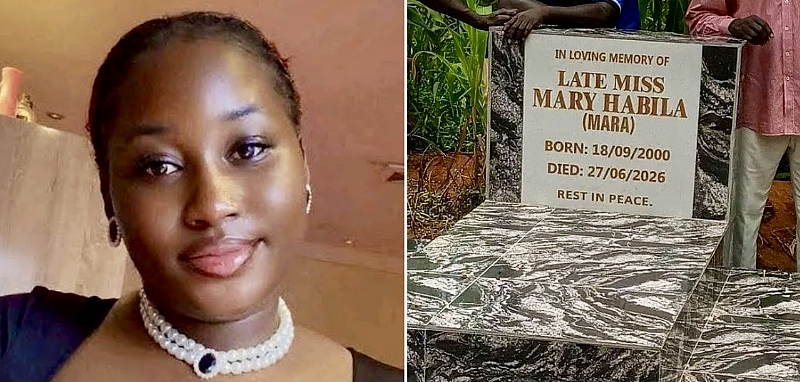
Mary Habila, the 26-year-old woman whose death at the Ebonyi State residence of Minister of Works, Senator Dave Umahi, triggered controversy and calls for an independent forensic investigation, has been buried in Nok, Kaduna State.
Habila was buried quietly on Friday, August 21, nearly two months after she died, following a protracted dispute over whether her remains should be subjected to an autopsy.
Her death on June 27 at Umahi’s residence in Uburu, Ohaozara Local Government Area of Ebonyi State, had generated conflicting accounts and a legal dispute involving the deceased’s family, the minister, security authorities and the Southern Kaduna Peoples Union.
The circumstances surrounding her death also prompted civil society organisations and members of the public to demand an independent forensic examination to establish the cause and manner of her death.
The burial followed an affidavit filed by Habila’s father, Tanko Habila Wisdom, withdrawing from the legal proceedings and opposing the proposed autopsy.
His decision effectively removed the family’s backing for the forensic examination, despite earlier moves by the police to have the procedure conducted.
Umahi had confirmed that Habila died at his residence but denied any wrongdoing in connection with her death.
The minister initially identified Habila as a physiotherapist who had reportedly been seconded from the David Umahi Federal University of Health Sciences to the Federal Ministry of Works.
However, questions were later raised about her professional status after the Nigeria Society of Physiotherapy reportedly stated that her name was not on its register of licensed physiotherapists. She was subsequently identified as a Community Health Extension Worker.
The controversy deepened after police and medical sources reportedly said the deceased had signs consistent with blunt force trauma.
One source said Habila bore “signs of blunt force trauma” after her death.
The Ebonyi State Police Command had initially maintained that a forensic autopsy was necessary before the remains could be released for burial.
That position was reportedly supported by legal advice from the Ebonyi State Director of Public Prosecutions, J.U. Chukwu.
According to the DPP, available evidence indicated that Habila had been found “laid lifeless on the floor of her apartment naked with blood stain on her nose and mouth.”
The DPP reportedly said a post-mortem examination could provide crucial evidence in determining the cause of her sudden and unexplained death, while also noting that the police retained discretion to proceed with the examination or respect the family’s wishes.
The disagreement over the proposed autopsy subsequently delayed the burial.
Although Habila’s family initially opposed the examination and demanded the release of her remains, it later agreed to the procedure on the condition that the investigation be transferred from Ebonyi State to the Nigeria Police Force Headquarters in Abuja.
The police subsequently took over the investigation, while Habila’s remains were transferred to the National Hospital, Abuja, where a forensic examination was expected to be conducted.
However, with the family’s subsequent withdrawal from the legal proceedings and opposition to the autopsy, Habila has now been buried without the publicly demanded forensic examination being resolved.
Originally published on www.thenigerianvoice.com
