

July 6, 2026
Jolted by Ebola, countries try again to finish pandemic treaty


Jolted by Ebola, countries try again to finish pandemic treaty
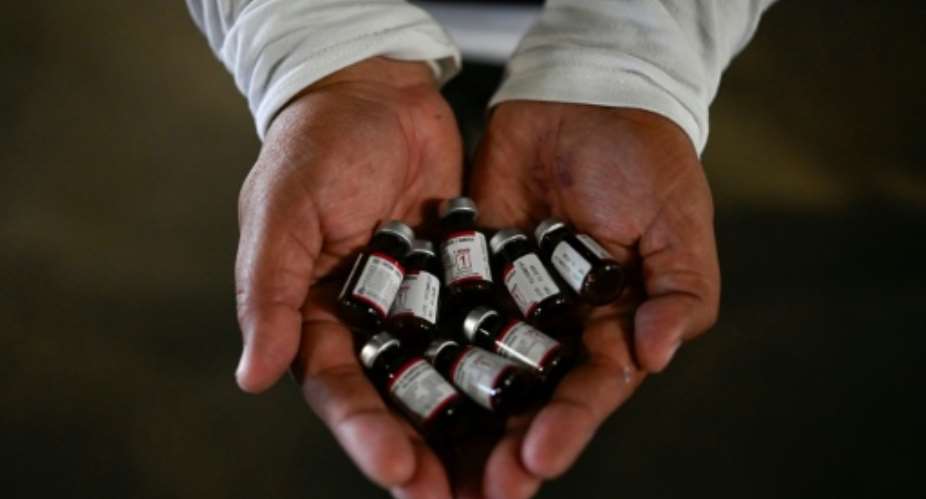
A health ministry worker showing vaccine doses for an immunisation campaign in Guatemala. By JOHAN ORDONEZ (AFP)
WHO member states kicked off another attempt at finalising the missing piece of the pandemic treaty on Monday, with the Ebola outbreak injecting a fresh sense of urgency.
Wealthy countries and developing nations are at loggerheads in talks at the World Health Organization’s headquarters over how the pandemic agreement, adopted last year, will work in practice.
Though the treaty was agreed in May 2025, how its key mechanism would operate was left out to get the deal over the line.
The agreement’s Pathogen Access and Benefit-Sharing (PABS) system deals with sharing access to pathogens with pandemic potential, then sharing benefits derived from them such as vaccines, tests and treatments.
It was meant to be finalised by May 2026, but progress has been agonisingly slow.
 The pandemic agreement aims to prevent the scramble for vaccines seen during the Covid-19 crisis. By Marvin RECINOS (AFP)
Negotiations have often gone late into the night, producing slender advances and leaving diplomats drained.
This two-week session until July 17 is the seventh such round of talks.
As the number of confirmed Ebola deaths in the Democratic Republic of Congo outbreak topped 500, WHO chief Tedros Adhanom Ghebreyesus urged countries to grasp the nettle.
“Keep the destination in sight,” pleaded the UN health agency’s director-general.
“A future in which pathogen samples and information move quickly, without needless delay; and in which the benefits that come from them reach the people who need them most, fairly and in time.”
‘Danger can emerge from anywhere’
The Ebola outbreak in the DR Congo, declared in mid-May, is a “painful” reminder that “the threat never truly goes away”, Tedros said.
There have been 1,561 confirmed cases in the DRC, including 506 confirmed deaths, and the outbreak has spilled over into neighbouring Uganda.
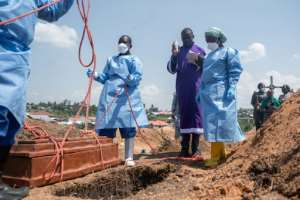 A priest and Red Cross members at the burial of an orphan who died from Ebola, at Mbiyo cemetery in Bunia, northeastern DR Congo. By Jospin Mwisha (AFP)
“Danger can emerge from anywhere, at any time, in ways we don’t always expect,” he added.
Tedros said every month that that annex remained unfinished was one in which the world was underprepared.
“It is people — real people, real families — left less safe than they deserve to be,” he said.
Before last month’s G7 summit, Tedros and Brazilian President Luiz Inacio Lula da Silva urged its leaders to find the “political will” themselves ensure the PABS annex gets finished, and “treat July 17 as a deadline, not a milestone”.
The pandemic agreement was struck after more than three years of negotiations sparked by the shock of Covid-19.
The accord aims to prevent a repeat of the disjointed international response that surrounded the coronavirus crisis, by improving global coordination, surveillance and access to vaccines.
Countries set out red lines
As negotiations resumed on Monday, Indonesia, speaking for the Group for Equity bloc of developing countries, said benefit-sharing “cannot be something that materialises only when users happen to feel generous after the fact”.
 The Umbral monument in Bogota pays tribute to the medical personnel who died during the Covid-19 pandemic. By Raul ARBOLEDA (AFP)
And Pakistan’s representative, speaking on behalf of the 22 countries in the WHO’s Eastern Mediterranean region, insisted: “We cannot support any outcome that delinks access from benefit sharing.”
Namibia meanwhile insisted that “African laboratories must be partners in global science, not collection points for samples that enrich research conducted elsewhere”.
On the other side of the debate, the European Union stressed that PABS needed to be “truly conducive to enhancing the innovation… that is vital for such medical countermeasures, and can lead to broad participation by the private sector”.
The Third World Network, an NGO that is monitoring the negotiations, pushed back, insisting that meaningful progress “requires developed countries coming down from their maximalist positions and adopting a positive and a constructive outlook”.
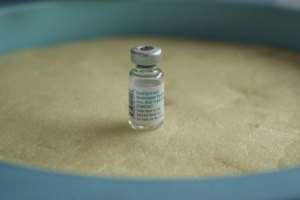 The pandemic agreement envisages more equitable access to vaccines. By Aubin Mukoni (AFP)
Meanwhile the International Federation of Pharmaceutical Manufacturers and Associations warned against a PABS annex that “is impractical for research and potentially counterproductive”.
IFPMA said PABS would “either enable innovation or introduce delays and uncertainty that risk slowing it down”.
Only once the PABS annex is complete will countries be able to start ratifying the treaty.

AFP
Top news and features from AFP’s reporters around the world. Page: afp
Top Stories


<!–
–>
Originally published on www.modernghana.com
