

July 26, 2026
In the Shadow of a Leader: Why Tehran’s Turn West Is Being Steered by Men the World Can See


In the Shadow of a Leader: Why Tehran’s Turn West Is Being Steered by Men the World Can See
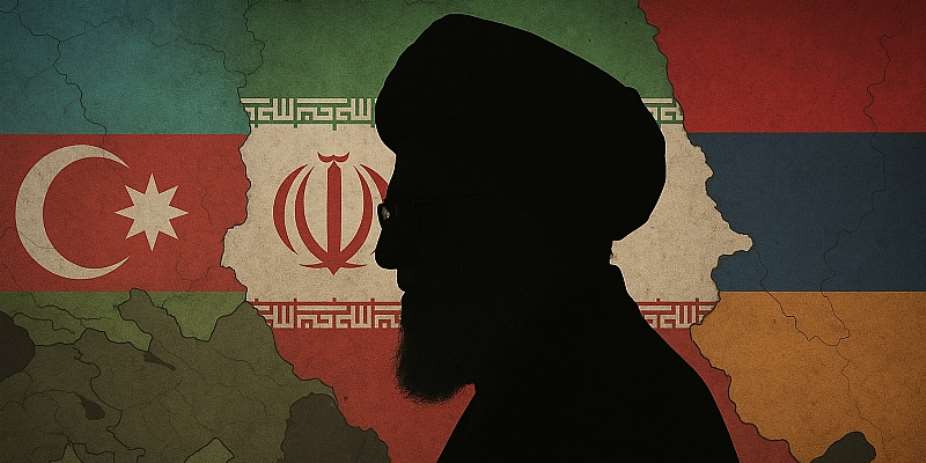
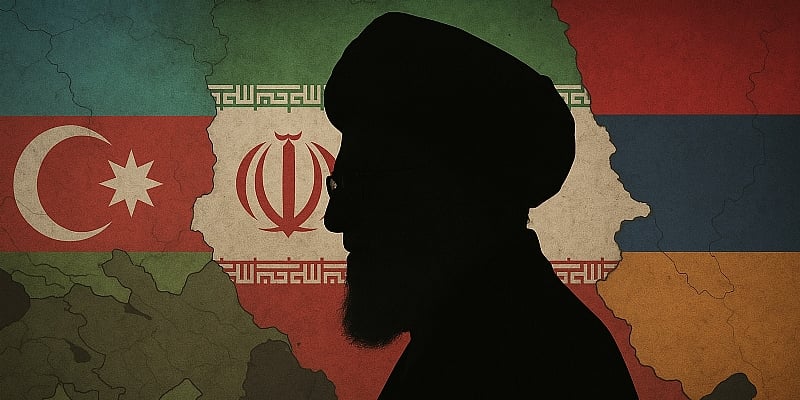
Iran is, for the first time in the Islamic Republic’s history, being governed by a Supreme Leader the public has never seen and whose voice has never been heard. Mojtaba Khamenei, installed in March 2026 after an Israeli strike killed his father, Ali Khamenei, has issued no live address, granted no audience, made no appearance since his own reported wounding in the same attack that took his father’s life. His authority reaches Tehran’s streets only through statements read aloud by state television anchors. And yet, in his enforced absence, Iran has done something the elder Khamenei spent three decades resisting: it has sat, however reluctantly, across the table from Washington.
This is the paradox worth examining. The man now carrying the title that once defined implacable hostility to the West earned his earlier reputation as the “Shadow Prince” the son who ran his father’s office from behind the curtain for nearly two decades, never holding formal rank, never courting the cameras, yet shaping decisions at the highest level. He has simply carried that instinct for invisibility into the office itself. The question for analysts, and for a security-conscious readership across Africa watching Gulf instability ripple into oil markets and shipping lanes, is who is actually doing the “looking west” the unseen leader, or the visible men now speaking in his name.
A government of proxies
The record since March is instructive. Iran’s chief negotiator in the technical talks with Washington has been Parliament Speaker Mohammad Bagher Ghalibaf, not the Supreme Leader. Foreign Minister Abbas Araghchi, Iran’s most recognisable diplomatic face throughout the crisis, has publicly admitted he has never personally met Khamenei, and doubts anyone outside a tight inner circle has either.
The actual negotiating architecture, according to Araghchi’s own account, runs through a security subcommittee that evolved out of a nuclear working group into a full negotiating body chaired by Ali Larijani. Analysts have increasingly pointed to Ghalibaf and IRGC Commander Ahmad Vahidi as the men actually steering Tehran’s course, with President Masoud Pezeshkian providing the elected, public-facing legitimacy the process needs.
When a memorandum of understanding was signed in Switzerland in June, Khamenei’s only recorded reaction was a brief written line stating he held “a different view” as a matter of principle, before noting he had accepted assurances from Pezeshkian that Iran’s negotiating red lines sovereignty and protection for the so-called Resistance Front of allied armed groups would hold. That is not the language of a leader driving policy. It is the language of a leader being managed around it.
Diplomacy under duress, not conviction
None of this should be mistaken for an ideological opening to the West. The talks in Doha through July, mediated indirectly by Qatar and Pakistan, have been described by American officials as “going well,” even as Tehran has simultaneously threatened to keep the Strait of Hormuz as a pressure tool and, according to Ghalibaf’s own complaints this month, watched a fragile ceasefire collapse amid renewed attacks that killed American service members. Israel’s defence minister has separately warned that Khamenei himself remains a marked target. This is diplomacy conducted at gunpoint on both sides, not a strategic embrace of Western partnership.
What makes the moment historically unusual is the governance vacuum at its centre. Iran’s constitution vests near-total authority in the Supreme Leader commander of the armed forces, arbiter of all three branches of state. That authority now sits with a man whose own foreign minister cannot confirm having spoken with him. Iran is, in effect, being run by consensus among visible power centers parliament, the presidency, the IRGC operating in the name of a leader whose physical condition remains a matter of open speculation in Tehran and abroad.
Why this matters beyond Iran
For Ghanaian and wider African readers, the relevance is not abstract. Oil prices spiked past $120 a barrel on the news of Khamenei’s succession and the closure of the Strait of Hormuz earlier this year, a shock that lands directly on fuel-import-dependent economies across the continent long before it registers in Washington or Tel Aviv. A protracted, opaque power struggle inside Iran’s leadership one where the nominal head of state cannot be reliably reached even by his own cabinet raises the odds of miscalculation, whether through a collapsed ceasefire, a strike on Hormuz shipping, or an Israeli operation aimed at a leader Israel has openly marked for elimination. Instability transmitted through energy markets and shipping insurance rates does not respect distance.
Iran’s tilt toward the negotiating table, then, should be read less as a strategic pivot ordered by its Supreme Leader and more as the improvised management of a state whose apex of authority has gone dark. Whether that produces a durable settlement or merely buys time before the next escalation will depend less on what Mojtaba Khamenei believes a question no one outside a handful of aides can currently answer than on whether the men speaking in his shadow can hold Tehran’s fractious security establishment together long enough to see the talks through.
Mustapha Bature Sallama.
Medical/ Science Communicator,
Private Investigator, Criminal investigation and Intelligence Analysis.
International Conflict Management and Peace Building.USIP
[email protected]
+233-555-275-880
Sources
Iran International, “Mojtaba Khamenei: The shadow prince who became Iran’s supreme leader,” March 9, 2026 https://www.iranintl.com/en/202603084245
Wikipedia, “Mojtaba Khamenei” https://en.wikipedia.org/wiki/Mojtaba_Khamenei
CNBC, “Five things to know about Iran’s new supreme leader, Mojtaba Khamenei,” March 11, 2026 https://www.cnbc.com/2026/03/11/five-things-to-know-about-irans-new-supreme-leader-mojtaba-khamenei.html
Iran International, “Iran’s unseen new leader issues first message in writing,” March 13, 2026 https://www.iranintl.com/en/202603125349
Wikipedia, “Supreme Leader of Iran” https://en.wikipedia.org/wiki/Supreme_Leader_of_Iran
Bloomberg, “Ali Khamenei, Iran’s Anti-Western Supreme Leader, Is Dead,” February 28, 2026 https://www.bloomberg.com/news/articles/2026-02-28/ali-khamenei-iran-s-supreme-leader-killed-in-us-israel-strikes
Reuters (via AOL), “Iran’s Supreme Leader Ali Khamenei killed, senior Israeli official says,” February 28, 2026 https://www.aol.com/articles/irans-supreme-leader-ali-khamenei-194449508.html
CNN, “July 1, 2026 Meetings in Doha, Vance says talks ‘going well'” https://www.cnn.com/2026/07/01/world/live-news/iran-war-trump
House of Commons Library, “US-Iran ceasefire and nuclear talks in 2026” https://commonslibrary.parliament.uk/research-briefings/cbp-10637/
The Jerusalem Post, “Iran FM reveals security committee led nuclear talks, says he never met Khamenei” https://www.jpost.com/middle-east/iran-news/article-903180
Fox News, “US-Iran talks gain momentum in Doha as Hormuz tensions ease ahead of Khamenei funeral,” July 1, 2026 https://www.foxnews.com/live-news/us-iran-peace-talks-07-01-26
CNN, “July 2, 2026 Iran issues fresh warning on Hormuz, Qatar talks make ‘positive progress'” https://www.cnn.com/2026/07/02/world/live-news/iran-war-us-talks
Al Jazeera, “US-Iran negotiations: What’s the latest?” https://www.aljazeera.com/news/2026/7/1/us-iran-negotiations-whats-the-latest
Al Jazeera, “Khamenei’s MoU stance stirs debate as Iran and US meet in Switzerland,” June 21, 2026 https://www.aljazeera.com/news/2026/6/21/khameneis-mou-stance-stirs-debate-as-iran-and-us-meet-in-switzerland
The Washington Times, “Iran’s chief negotiator chastises U.S. for moving new military equipment to the region,” July 20, 2026 https://www.washingtontimes.com/news/2026/jul/20/irans-chief-negotiator-chastises-us-moving-new-military-equipment/
New York Post (via AOL), “US negotiating with Iranian parliament speaker Mohammad Bagher Ghalibaf…” https://www.aol.com/news/us-negotiating-iranian-parliament-speaker-144020112.html
Al Jazeera, “Is the US talking to Iran’s Mohammad Bagher Ghalibaf, and who is he?” March 24, 2026 https://www.aljazeera.com/news/2026/3/24/is-the-us-talking-to-irans-mohammad-bagher-ghalibaf-and-who-is-he

Mustapha Bature Sallama, © 2026
This Author has published 1606 articles on modernghana.com. More COE Hijama Healing Cupping therapy ,Mini MBA in Complimentary and Alternative Medicine .Naturopathy and Reflexologist. Private Investigation and Intelligence Analysis,International Conflict Management and Peace Building at USIP. Profession in Journalism at Aljazeera Media Institute, Social Media Journalism,Mobile Journalism, Investigative Journalism, Ethics of Journalism, Photojournalist, Medical and Science Columnist on Daily Graphic. Column: Mustapha Bature Sallama
Disclaimer: “The views expressed in this article are the author’s own and do not necessarily reflect ModernGhana official position. ModernGhana will not be responsible or liable for any inaccurate or incorrect statements in the contributions or columns here.”
Follow our WhatsApp channel for meaningful stories picked for your day.
Top Stories


Originally published on www.modernghana.com
