

August 1, 2026
[Full text] Osahen Afenyo Markin delivers closing remarks as Parliament rises for recess on July 31
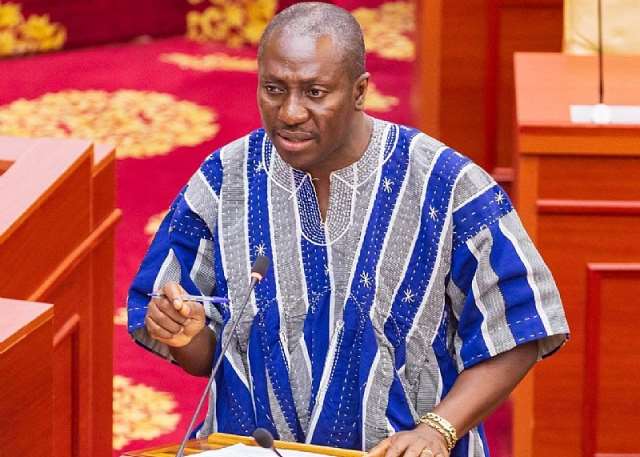


[Full text] Osahen Afenyo Markin delivers closing remarks as Parliament rises for recess on July 31
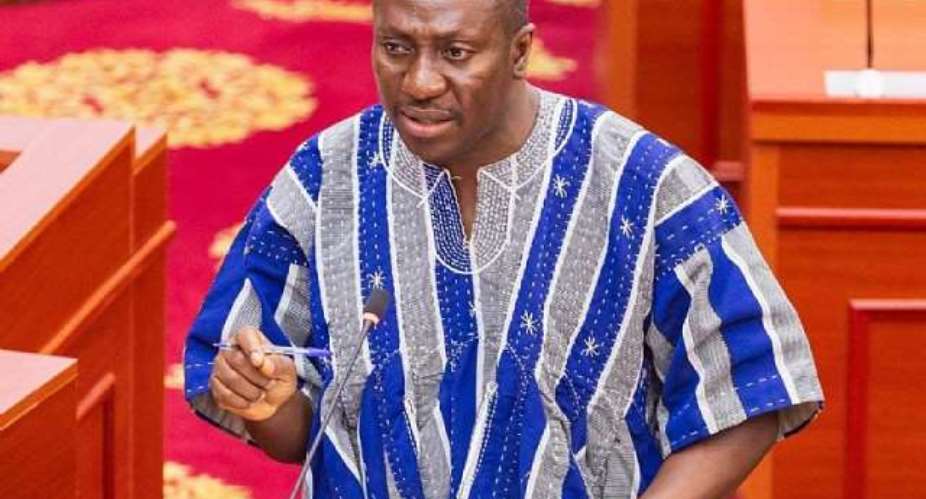
CLOSING REMARKS OF THE MINORITY LEADER, OSAHEN ALEXANDER KWAMENA AFENYO-MARKIN – FRIDAY, 31ST JULY 2026
Mr Speaker, Honourable Members,
On 23rd April 1910, the 26th President of the United States, Theodore Roosevelt, delivered an address at the Sorbonne in Paris titled ‘Citizenship in a Republic’ during his post-presidential tour of Europe.
He reminded the world of one enduring truth:
“It is not the critic who counts; not the man who points out how the strong man stumbles, or where the doer of deeds could have done them better. The credit belongs to the man who is actually in the arena, whose face is marred by dust and sweat and blood; who strives valiantly; who errs, who comes short again and again, because there is no effort without error and shortcoming; but who does actually strive to do the deeds; who knows great enthusiasms, the great devotions; who spends himself in a worthy cause; who at the best knows in the end the triumph of high achievement, and who at the worst, if he fails, at least fails while daring greatly, so that his place shall never be with those cold and timid souls who neither know victory nor defeat.”
Relying on these veritable words, I say to my colleagues on the Minority side, let Roosevelt’s words strengthen our resolve. We will be criticised, called names and accused of opposing everything, but we must not retreat from our duty. We must continue to fight, let’s soldier on, scrutinise and hold this Government’s feet to the fire, because we were elected to defend the public interest, demand accountability and speak for the people, even when doing so is difficult.
In the same light, the Clerk to Parliament, speaking at the launch of the Parliament and You initiative on 9th June, 2026, offered a fitting reminder of the wider purpose of our work when he said:
“May today’s constructive engagement and similar future endeavours, secure for us and posterity the blessings of liberty, equality, opportunity and prosperity.”
These words should guide us as we bring this Meeting to a close. Beyond our political differences, Parliament must remain a place where debate serves the public good and where our decisions protect the freedoms, opportunities and future of the people we represent.
Mr Speaker, Honourable Members,
There is a moment, at the end of every meeting of this House, when the noise settles, and the only thing left is the record. Not the applause. Not the headlines. The record: what we said, what we did, what we had the courage to name.
So let me be honest with you today, and through you, with the people of Ghana who sent us here. Not because it is easy. But because it is owed.
And let me be plain from the outset, Mr Speaker. Our Republic, under this NDC administration, is not in safe hands. Executive incompetence, majority tyranny in this House, and a timid or malleable judiciary are, together, suffocating the faith of our citizens in democracy, and pushing Ghana towards the precipice. That is the case this speech will make, point by point, before this House and before the nation.
A Son of Anlo Goes Home
But before I make that case, Mr Speaker, let me first speak of matters that rise above politics. Today, Ghana laid to rest James Victor Gbeho: diplomat, Minister, Member of this House. A man who represented us at the United Nations and across our region with quiet dignity. We do not always agree, in this Chamber, about how to serve Ghana. But we can agree he served her well. Rest well, sir.
Condolences to the People of Dagbon
And in this same season of loss, a word to our brothers and sisters in Dagbon, mourning the passing of their Overlord, the Ya Na. When Dagbon grieves, Ghana grieves, because the Dagbon stool carries the memory of this whole nation. Today, in keeping with tradition older than this Republic, a Regent was installed, to hold Dagbon steady until final rites are performed and a new Ya Na takes the stool. To the chiefs, the elders, and the people of Dagbon: we honour the dignity of this moment, and hold you in our prayers.
The June Disaster: Who Will Answer?
Now, Mr Speaker, to the hard things I promised at the outset, and there is no harder place to start than here.
On June 29, this country was hit by floods and fire. NADMO’s own figures tell us at least 34 Ghanaians died and 6 went missing: 18 in the Central Region, 12 in Greater Accra, and 4 in the Volta Region. Mr Speaker, it is easy for numbers to become just numbers. They are not. They are citizens who did not come home.
But silence is not an answer. It has been weeks, and not a single official has stood before this country and said, simply, “I failed. I am responsible. I resign.” There was a task force, set up before the rains ever came, with time to prepare and a mandate to protect our people. We believe that if it had done its job, some of those 40 persons might still be with us today. Maybe not all. But some.
So let us be clear about what we are asking for. Not a witch hunt. An answer. Every member of that task force must be hauled before the appropriate committee of this House and account, in full, for what they did and did not do. Ghanaians buried their dead in June. The least we owe them is the truth in July.
Mr Speaker, and this is not the only silence this government owes us an answer for. A state-owned helicopter fell from the sky, killing high-ranking state officials and army personnel. To this day, no one in this government has accepted responsibility. A routine recruitment exercise for the Ghana Armed Forces turned into carnage, killing at least six young women who had simply come seeking to serve their country. To this day, no one in this government has accepted responsibility. Mr Speaker, three tragedies. Three sets of graves. And not one word of ownership from this government.
This House cannot allow that silence to stand. We insist, without qualification, that both the helicopter crash and the deaths of those young women at that recruitment exercise be subjected to the same full parliamentary investigation we demand for the June floods. Not a quiet internal memo. Not a press statement issued and forgotten. A proper inquiry of this House, with power to summon, to question, and to publish.
Numbers That Do Not Add Up
Mr Speaker, if this government cannot give us straight answers on matters of life and death, we should not be surprised that it cannot give us straight numbers either. On the 23rd of July, the Minister for Finance gave us the mid-year budget review, a speech this House is asked to enter, word for word, into our official Hansard, as a record for history. That is a serious honour. It should come with a serious duty: to get the numbers right.
It did not. Inflation for June, was given as 5.7 per cent in one breath, and 5.3 per cent in the next.
Mr Speaker, this Minority is not alone in raising the alarm. Civil society has independently flagged the very same rot. Dr Adu Owusu Sarkodie, Executive Director of the Centre for Policy Scrutiny, has publicly pointed out that total expenditure was quoted at one figure on page 25 of the budget document, and a different figure entirely on page 26, against two different spending targets. He found the same pattern in our capital expenditure numbers: one figure on page 25, another on page 26. Mr Speaker, when independent policy analysts and this Minority are reading the very same document and arriving at the very same alarm, that is not partisan noise.
That is a warning this government cannot explain away, because as Dr Sarkodie rightly noted, these fiscal figures are “the foundation upon which government policies are formulated”.
Mr Speaker, a budget is not just arithmetic. It is a promise. When the numbers inside a promise cannot agree with each other, the promise itself starts to look like fiction. We demand, simply, for the Finance Minister to return to this House and provide one set of figures, told the same way from the first page to the last.
A Government Failing Its Own Promises
Mr Speaker, sloppy numbers on a page are one failure. Broken promises to the Ghanaian people are another, and this government has no shortage of those either. Every government is elected on its promises. That is the deal. Tonight, we ask, plainly: where are those promises?
Where is “Akoko Nkitinkiti”? We were told it was an investment. Now the Minister for Food and Agriculture himself tells us the beneficiaries are simply eating the chicken and sent him videos of their feast. You cannot hatch an economy from a bird that has already been eaten.
Where are the nurses we trained? Where are the teachers we prepared? They sit at home, thousands of them, while the promise that gave them hope collects dust.
Where is the fight against galamsey, which we return to shortly? Where is the Women’s Bank, still mostly an idea? Where is the end of “family and friends”, a promise broken in full view of the people who believed it?
Where is the overhaul of our procurement system, when sole-sourced contracts are still handed out like sweets, left and right, to whoever stands closest to power? That is not reform. That is the very rot this government told us it came to clean up.
Where is the 24-hour economy? Where is One Job, Three Shifts? Where is costfree first-year university?
Mr Speaker, these are not our pillars. This government chose them, and this government promised them, and one by one, we are watching them fail miserably or collapse. Ghanaians did not vote for slogans. They did not vote for crass incompetence. They voted for delivery. Tonight, this government owes them an answer, not another speech – which will likely come from the Deputy Minority Leader.
The Tribunal Bill Must Not Become Law
Mr Speaker, as if broken promises are not enough, this NDC Government is now embarking on actions that have grave consequences on our justice system. For example the enactment of a bill to create district and regional tribunals creates a lot of apprehension in sections of our society.
Let us talk about tribunals, and start with what is true. Indeed, our Constitution does allow for them. Article 125 speaks of citizens taking part in justice through public tribunals. Articles 142 and 143 speak of Regional Tribunals. This Minority will not stand here and pretend otherwise.
But here is what else is true. This same Constitution allowed the President to create a Constitutional Review Committee, chaired by Professor H. Kwasi Prempeh, a man of real standing. That Committee studied the very question of the tribunals, and in December last year, it reported to the President. Its advice was simple: expunge the tribunal system, replace it with ordinary courts. The President’s own reviewers told him to close this door. Instead, his side in Parliament forced it open, at midnight, on Friday the 16th of July, while most of Ghana slept. This Minority refused to add our voice to that vote. We stood up. We walked out. So history would have no doubt where we stood.
Mr Speaker, we have walked this dangerous road before. In the 1980s, Public Tribunals and Community Tribunals were accused of grave human rights abuses. They earned a name, and not a kind one: “kangaroo courts”. Professor Kwesi Yankah has called this bill “a revolutionary monster nicely cloaked in fugu democracy”, warning it marks “the return of terror”. Those words should not leave this Chamber unshaken.
Yes, the bill has safeguards on paper, I agree. It requires panel members of high moral character. But it also says, plainly, that they “may or may not be lawyers”. That means a person with no legal training can sit in judgment on serious cases of fraud, tax, and mining crime, shielded by immunity for whatever they decide on that bench. Power, without training, wrapped in immunity, is not a small risk in a country with our history. If today the Court of Appeals says High Court Judges are making mistakes in applying the law, what will non judges do when people are hauled before them? And by the way Mr Speaker, let not the NDC forget that in our history some of the people who have led or supported the passage of controversial bills have ended up being the victims of it soon afterwards.
So, standing firmly behind our flagbearer, Dr Mahamudu Bawumia, we the Minority say to President Mahama: do not sign this bill. Send it back. Listen, for once, to your own Committee. A tribunal built to be used against your opponents today can be turned on you tomorrow. Nobody wins that game. Only the law loses.
Mr Speaker, kindly permit me to place on record that we are aware of the Government’s position paper on the proposed constitutional changes being canvassed by the Mahama administration, following the work of the Prempeh Committee. This is a serious and delicate matter, which we will study thoroughly with our national party and respond to properly at another time.
Stop the Harassment of the Opposition
Mr Speaker, a tribunal that can be turned on political opponents does not exist in isolation. It sits alongside a pattern this Minority has watched grow all year, and we cannot leave this Chamber without naming it plainly. Members of the New Patriotic Party, including MPs from the Minority, have been maliciously targeted and harassed, simply for holding a different view, using the investigative and prosecutorial powers of the state. We say, without apology, that this is both dangerous and wrong. A government that fears its critics has already told us something horrifying about itself: it is inflicting a new culture of silence on this nation.
Mr Speaker, we also place on record a shocking string of doubtful judicial decisions that has emerged in recent times. Taken together, they appear to suggest that there is one set of justice for the friends and cronies of this government, and another, altogether harsher, set for its opponents. Ghana is bigger than any one party, and our democracy only works if the opposition can speak, organise, and challenge power without looking over its shoulder, and if every citizen, regardless of political colour, can trust that the same law applies to them all.
The Bail Regime Has Been Abused
Mr Speaker, that targeting does not end with investigation and doubtful verdicts. It follows opponents into the courtroom itself, through how a bail is granted, or withheld. This concern is not new, and we return to it because the problem has not gone away. We have said before, and say again, that our bail regime has been abused. Opposition figures have been kept behind bars, in all but name, through conditions no ordinary Ghanaian could meet, even as our Constitution promises them liberty and the presumption of innocence. That is not bail. That is unlawful punishment, wearing bail’s clothing. The time has come for this House to close the gaps that make this possible. Bail should protect liberty. It should never punish a person before they are even tried.
Free Speech Under Threat
Mr Speaker, if the state can use bail to punish an opponent before trial, it should surprise no one that the same fear of criticism is manifesting itself in other horrifying ways. This government has taken steps that look, unmistakably, like an attempt to revive the old criminal libel law, the very law a Kufuor-led NPP government asked this Parliament to repeal, back in 2001. Consequently, this Minority has filed a bill to amend Sections 207 and 208 of the Criminal Offences Act, 1960. These are sections that still criminalise insult and so-called false news. Those laws belong to an older, harder Ghana. Not the Ghana we are building together. While we do not support irresponsible or reckless speech, we are of the firm conviction that no citizen should go to prison for mocking a leader, or for getting a fact wrong. Those are matters our civil litigation should deal with. We ask our colleagues opposite to join hands with us to ensure this House passes the proposed amendments without delay.
A Broken Promise to Reset Governance
Mr Speaker, silencing citizens is one betrayal. But the biggest betrayal of all sits behind everything I have described tonight, and it goes by a single word this government campaigned on: reset. They promised to fight corruption without fear, and without favour. Ghanaians believed them, and voted for that promise.
So let us ask, honestly, what we got instead. We have watched the prosecutorial power of this state become a shield for the well-connected, and a sword wielded against their opponents. Serious cases, once actively pursued against NDC loyalists and allies under the Nana Addo government, have gone quiet, or vanished altogether. Meanwhile, that same power has moved swiftly against members of the New Patriotic Party to mount bogus and politically motivated trials.
Mr Speaker, nowhere is this clearer than in the questionable acquittal of Madam Sedina Tamakloe of the NDC. Was justice blind in that case? Or did a party card open a door that stays shut for everyone else? We have seen a hurriedly written press statement suggesting the Attorney General intends to appeal the decision. The same Attorney General who did a terribly poor job in defending the interest of the Republic at the Court of Appeal? No, we don’t have a shred of confidence in the current Attorney General and his deputy. A so-called reset that only resets in one direction is not a reset. It is a recalibration of George Orwell’s Animal Farm, wearing the language of reform.
Galamsey: A Tale of Two Standards
Mr Speaker, nowhere is that one-directional reset clearer than in the fight, or the absence of one, against galamsey. In March, President Mahama stood before Organised Labour at Jubilee House, and he was candid. He said he does not “kid” himself that his own people are free of galamsey, describing how illegal operators simply switch loyalty whenever a new government arrives. That is the President’s own account. Not ours. It tells us he knows names, or at least, he knows networks. Yet as of today, the Attorney General has not even taken a statement from the President to learn who these people are. No investigation. No prosecution.
Now compare that to the treatment of Bernard Wuntumi, the NPP’s Ashanti Regional Chairman. The same Attorney General moved with remarkable speed to secure his conviction, in a case that itself raises real questions. One case crawls, because the names might be too close to home. Another moves at lightning speed, because the target wears the wrong colours. That is not the rule of law. That is the discriminatory use of the power of the state, and it is dangerous, in any democracy, anywhere. Justice must be blind. Not selective.
The Courts: Progress and a Warning
Now, Mr Speaker, having spoken of double standards, let me be fair, because fairness matters even in a speech like this one, and not every recent judicial development has troubled us. We commend the Supreme Court for upholding the constitutionality of the Office of the Special Prosecutor. That office is a safeguard for this nation, and every attempt to weaken it, by bill or by bogus petition dressed up as concern, should stop.
But we also have a warning. That same ruling upheld the Attorney General’s power to enter a nolle prosequi, and this government has a track record of using that very power to quietly end prosecutions that began before January 2025. That power must never become a shield for the connected, and a sword for the powerless. We will be watching. Ghanaians are also watching as now the computerised case allocation system has been suspended and in its place three judges have been assigned to handle cases of NPP members. What happened to the need for Justice to be blind? And now even as courts go on vacation some judged have been given special certificates to speed up the trials of NPP members. This comes after various NDC officials have been freed or Nolle Prosequis filed to ensure they do not open their defence in court. It is now one system of Justice for NDC members and a a different one for NDC members.
A Word on the Primary Elections Ruling
Mr Speaker, In the matter of the Supreme Court ruling, abolishing the on the oneman-one-vote (OMOV) for Presidential and Parliamentary primaries, the Party to which the Minority caucus belongs has stated its position clearly. At our last conference in Legon the Party decided to eventually open up to the OMOV starting with a forty percent expansion in the delegate base. This new decision is a call on us to fast track the process and we will.
Words of Thanks
Mr Speaker, I have covered a great deal of ground tonight, and before I take my seat, let me say what should always be said, regardless of how difficult a meeting has been. Thank you, and your deputies, for presiding over this House through this meeting. Thank you to my colleagues, on every side of this Chamber, for showing up and doing the work. To the Members of this Minority: thank you for your dedication. Thank you to the Parliamentary Service Staff led by Mr. Ebenezer Ahumah Djietror, who keep the lights on here long after we have gone home, and to the officials across government who worked with this House to move our legislative business forward.
And thank you to the press, who carry our words from this Chamber to the doorstep of every Ghanaian. A free press is not a convenience. It is the lifeblood of everything we are trying to build.
Closing
Mr Speaker, Honourable Members, as we rise sine die, I want to leave you with this.
We stood for the dead of June. We stood against a tribunal built for revenge. We stood for a free press, and for free speech. We stood against galamsey, wherever it hides, and for courts that hold every Ghanaian to the same standard, including the government of the day.
Mr Speaker, when we weigh all of this together, one picture emerges, and it is the same picture I named when I rose to speak tonight. Executive incompetence, because this government has failed, on almost every measure that matters to the ordinary Ghanaian: on the economy, on its own promises, on protecting our people from disaster, on delivering the reset it promised us. Majority tyranny in this House, because a Tribunal Bill its own reviewers warned against was forced through at midnight, and dissenting voices have been met with harassment rather than argument. And a judiciary too often timid or malleable, because the same law appears to move at different speeds for different Ghanaians, depending on whose side they are on. Yet on one thing, and one thing only, this government has shown real creativity and real discipline: finding ever more inventive ways to shield family members, friends, and cronies associated with it from the long arm of the law. That is not governance. That is self-preservation dressed up as leadership. But let this government hear us clearly: no matter how long it takes, the day of accountability will come.
That is precisely why we did what we did in this meeting, Mr Speaker. We did not do it because it was easy. We did it because Ghana is watching, and history is watching, and one day, someone will ask what this Parliament did in this season, when it mattered. Let the record show: we told the truth. When we return to this Chamber, we will still be here, still asking, still holding this government to account, until every one of these matters is resolved.
I thank you, Mr Speaker. I thank this House.
Top Stories


Originally published on www.modernghana.com
