

July 25, 2026
Finance Ministry tables six bills in Parliament to tighten revenue collection, reform procurement


Sat, 25 Jul 2026 Parliament
Finance Ministry tables six bills in Parliament to tighten revenue collection, reform procurement
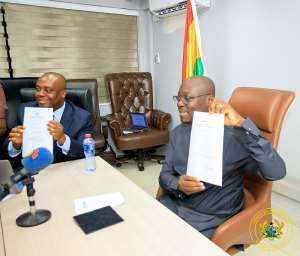
The Ministry of Finance has laid six bills before Parliament aimed at strengthening revenue mobilisation, closing tax leakages and reforming key areas of public financial management.
The proposed legislation includes the Customs Bill, 2026; the Income Tax (Amendment) Bill, 2026; the Value Added Tax (Amendment) Bill, 2026; the Excise Duty (Amendment) Bill, 2026; the Public Procurement (Amendment) Bill; and the Ghana Cocoa Board (Amendment) Bill, 2025.
Deputy Finance Minister Thomas Ampem Nyarko moved the motion for the bills to be laid in Parliament ahead of the presentation of the 2026 Mid-Year Budget Review on Thursday.
However, he subsequently withdrew the Ghana Cocoa Board (Amendment) Bill, 2025, explaining that it had undergone substantial revisions since it was first introduced in March this year and therefore needed to be re-laid as a new bill.
Addressing Parliament, Mr Ampem Nyarko said extensive work had been undertaken on the COCOBOD bill, making it necessary to withdraw the earlier version and present a revised one for fresh consideration.
He explained that the Customs Bill represents a comprehensive overhaul of Ghana’s customs legislation, noting that the existing law has not been reviewed in about 11 years despite significant changes in the customs environment.
“So, we are coming with an entirely new bill to enhance our Customs revenues,” he told the House.
On the Income Tax (Amendment) Bill, the Deputy Minister said the proposed changes were intended to strengthen the current tax framework, adding that similar amendments were also being proposed under the Value Added Tax and Excise Duty bills.
Mr Ampem Nyarko said government had identified significant revenue leakages under the current excise duty regime, particularly in the taxation of imported wines and spirits.
According to him, imports of wines and spirits between 2023 and 2025 had a taxable value of about GH¢5 billion, yet government collected only about GH¢1 billion in excise revenue.
“So, we are coming with an amendment to tighten some provisions to secure the revenue inflow,” he said.
He further explained that amendments to the customs suspense regime are intended to address leakages associated with transit cargo, which currently enters the country without attracting taxes.
Under the proposed reforms, customs officials from destination countries will be required to be present at Ghana’s ports to collect applicable revenues before consignments are released.
Mr Ampem Nyarko also outlined proposed changes to the Public Procurement Act, saying the amendments are designed to tighten the use of restrictive tendering procedures and reduce the overreliance on single-source procurement.
“And so we are coming with amendments to this bill to tighten and make competitive tendering the norm.
“As a consequence of this, we are going to shorten the period within which procurement process can be completed because it takes a long time to complete competitive tendering procurement, and that is one of the excuses for a lot of ministries, departments and agencies (MDAs) resorting to single source,” he said.
He added that the reforms would promote greater competition, improve efficiency in public procurement and ensure better value for money in the use of public funds.
Top Stories


Originally published on www.modernghana.com
