

July 17, 2026
Cuba: A New Silent Gaza Suffocated By A Barrage Of Further Sanctions
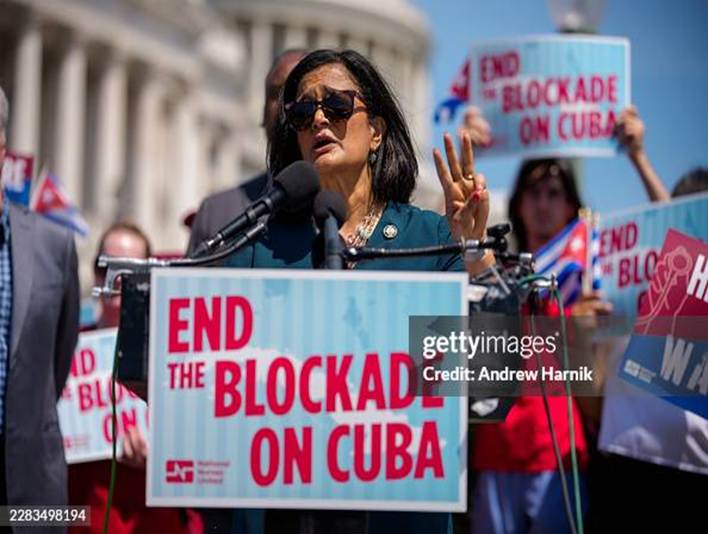


Cuba: A New Silent Gaza Suffocated By A Barrage Of Further Sanctions
Not a failed state but a resistance state paying the price
Introduction
Monday 13 July 2026, the United States of America (US) Treasury Department imposed additional sanctions on Cuba. Cuba’s Ministry of Tourism and nine other state-owned companies were hit by another wave of fresh, crippling US sanctions.This further extended the longest, sixty- six (66 years)trade embargo to the Caribbean island, the longest and most enduring embargo in this modern world era.The result, a catastrophic humanitarian crisis is unfolding in Cuba
Background
US sanctions on Cuba started in 1960 after the Cuban revolution of 1959 led by the late Fidel Castro.Cuba was hit since then by US trade embargo under numerous US laws: Trading With The Enemy Act 1917, Foreign Assistance Act 1961, Cuban Assets Control Regulation Act 1963, Cuban democracy Act 1992, Helms and Burton Act 1996 and the Trade Sanctions Reform Export Enhancement Act of 2000. Over the 67 year period, these are pieces of US legislative instruments that have maintained the trade embargo on Cuba and kept Cuba politically and economically isolated. On 29January of 2026, the Trump administration passed an Executive Order number 14380 which emphasized the “maximum pressure policy” on Havana, placing Cuba effectively under a blockade. And now, on the 13th of July 2026, the US announced further sanctions on Cuba’s Ministry of Tourism and nine other Cuban state owned companies. By sanctioning Cuba’s Ministry of Tourism (US has effectively crippled the country’s main source of foreign exchange.
International Position
The international community since 1992 has condemned and voted year in year out in the United Nations General Assembly (UNGA) against continued existence of embargo and blockade against the Caribbean island of Cuba. On October 29, 2025, for the 33rd consecutive year. The United Nations (UN) adopted resolution A/80/L.6 calling for an end to the blockade overwhelmingly supported by a margin of 165 votes in favour, 7 against, and 12 abstentions.The countries that voted against the resolution were the US, Israel, Argentina, Hungary, Paraguay, North Macedonia, and Ukraine. On the 7th of July 2026, UNGA resumed debate against the US decades long economic, commercial and financial embargo against Cuba, calling it an,“unprecedented actions of an extreme extraterritorial nature”by Washington DC.
Cuban foreign minister Rodríguez Parrilla accused the US of carrying out;”multidimensional, non conventional warfare” against the Cuban people, an action that have, “become ever more cruel over the last seven months”. Eritrea’s delegate, on behalf of the Group of Friends in Defence of the UN Charter, affirmed that, “every day the blockade continues to exist represents a shame on the moral authority of this organization (UN)”.
Adding that,
“Since the Assembly last met on the matter in October 2025, the unjust and abusive blockade had been severely tightened, with grave humanitarian consequences for the Cuban people”. The European Union (EU)acknowledged the adverse humanitarian consequences of the blockade against Cuba but stressed that, “the dire situation of the Cuban people is not only due to the embargo”, pointing out that political and economic reforms by the Cuban authorities are an urgent need.
Cuba…”A New Silent Gaza”
Due to US trade embargo and fuel blockade, Cuba is in the midst of a serious humanitarian crisis. Energy shortages, national grid blackouts due to shortage of fuel.Basic human needs like food,water,medication are running law making daily existence of especially vulnerable Cubans a living nightmare. This has seen Cuban officials accusing the US of “genocide”. Four Democratic US representatives visited Cuba in mid-July 2026: Mark Pocan (WI), Teresa Leger-Fernández (NM), Maxine Dexter (OR), and Delia C. Ramirez (IL). Their conclusion was heartbreaking as it was telling.The US energy embargo was turning the Caribbean island of Cuba into a “silent Gaza”.
“There may not be bombings, but there are certainly conditions that prevent people from going about their daily lives. They can’t go to work, they can’t preserve their food, they can’t access medical supplies, or live as they did before”, US lawmakers concluded. Congresswoman Delia C. Ramirez who was part of the oversight visit to Cuba said;
“As a member of Congress, it is my responsibility to understand the effects of U.S. policies on the lives of our neighbors in Cuba. That’s why this weekend, I visited Cuba to hear first-hand accounts about the humanitarian crisis unfolding on the island. Through my conversations with civil society, religious leaders, entrepreneurs, journalists, farmers, and many other Cubans, one thing is clear: under the pretense of freeing the Cuban people, the United States government wounds them, cutting them off from access to reliable infrastructure, economic opportunities, and a thriving life on their island. Plain and simple, our 60-year-long imperialistic policies, including an immoral, inexcusable, cruel blockade, have contributed to the dire conditions facing Cubans who yearn to be free”.
Due to the trade embargo and US fuel embargo,
“Cuba is facing an acute humanitarian crisis as the U.S. seems determined to bring an end to the communist regime in power since the 1959 revolution. A U.S. oil blockade has put additional pressure on an already fragile economy, resulting in massive blackouts and shortages of food, medicine and other necessities”, International Crisis Group (ICG)
Havana Response
According to the Caribbean Island’s state-run CubaDebate outlet: this year’s measures(US Blockade) further, “aggravated the premeditated suffocation”, And, “Its human impact is incalculable. It is genocidal, illegal, extraterritorial and contrary to international law”. Both the Cuban President Miguel Diaz-Canel and Cuban Foreign Minister Bruno Rodriguez slammed the US’s new round of sanctions against Cuba. Writing on his social media, Diaz-Canel the Cuban President said, “sanctions against Cuba is the “war” of the US and its zeal to strangle our economy”. “They reinforce the aggression in search of greater harm to the people. We are facing a genocidal design plan denounced at the UN less than a week ago”, Diaz -Canel added.
Foreign Affairs minister Rodriguez echoed the same saying that the new sanctions, “intensify the war against the people of Cuba, their living conditions, and their sources of livelihood”. In face of the current harsh further sanctions reality the Cuban government has implemented a dramatic opening up of its foreign and domestic capital, private business, the market and the dollar. A move away from Havana traditionally obstinate bureaucracy.Cuban Prime Minister Manuel Marrero on 19 June 2026, presenting the plan for final approval to an emergency session of the National Assembly of People’s Power commented that- these transformations in the Cuban economy did not imply that the Cuban state was giving up on its social responsibility but was a move neccesiated by current realities.
In an interview, President Miguel Díaz-Canel said, “The high-pressure situation we are in right now pushes us to speed things up a bit, to make decisions faster, to have to take action; but not because we are giving in to pressure from the United States”, adding that, “we are looking for ways to overcome those pressures without compromising the sovereignty, independence, and self-determination of our country”, said the Cuban President.
Sanctions: “The new Gunboat Diplomacy”
“For sixty – seven (67 years) the US tried to starve an idea, and the idea is “Cuba”. Cuba, a small Caribbean island owning its land, its doctors, its choices, its destiny, its sovereignty, its resource sovereignty and its only crime is a divergent economic and political system.So instead of sending US marines, the US used and is still using sanctions. According to the UNGA Resolution 1803 of 14 December 1962 nations have, “permanent sovereignty over natural resources” by the same token nations have rights over their political choices too. But the message coming from the likes of Washington DC is crystal clear to anyone who bothers to listen: “If you don’t align with the West e.g. Washington DC, we will isolate your territory economically”.
US sanctions are meant to wrestle from Cuba its sovereign right. Does Cuba control its land? Politically yes. Economically no, because the US tries to dictate who Cuba can trade.This is the same sad state of affairs with Africa. Politically independent, economically under neo-colonialism.But at the end of the day political or flag independence is useless with economic independence, without control of own wealth.This is the same logic used against Burkina Faso, Mali, Niger when they kicked out French/US troops.
In the case of Cuba sanctions are firstly, blocking trade and finance.The result, Cuba cannot access US markets, dollars, or international banks easily. Secondly, sanctions are blocking investment. Foreign companies fear US penalties if they invest in Cuba. Fuel companies fear supplying fuel to Cuba. Thirdly, sanctions are blocking technology and medicine. Even during the COVID era, Cuba struggled to get ventilators and syringes. Cuba is being intentionally and inhumanly grounded by a deliberate US blockade policy. Cuba is not a threat, though framed by Washington DC as a US security threat. Instead, the US blockade is a threat to Cuban lives.
The US is using sanctions to punish Cuba for choosing a different political/economic system. The US is controlling who can trade with Cuba, which ships can dock, which banks can process payments.Thus, sanctions a direct attack on Cuban sovereignty. And for what end? This is “wealth extraction in reverse”. Instead of taking resources, the US blocks Cuba from building wealth. And the ultimate goal is to make life so hard that people overthrow their own government. Framing Cuba as a failed state.This is the same logic of manipulation Global South including Africa is subjected to in order to lose its resource sovereignty and forcing Africa to export raw materials instead of processed goods. Keep the economy at the bottom of the value chain. Not allowing their economies to grow, keep them in perpertual poverty and frame them as poor states, failed states.
Bottom Line About US Sanctions On Cuba
The US narrative is that the sanctions will bring down the Havana regime for the betterment of Cuban lives as a statement from US State Department reads, “The United States will continue to use every tool at our disposal to both address the national security threats posed by the Cuban Communist regime, and to drive the economic and political reforms to give Cuba a better future”.This US’s claim of sanctioning Cuba to promote democracy and human rights is questionable. It smacks of hypocrisy and double standards for “Sanctions are not about democracy. They are about preventing an alternative model of development from succeeding 90 miles from Miami.”
The US trades with Saudi Arabia (with no western democracy and human rights catalogue), Vietnam (with no Western democracy), China, (with no Western democracy) but does not trade and has extended a fuel blockade against Cuba(because there is no democracy). Hypocrisy and double standards.Therefore, sanctions are not about “values”, of democracy and “human rights”. Cuba is being punished for its disobedience, for its sovereign right of choosing a different economic system. Whilst the US narrative is “Sanctions results in pressure for human rights and democracy”, but the Cuban/African narrative is otherwise, “Cuban Blockade is collective punishment for independence”.
And for the Global South, the message is scary. If Cuba falls, the message to Africa is: “Don’t try to control your resources or choose your own path”, like Cuba you will be punished for that. But, if Cuba survives, it proves resistance is possible.The US blockade is also meant to erase 60 years of Cuban achievements in health, education, and biotech. All such achievements are ignored because they happened “under sanctions”.The US and her allies shout that Cuba is a “failed state”. But the global south knows better, Cuba is a “resistance state”, paying the price for asserting its sovereignty.The bottom line of sanctions is about setting an example to the rest of the global south.
And for 67 years, Washington DC has punished Havana for that sovereign choice. And the lesson and big take away is crystal clear. If Africa wants resource sovereignty like the Abuja Declaration of July 2026 on Cocoa Value Addition Summit pronounced and intended; Global South, Africa included must also prepare for “sanctions”. Because the moment Africa controls lithium, cocoa, diamond, gold, cobalt, etc — the pressure will come, and remember, “Sanctions” are the new weapon against sovereignty and resource sovereignty.
Conclusion
It is no secret that the US sustained trade embargo against Cuba, moreso, the fuel blockade on the island has manufactured a humanitarian crisis in Cuba. Faced with humanitarian crisis one is forced to question the real purpose of the embargo and blockade.Why despite thirty- three (33years) of international condemnation against Cuban embargo has Cuba remained economically isolated? Year after year, its now a generation the UNGA voted against Cuban embargo but year after year Cuba is subjected to isolation and off late crippling sanctions have been out on Havana.The argument that Cuba is a threat should be dismissed with the contempt there deserves. Cuba is not a threat, the blockade is.Does it make any sense at all to force a country to suffer, because of its divergent economic/ political system? Or is Cuba being punished as an example for Global South, Africa included that either you align with certain powerful Western interests or you face the consequences.

Fortune Madondo, © 2026
Fortune Madondo is a Zimbabwean Pan-Africanist writer, political analyst and a decolonial thinker. . More His work is characterized by staunch, unapologetic, defiant, Pan-Africanist and anti-imperialist stance, often addressing issues of neocolonialism and the need for African self-determination. His writing champions global South solidarity, regularly critiquing global powers hegemony and resource exploitation in Africa.His work is driven by his core Pan-Africanist framework: African sovereignty, anti-paternalism, African geopolitics; in all this, he advocates for socio-economic justice. He is a youth empowerment advocate, organiser, activist and a founder of a youth organization.
Column: Fortune Madondo
Disclaimer: “The views expressed in this article are the author’s own and do not necessarily reflect ModernGhana official position. ModernGhana will not be responsible or liable for any inaccurate or incorrect statements in the contributions or columns here.”
Follow our WhatsApp channel for meaningful stories picked for your day.

Top Stories


<!–
–>
Originally published on www.modernghana.com
