

August 17, 2026
Constitutional Leadership: An Imperative for the Removal of Sheikh Umar Ibrahim Imam


Mon, 17 Aug 2026 Feature Article
Constitutional Leadership: An Imperative for the Removal of Sheikh Umar Ibrahim Imam
I. The Anatomy of an Institutional Breakdown
The governance crisis currently paralyzing Ahlussunnah Wal-Jamaa’ah (ASWAJ) Ghana is no longer a mere internal administrative friction; it has escalated into a full-blown constitutional breakdown that threatens the structural integrity of the organization. The public manifestations of this impasse—ranging from the high-profile confrontation during the 2026 Eid-ul-Adha prayers at Parliament House, where state security forces were forced to intervene to prevent a breach of peace, to the series of summary suspensions broadcast over social media—point to a shadow executive office operating entirely outside its legal mandate. When a leader no longer exercises power within the strict limits of an organization’s written or unwritten constitution, there is a constitutional crisis.
When National Imam Sheikh Umar Ibrahim Imam attempted to unilaterally bypass his 1st Deputy, Sheikh Muhammad Kaamil Muhammad, and bar him from officiating the national Eid prayers, he did not merely precipitate a public relations disaster; he openly defied the institutional mechanics established under the amended 2025 ASWAJ Constitution.
The recurring necessity for interventions by state apparatuses—including the Ghana Police Service, the Ministry of the Interior, the Bureau of National Investigations (BNI, now NIB), National Security, and state-backed mediation mechanisms such as the Justice Amadu Tanko Arbitration Committee—underlines a damning reality: the internal constitutional mechanisms of ASWAJ have been deliberately circumvented, subverted, and neutralized by an executive leadership unwilling to submit to the rule of law.
Far from being an isolated personal dispute between senior clerics, this conflict stems from a systematic pattern of administrative overreach. Alhaj Umar has engaged in a calculated campaign of malicious vilification against his constitutional deputies, the Regional Representative Imams, and members of the National Executive Council (NEC). His constant recourse to social media platforms to level unsubstantiated accusations, seek unearned public sympathy due to his declining years or senescence, and demand that long-standing community assets be treated as his personal fiefdom represents not only a grave breach of Islamic decorum, but a manifest abuse of office (إساءة استخدام المنصب العام).
For a religious body registered as a corporate entity under Ghana’s statutory laws, this persistent refusal to govern through constitutional structures demands a rigorous, uncompromising legal critique.
II. The 2025 ASWAJ Constitution: Textual Analysis and Executive Overreach
A rigorous constitutional audit of the amended 2025 ASWAJ Ghana Constitution demonstrates that Sheikh Umar’s recent actions are entirely ultra vires. Under secular administrative law, a registered voluntary association’s constitution serves as a binding covenant that strictly circumscribes the powers assigned to every office holder.
1. The Allocation of Power and the Absence of Unilateral Authority
Article 5 of the ASWAJ Constitution lays down a clear, non-autocratic structure of leadership. The National Representative Congress (NRC) is established as the highest decision-making body, while executive administrative authority is vested in the National Executive Council (NEC). The article states ipso facto: “THE NATIONAL REPRESENTATIVE CONGRESS (N.R.C.): The NRC shall be the highest decision-making body and shall be made up of NADAC, NEC, Representatives of all other organs of ASWAJ and other Sub-committees.”
This needs no further interpretation to a critical observer. It is sufficient to reiterate that when a council or committee is designated as the highest decision-making body (often referred to as the supreme organ, governing board, or ultimate authority) within an organization, it means that no internal entity possesses greater formal authority. The ultimate power of the NRC therefore needs no further emphasis.
ASWAJ NRC’s Core Structural & Legal Implications
- Ultimate Fiduciary & Legal Responsibility: Members of this body owe primary duties of loyalty and care to Allah and the organization. They bear ultimate accountability for legal compliance, financial health, and ethical governance. It is not surprising that the processes of their appointment are meticulous and strictly selected from the crème de la crème of ASWAJ’s most loyal and experienced elders.
- Finality of Decisions: Decisions made by this body cannot be overruled, vetoed, or reversed by any internal executive, officer, administrator, or lower committee. Its rulings set binding internal precedent.
- Non-Delegable Powers: While routine operations, administrative or managerial responsibilities are delegated to executives, core strategic powers—such as amending articles of association, approving major budgets, or appointing top leadership—remain strictly with the NRC.
- Source of Authority: All lower bodies, sub-committees, and operational arms derive their delegated mandates directly from this primary organ. If you so wish, you may call them the real Board of Directors.
Alhaji Umar’s decision to distance himself from the NRC, refusing to engage them in salon round-table talks, and instead fostering an atmosphere of entitlement to ASWAJ, has ultimately given rise to a major operational crisis that requires judicial attention.
Article 9(B)(1) of ASWAJ’s Constitution defines the specific duties of the National Imam:
- He is the overall head of ASWAJ in Ghana.
- He leads prayers, chairs meetings, and supervises present activities.
- He heads the day-to-day administration, serves as the spokesperson on official resolutions, signs appointment letters, and submits performance reports.
At no point in Article 9(B)(1)—or anywhere within the text of the Constitution—is the National Imam granted summary, independent, or emergency powers to suspend, dismiss, or discipline any elected national officer.
2. Jurisdictional Mandate over Elections and Removals
The power to appoint, elect, and remove national leadership is explicitly distributed across specialized constitutional bodies, completely removing it from the personal discretion of the National Imam:
- Article 7(c): Mandates that “The election of the National Imam and his two (2) deputies shall be done by the NADAC [National Da’awa Council], while the election of other office holders who form the N.E.C. shall be elected by the N.R.C.”
- Article 10(3)(f): Dictates that an officer ceases to hold office if he “is dismissed from office by at least two-thirds majority vote by the council/committee that elected him.”
- Article 11(3): Reaffirms that removal occurs “when two-thirds or more of the members of the council/committee that elected him passes a vote of no confidence in him.”
Because the 1st Deputy National Imam (Sheikh Muhammad Kaamil Muhammad) was elected by the National Da’awa Council (NADAC) under Article 7(c), only NADAC possesses the legal capacity to initiate, vote upon, or execute his removal or suspension through a two-thirds majority vote.
When Sheikh Umar unilaterally issued summary suspensions against his 1st Deputy, Regional Imams, and executive officers, he committed a brazen usurpation of NADAC’s authority.
Under administrative law, an action that breaches explicit statutory provisions regarding disciplinary jurisdiction is ultra vires, illegal, void ab initio, and of no legal effect.
3. Violation of Due Process and Natural Justice
Article 9(K)(6) establishes a dedicated Arbitration and Disciplinary Committee (ADC), charging it to:
“Investigate all allegations, complaints etc., submitted to it and shall give implicated person(s) the opportunity to defend himself/herself/themselves and recommend appropriate punishment if found guilty.”
By bypassing the ADC entirely, failing to issue formal charges, denying the accused an impartial hearing, and unilaterally broadcasting punitive decisions on public social media channels, Sheikh Umar violated both the internal constitution of ASWAJ and the fundamental principles of natural justice (audi alteram partem).
III. The Case for Removal under Articles 10 and 11
The ASWAJ Constitution does not grant lifetime tenure as a shield for impunity. While Article 10(4) states that Imams hold office for life, it strictly qualifies this privilege by subjecting it to the forfeiture conditions outlined in Article 10(3) and Article 11.
1. Misuse of Office and Bringing the Organization into Disrepute
Under Article 11(2)(a) and (b), an officer is subject to formal removal if found guilty of misusing his office or bringing ASWAJ’s name into public disrepute. Sheikh Umar’s deliberate attempts to block his constitutional deputy from officiating religious rites, his manufacture of false accusations against senior regional Imams, and his public vilification campaign have repeatedly dragged a respected national Islamic body into public scandal.
His despotic act of reporting the regional Imams to the Nima Police, and blocking them from accessing the national headquarters for a meeting, constitutes an unashamed violation of their rights. The office was built on their common contribution and with funds from all the regional members of ASWAJ.
The constant necessity for state security institutions—such as the BNI, National Security, the Police, and the Ministry of the Interior—to intervene in ASWAJ governance constitutes an unprecedented embarrassment to the Sunnah movement in Ghana.
2. Cognitive Capacity and Health Mandates
Article 8(c) establishes an ongoing prerequisite for leadership: an officer must be “healthy and of a sound mind.” Advanced age, when coupled with demonstrated cognitive decline, emotional instability, susceptibility to manipulation by unelected inner circles, and an inability to grasp basic constitutional boundaries, invalidates an individual’s legal standing to hold executive office.
Sheikh Umar’s erratic behavior—manifested in his public assertions that a public, statutorily registered organization created in 1997 is his personal private property—raises legitimate operational questions regarding his fulfillment of Article 8(c).
Permit me to humbly argue that Islamic law also acknowledges that physical or mental incapacity can serve as legal grounds for the removal or disqualification of a Caliph or an Imam.
IV. Moving Past Autocratic Traditionalism
The leadership crisis within ASWAJ Ghana represents a classic structural clash between outmoded, autocratic traditionalism and modern constitutional governance. Sheikh Umar’s actions reflect an obsolete leadership style where an individual views himself as an absolute, infallible ruler who stands above organizational rules, institutional oversight, and due process.
Islamic jurisprudence explicitly rejects this paradigm. In the tradition of Ahlussunnah Wal-Jamaa’ah, infallibility (‘Ismah) belongs solely to the Prophets in their transmission of divine revelation. An Imam is a human administrator whose legitimacy remains entirely contingent upon his adherence to the Qur’an, the Sunnah, and the contractual agreements (Shuroot) forged through the organization’s constitution.
When a leader substitutes his personal whims for codified consultation (Shura) and statutory law, he abdicates his moral and legal authority to lead.
In November 2023, a significant leadership crisis disrupted the structural integrity of the Ahlussunnah Wal Jamaah (ASWAJ) organization in Ghana. The tension escalated after the National Imam, Alhaj Umar Ibrahim Imam, repeatedly aired unverified accusations on social media regarding financial irregularities involving his deputy. By bypassing established administrative channels in favor of public hostility, he compromised the unity of the group, eroded public trust, and exposed its internal governance to severe reputational damage.
This breach of administrative protocol had immediate operational consequences for the organization’s broader mission. Most notably, the ongoing dispute forced the indefinite postponement of the 22nd National Da’wah event, originally scheduled for November 24 and 25 of that year. The cancellation of such a flagship national event underscored a fundamental failure in leadership, as personal grievances directly paralyzed the institution’s primary religious and educational operations.
To contain the crisis, an international delegation of clerics from Nigeria—led by Sheikh Abdullahi Bala Lau and Sheikh Kabiru Gombe of Jama’atu Izalatil Bid’ah Wa’iqamatus Sunnah (JIBWIS)—arrived in Ghana, joined by scholars from Togo.
The delegation engaged Sheikh Umar at the ASWAJ Headquarters in Accra and held parallel discussions with the Deputy Imam, Sheikh Kamil Mohammed Kamil. Although initial reports suggested a private reconciliation at Sheikh Umar’s residence, subsequent actions demonstrated a complete disregard for these diplomatic interventions.
The governance crisis deepened when Sheikh Umar arbitrarily denied regional ASWAJ Imams access to the national headquarters for an official meeting. This autocratic move forced regional leaders to seek legal remedy to establish that a National Imam possesses no unilateral right to lock out constituent leadership. The resulting public controversy required an elite panel—comprising Alternative Dispute Resolution expert Danial Abdul-Karim, Justice Amadu Tanko, Imam Umar Sanda Ahmed (Lt. Col., Rtd.), and prominent Muslim members of Ghana’s security services—to intervene and secure an out-of-court settlement.
Rather than honoring this mediated framework, Sheikh Umar actively sabotaged it. In December, he convened a press conference alongside close allies to unililaterally reject the terms of the settlement, dismantling the progress achieved by legal and security experts. Shortly thereafter, during a broadcast on Kumasi’s Zuria FM, he explicitly expressed a willingness to splinter the organization, declaring his readiness to form a separate entity even if ASWAJ were to divide into ten distinct factions.
The Path Forward for ASWAJ Ghana
The path forward for ASWAJ Ghana is legally clear:
- Invocation of Article 11(3): The National Da’awa Council (NADAC)—the constitutional body empowered to elect and oversee the National Imam under Article 7(c)—must convene a formal session.
- Passing a Vote of No Confidence: Upon reviewing the findings of constitutional overreach, public disrepute, and misuse of office under Article 11(2), NADAC must exercise its statutory duty by executing a two-thirds majority vote of no confidence to formally remove Sheikh Umar from office.
- Transition of Authority: In strict accordance with Article 9(B)(2), which mandates that the 1st Deputy National Imam shall act in the National Imam’s stead during incapacitation or vacancy, Sheikh Muhammad Kaamil Muhammad must assume interim leadership to restore institutional order, constitutional integrity, and administrative dignity to ASWAJ Ghana.
Institutional Assessment and Conclusion
From a governance and institutional perspective, Sheikh Umar’s course of conduct represents an absolute collapse of fiduciary duty, administrative ethics, and constitutional responsibility.
A leadership office within an institutionalized religious body exists to preserve unity, enforce administrative order, and protect organizational assets. Sheikh Umar has systematically violated every core standard of his office through:
- Gross Administrative Malfeasance: Unilaterally locking regional leadership out of national headquarters and violating organizational rights.
- Public Dereliction of Duty: Sabotaging national events and using public media platforms to broadcast internal disputes rather than utilizing constitutional dispute-resolution mechanisms.
- Bad-Faith Governance: Repeatedly reneging on negotiated settlements brokered by both international religious authorities and national legal and security experts.
- Subversive Conduct: Publicly advocating for the fragmentation of ASWAJ on national media, thereby directly threatening the existence of the institution he was sworn to protect.
By prioritizing personal autonomy over institutional integrity and actively threatening to dismantle the organization, Sheikh Umar has committed an irreparable breach of trust. He has demonstrated that he no longer possesses the moral authority, legal legitimacy, or administrative capacity to hold the office of National Imam.
Consequently, to protect ASWAJ from further structural decay, preserve its constitutional governance, and restore stability to the community, standard procedures for his immediate removal from office must be initiated through all available legal, constitutional, and administrative channels.
An organization that stands under the motto “We stand for the Qur’an and the Hadith” (Article 1(b)) cannot allow its governance to be dictated by autocratic lawlessness. The constitutional process must be enforced without prejudice.

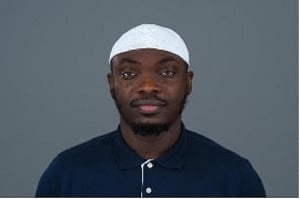
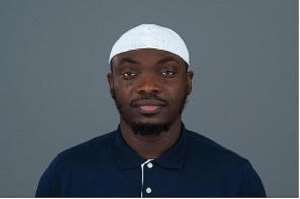
Abdul-Manaf Yunus, © 2026
*Student Of Knowledge
*Uncompromising Muwahhid
*Salafi Ideologue & Apologist. More *Student Of Knowledge
*Uncompromising Muwahhid
*Salafi Ideologue & ApologistColumn: Abdul-Manaf Yunus
Disclaimer: “The views expressed in this article are the author’s own and do not necessarily reflect ModernGhana official position. ModernGhana will not be responsible or liable for any inaccurate or incorrect statements in the contributions or columns here.”
Follow our WhatsApp channel for meaningful stories picked for your day.

Top Stories


Originally published on www.modernghana.com
