

August 3, 2026
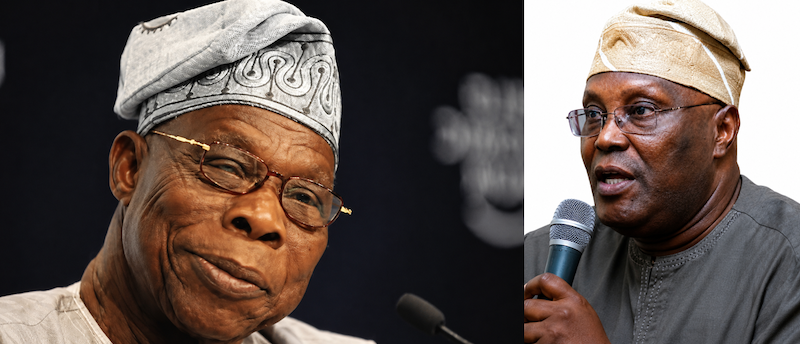
Atiku Vs Obasanjo: A Feud Death May Not End
4 hours ago | Opinion
Atiku Vs Obasanjo: A Feud Death May Not End

The long-running political estrangement between former Vice President Atiku Abubakar and former President Olusegun Obasanjo has evolved far beyond an ordinary disagreement between two influential politicians. It has become one of the defining rivalries in Nigeria’s democratic history, indeed, a relationship marked by distrust, competing ambitions, and irreconcilable interpretations. Judging from recent public exchanges, the wounds remain fresh, and there is nothing to show that reconciliation is anywhere around the corner.
What makes the Atiku–Obasanjo feud remarkable is that both men once occupied the highest offices in the land as political partners. Their joint administration between 1999 and 2007 helped restore democratic governance after years of military rule. Yet beneath the façade of unity lay growing suspicion over power, succession, and the future direction of the country. A head was reached during the controversial attempt to amend the Constitution to permit a third presidential term for Obasanjo. Atiku has consistently maintained that his opposition to the tenure elongation project transformed him overnight from a trusted deputy to a perceived enemy.
Whether that explanation tells the whole story or not, it is undeniable that the relationship never recovered. The political divorce was bitter, public, and complete.
Since then, both men have seized every opportunity to revisit old grievances. Obasanjo has repeatedly questioned Atiku’s suitability for Nigeria’s highest office, while Atiku has accused his former boss of rewriting history to justify personal vendettas. Their exchanges have often sounded less like political disagreements and more like unfinished personal battles.
Their dispute has also shaped Nigeria’s political landscape. Supporters on both sides have inherited the animosity, ensuring that every new statement by either statesman is interpreted through the lens of decades-old grievances rather than present realities. The feud has become institutionalized within political discourse to the point that one cannot help wondering whether history will eventually remember these two leaders for their accomplishments or for their inability to reconcile.
It is for this reason that many observers describe the Atiku–Obasanjo feud as so deep-seated that even death may not end it. Long after both men have exited the political stage, historians, biographers, political scientists, and loyalists of the two antagonists will continue to debate who stood on principle, and who allowed personal ambition to overshadow national interest.
Ultimately, Nigeria deserves better than an endless replay of yesterday’s quarrels. Political legacies are not defined solely by victories won or offices held; rather, they are measured by the capacity to forgive, reconcile, and place the nation above personal resentment.
Until that lesson is learned, the Atiku–Obasanjo feud will remain a cautionary tale of how broken trust can outlive even the men at the centre of it.
Magaji [email protected] > writes from Abuja.
Disclaimer: “The views expressed on this site are those of the contributors or columnists, and do not necessarily reflect TheNigerianVoice’s position. TheNigerianVoice will not be responsible or liable for any inaccurate or incorrect statements in the contributions or columns here.”
Originally published on www.thenigerianvoice.com
